

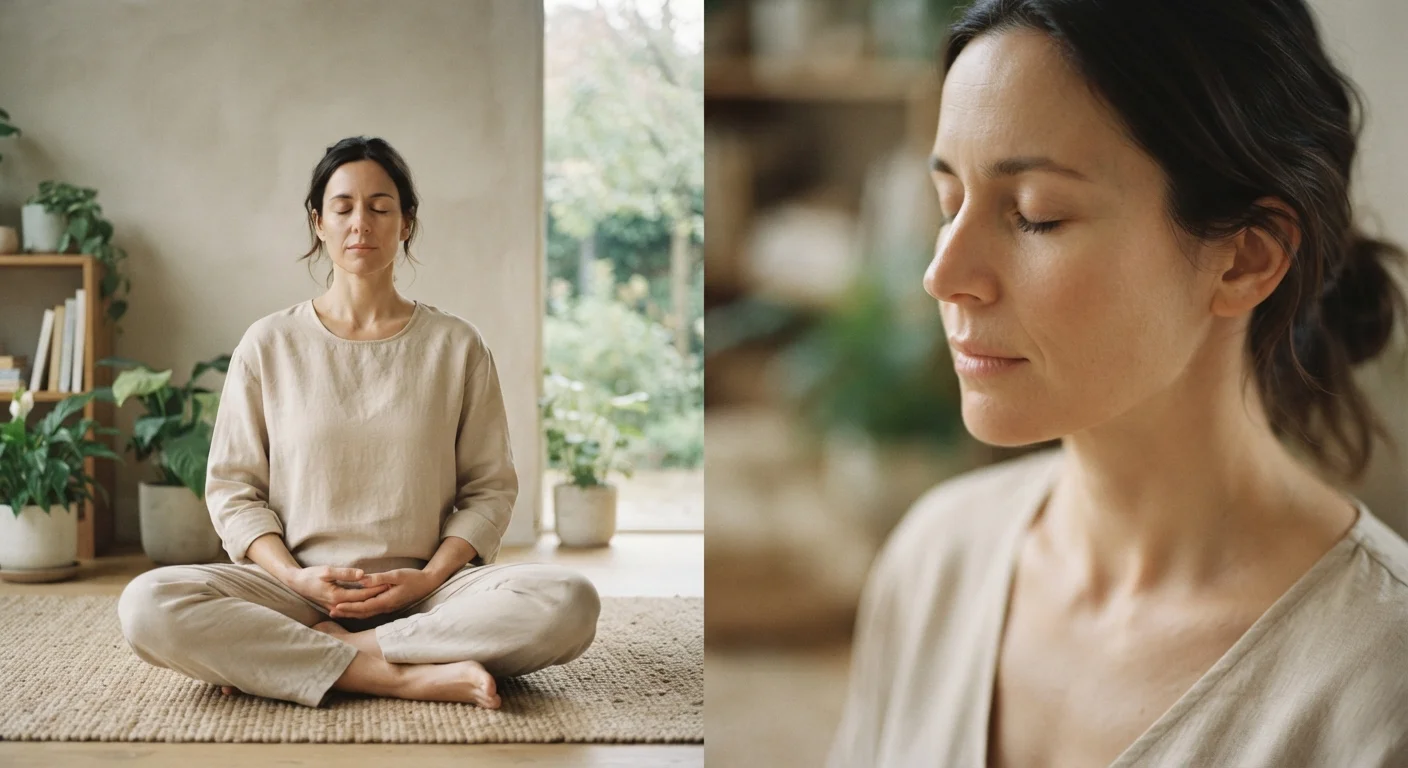
Option A
Meditation
The sustained, awareness-building practice.
Best for: People looking to build long-term emotional resilience and a consistent mindfulness habit over time.
Option B
Deep Breathing
The immediate, accessible stress-relief tool.
Best for: Anyone who needs fast, in-the-moment relief from acute stress, tension, or anxiety flare-ups.
How Each Practice Works
Meditation and deep breathing both ease stress, but they engage the mind and body through different mechanisms. Understanding those differences helps you pick the approach that actually fits your life.
Meditation is a broad umbrella term for practices that train attention and awareness. Most forms — including mindfulness, focused-attention, and loving-kindness meditation — ask you to observe thoughts, sensations, or a chosen anchor (like your breath) without judgment. The goal is not to empty the mind but to notice what arises and let it pass without reactivity. Over time, this trains the brain's response to stress at a deeper level. Research published in journals such as JAMA Internal Medicine has found that regular mindfulness practice is associated with meaningful reductions in anxiety, depression, and stress-related symptoms.
Deep breathing works more directly through the body. Slow, deliberate breathing — such as diaphragmatic breathing or box breathing (inhale for four counts, hold for four, exhale for four, hold for four) — directly stimulates the vagus nerve and activates the parasympathetic nervous system, the branch responsible for the body's "rest and digest" response. This is why a few slow breaths can lower your heart rate and ease muscle tension within minutes. To understand more about why stress registers so physically in the first place, see our explanation of stress's physical effects.
| Criterion | Meditation | Deep Breathing |
|---|---|---|
| Primary mechanism | Trains attention and awareness | Activates parasympathetic nervous system |
| Speed of effect | Builds over weeks of practice | Noticeable within minutes |
| Learning curve | Moderate — takes time to settle into | Very low — usable immediately |
| Session length needed | Typically 10–20 minutes per session | 2–5 minutes is effective |
| Best use case | Long-term resilience building | Acute stress or anxiety moments |
| Can be done anywhere | Ideally a quiet, dedicated space | Yes — virtually any setting |
| Research support | Extensive, including brain-structure studies | Strong, especially for heart rate and anxiety |
Effort, Time, and Learning Curve
One of the most practical differences between these two practices is how much time and effort they demand upfront.
Deep breathing can be learned and used effectively the very first time you try it. There is no required posture, equipment, or prior knowledge. A single two-to-five-minute session can produce noticeable physiological calm, which makes it especially useful for acute stress moments — a tense meeting, a sleepless night, or a wave of anxiety. It's also easy to layer into existing situations: during a commute, before bed, or at your desk.
Meditation, by contrast, tends to require more investment before its benefits become consistently felt. Many beginners report frustration in the first few weeks — the mind wanders, sitting still feels uncomfortable, and the benefits can seem elusive. Most research on meditation tracks outcomes after eight weeks or more of regular practice. That said, even shorter sessions of five to ten minutes have shown measurable effects on stress markers in some studies. Apps and guided recordings can ease the learning curve; for a balanced look at that option, our article on mental wellness apps covers what they can and can't reliably deliver.
8 weeks
Typical timeframe to see consistent meditation benefits
The landmark MBSR (Mindfulness-Based Stress Reduction) program, developed at UMass Medical School, runs eight weeks and forms the basis of much clinical research on meditation outcomes.
~60 sec
Time for slow breathing to begin lowering heart rate
Research on heart rate variability suggests that paced, slow breathing can begin producing measurable physiological calm within one to two minutes of practice.
36%
Reduction in anxiety symptoms with regular mindfulness practice
A 2014 meta-analysis published in JAMA Internal Medicine found mindfulness meditation programs reduced anxiety symptoms by approximately this magnitude across multiple studies.
Neither practice demands perfection. Skipping days or struggling to focus during meditation does not erase progress. Consistency over months matters more than any single session.
When to Use Each — and How to Combine Them
Rather than treating these as competing options, many people find the most benefit by using both strategically. Deep breathing serves as a reliable on-demand tool for acute stress, while meditation builds the foundation of emotional regulation that makes stressful moments less destabilizing in the first place.
A realistic pairing might look like this: a ten-minute meditation session in the morning to set a calm, focused tone for the day, combined with brief deep-breathing exercises during moments of friction throughout the day. If building a structured routine sounds appealing, our daily mental wellness routine framework offers a practical starting point.
For moments when anxiety feels more acute or intrusive, grounding techniques offer another complementary approach that works alongside both practices. Workplace stress, one of the most common triggers for Americans, often responds well to short breathing breaks; our piece on managing stress at work explores practical strategies in that context.
These Practices Work Best as Complements
Meditation and deep breathing are not mutually exclusive — in fact, most meditation practices incorporate deliberate breathing as a core component. Many practitioners use deep breathing as both a standalone quick-relief tool and as the opening anchor for a longer meditation session. Starting with just one and adding the other once it feels natural is a perfectly sound approach.
This article is for general informational and educational purposes only and does not constitute medical or mental health advice. If you are experiencing persistent anxiety, depression, or other mental health concerns, please consult a qualified healthcare or mental health professional.
The content on this site is for informational purposes only and is not a substitute for professional advice. Always consult a qualified professional for guidance specific to your situation.