

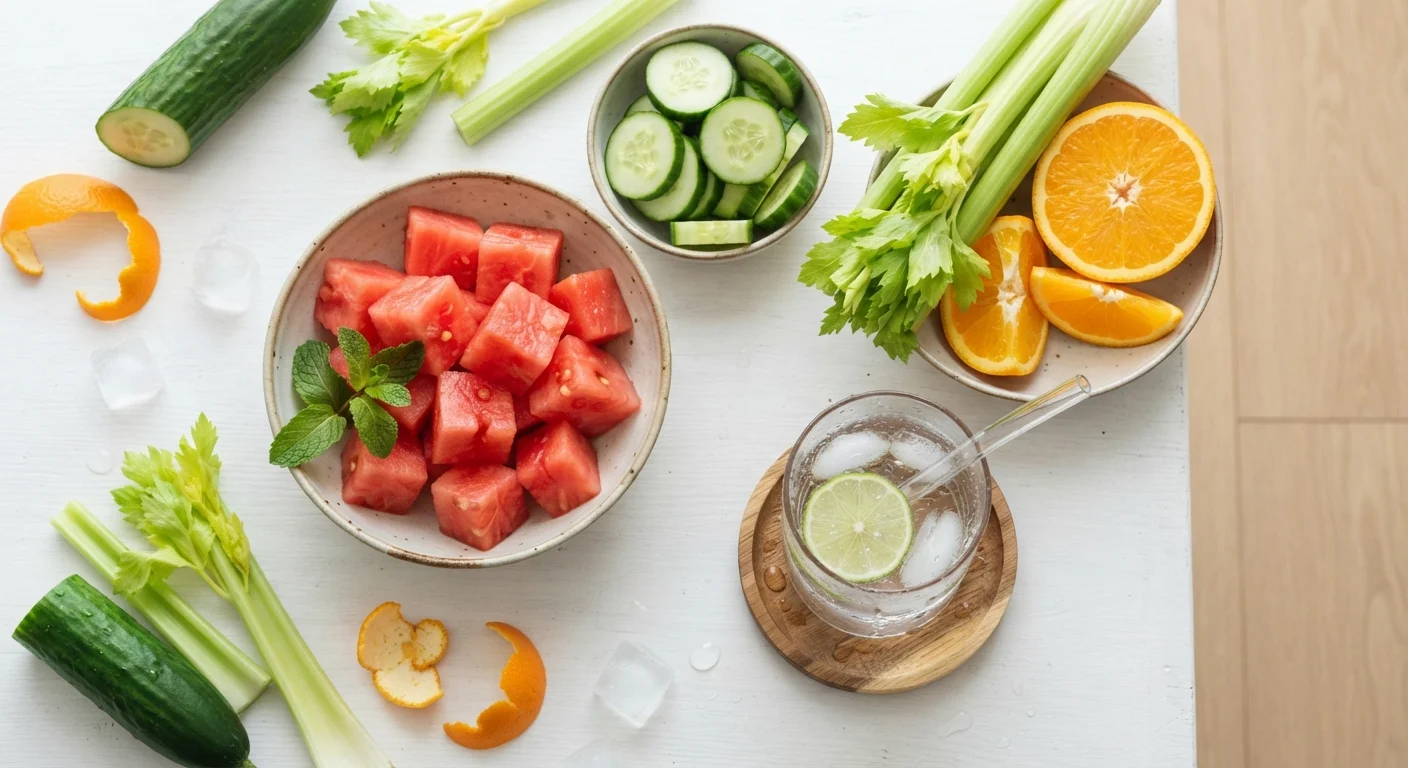
Hydration Is More Than What's in Your Glass
When most people think about staying hydrated, they picture drinking more water. That's certainly important — but it tells only part of the story. A meaningful portion of the fluid your body uses each day arrives through the food you eat, and understanding that connection can help you make smarter everyday choices about your diet and overall health.
Explore the broader picture of food and nutrition to understand how what's on your plate shapes your overall wellbeing. For the purposes of hydration, the key insight is simple: your body doesn't distinguish between water that comes from a glass and water that comes from a slice of watermelon. Both count.
~20–30%
Daily fluid from food for most adults
Nutrition research consistently estimates that food provides roughly 20–30% of total daily water intake, with variation based on individual diet patterns.
92%
Water content of watermelon by weight
According to USDA nutritional data, watermelon is one of the most water-dense foods commonly consumed in the American diet.
>95%
Water content of cucumber and lettuce
USDA food composition data shows cucumber and iceberg lettuce contain more than 95% water by weight, making them among the most hydrating whole foods available.
Which Foods Contribute the Most Fluid?
Water content varies widely across food groups. At the top of the list are fruits and vegetables, many of which are more than 90% water by weight. Cucumbers, lettuce, celery, tomatoes, zucchini, strawberries, and watermelon are standout examples. Citrus fruits, peaches, and cantaloupe also rank high.
Beyond produce, other foods contribute meaningfully too:
- Soups and broths: Among the most efficient food-based fluid sources, especially in colder months.
- Dairy products: Milk and plain yogurt contain significant water alongside their protein and calcium.
- Cooked grains: Foods like oatmeal and rice absorb water during cooking, contributing some fluid at mealtime.
- Beans and legumes: Cooked from dried, these contain considerably more water than their uncooked counterparts.
Ultra-processed snacks — chips, crackers, packaged pastries — tend to have very low water content and often contain high levels of sodium, which works against good hydration.
How Eating Habits Shift Your Hydration Needs
What you eat doesn't just supply water — it also determines how much water your body requires. Two dietary patterns are particularly worth understanding:
High-Sodium Diets
Sodium plays an important role in fluid regulation, but excess sodium requires the kidneys to work harder to maintain balance. The result is increased urine output and a higher daily fluid requirement. Diets heavy in processed meats, fast food, canned goods, and salty snacks can quietly raise your hydration demands without you realizing it.
High-Sugar and High-Protein Diets
Excess sugar — particularly from beverages like soda — contributes calories without meaningfully supporting hydration. High-protein diets increase the metabolic waste products the kidneys must filter, which also raises fluid needs. If your diet is protein-heavy, paying attention to fluid intake becomes especially important.
Staying physically active amplifies all of this. See how movement throughout the day interacts with your overall health — including how even routine activity increases sweat-based fluid losses that need to be replaced.
Build Hydration Into Your Meals Naturally
Rather than tracking every ounce of water you consume, focus on building meals that naturally include water-rich ingredients. Prioritizing vegetables, fruits, soups, and minimally processed whole foods across your day provides a consistent hydration foundation — without requiring a separate habit to maintain.
Practical Ways to Use Food for Better Hydration
You don't need to overhaul your diet to improve hydration through food. Small, consistent shifts tend to have the most durable effect:
- Start meals with a salad or broth-based soup. Both are high in water content and help contribute to your fluid balance before your main course.
- Snack on fruit instead of packaged foods. Swapping chips or crackers for an apple or a handful of grapes quietly adds fluid to your day.
- Choose whole grains over refined ones. Foods like oatmeal retain more water than dry, shelf-stable snack products.
- Watch sodium in everyday staples. Canned soups, deli meats, and condiments are common sources of hidden sodium that can drive up your fluid needs.
Thirst is a real signal worth paying attention to — but research indicates it doesn't always activate promptly in the early stages of mild fluid deficit, particularly in older adults. Regularly eating water-rich foods provides a built-in buffer that supports hydration even when you haven't been tracking your water intake closely.
This article is for general informational and educational purposes only and is not a substitute for professional medical or nutritional advice. Consult a qualified healthcare provider for guidance specific to your health needs.
Frequently Asked Questions
Research suggests that food accounts for roughly 20–30% of most adults' total daily water intake. Diets rich in fruits, vegetables, and soups can push that figure even higher. Beverages still make up the majority of fluid intake for most people.
Cucumbers, lettuce, celery, tomatoes, strawberries, watermelon, and oranges are among the foods with the highest water content — many exceeding 90% water by weight. Broths and soups also contribute significantly to fluid intake.
High sodium intake increases the amount of water your kidneys need to process and excrete excess salt, which raises your overall fluid requirements. This doesn't mean salty food directly dehydrates you, but it does mean you may need to drink more water to compensate.
For most people, food alone isn't sufficient to meet total hydration needs — beverages remain essential. However, a diet high in water-rich foods meaningfully reduces how much you need to drink. Adequate fluid intake still requires a combination of food and beverages.
Yes. Despite their caffeine content, coffee and tea do contribute to your overall fluid intake. Moderate caffeine consumption has not been shown to cause net dehydration in habitual drinkers, according to general health authority consensus.
Urine color is a practical general indicator: pale yellow typically suggests adequate hydration, while dark yellow may indicate a need for more fluids. However, certain supplements and medications can affect urine color. Consult a healthcare professional if you have concerns about chronic dehydration.
The content on this site is for informational purposes only and is not a substitute for professional advice. Always consult a qualified professional for guidance specific to your situation.