

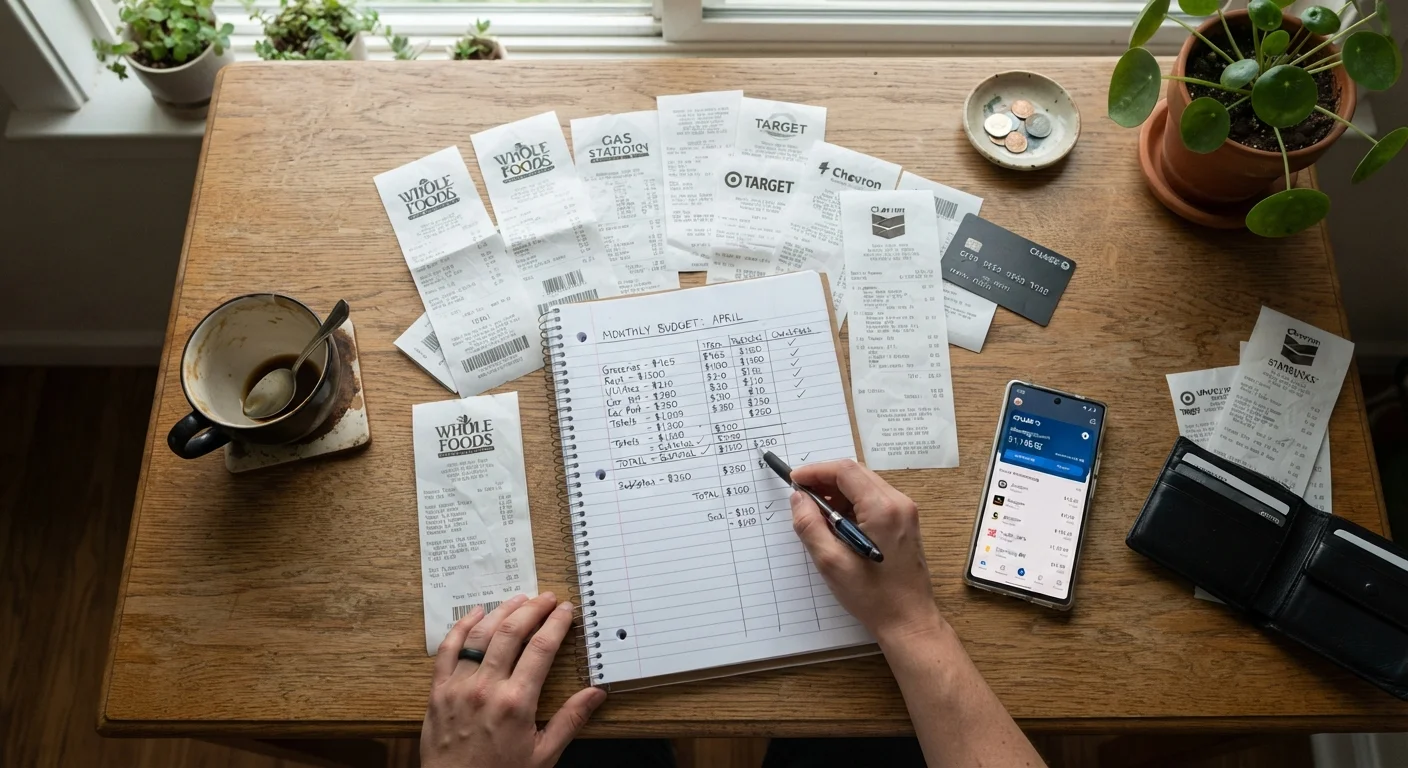
Why Spending Leaks Are Hard to Spot
A budget can look balanced on paper while quietly losing money every month. The culprit usually isn't one large expense — it's a collection of small, recurring charges that never get examined closely enough to catch.
Spending leaks tend to share a few traits: they're automatic, they're small enough to feel minor, and they're spread across multiple payment methods. That combination makes them nearly invisible until you do the deliberate work of looking for them. The good news is that you don't need a financial overhaul to fix them. You need a routine. The monthly financial reset checklist is a solid place to build that routine.
$219/mo
Average American's subscription spending estimate
A 2022 survey by C+R Research found that Americans underestimate their monthly subscription costs by a wide margin, with actual average spend near $219 per month across all services.
42%
Adults who forgot about an active subscription
The same C+R Research survey found that 42% of respondents had forgotten about a subscription they were still being charged for.
The Most Common Spending Mistakes — And How to Fix Them
The following mistakes show up again and again in American household budgets. They're not signs of carelessness — they're predictable patterns that can be interrupted once you know what to look for.
Letting subscriptions accumulate without regular review.
Why it happens: Streaming services, apps, and online memberships are easy to sign up for and even easier to forget. Charges are often small enough — $5 to $15 a month — that they don't trigger alarm on a bank statement.
Paying convenience fees and service charges without noticing.
Why it happens: ATM fees, ticket booking surcharges, delivery platform fees, and payment processing add-ons are often displayed at the end of a transaction — when you're already committed to buying.
Underestimating food spending outside the grocery store.
Why it happens: Coffee runs, fast-casual lunches, and food delivery orders feel like one-off decisions, not budget categories. Because they're paid on different apps and cards, they rarely show up as a coherent total.
Ignoring small automatic renewals on annual plans.
Why it happens: Annual subscriptions renew quietly. Because they hit once a year instead of monthly, they're easy to miss in the day-to-day flow of expenses — and often larger than expected when they do charge.
Carrying unused gym memberships or club dues.
Why it happens: People often keep memberships out of guilt or optimism, believing they'll use them soon. The psychological difficulty of canceling something you once valued makes inaction the path of least resistance.
Not accounting for irregular but predictable expenses.
Why it happens: Expenses like car registration, holiday gifts, back-to-school supplies, and annual insurance premiums happen every year — yet many households treat them as surprises each time they arrive.
Free Trials Can Become Paid Subscriptions
Many free trials automatically convert to paid monthly subscriptions if you don't cancel before the trial period ends. Always note the trial end date, set a calendar reminder, and review your statements the month after a trial begins. A single forgotten trial rarely breaks a budget, but several at once can add up quickly.
If you want to build habits that prevent these mistakes from resurfacing month after month, the habits that keep a budget running article covers sustainable practices that don't require constant willpower. And for a broader look at managing money responsibly, the Saving & Debt hub is a useful starting point.
This Is Education, Not Financial Advice
The information in this article is general in nature and intended for educational purposes only. It is not personalized financial advice. For guidance specific to your household's situation, consider consulting a licensed financial professional.
This article is for general informational and educational purposes only and does not constitute personalized financial advice. Consult a qualified financial professional for guidance tailored to your specific situation.
The content on this site is for informational purposes only and is not a substitute for professional advice. Always consult a qualified professional for guidance specific to your situation.