

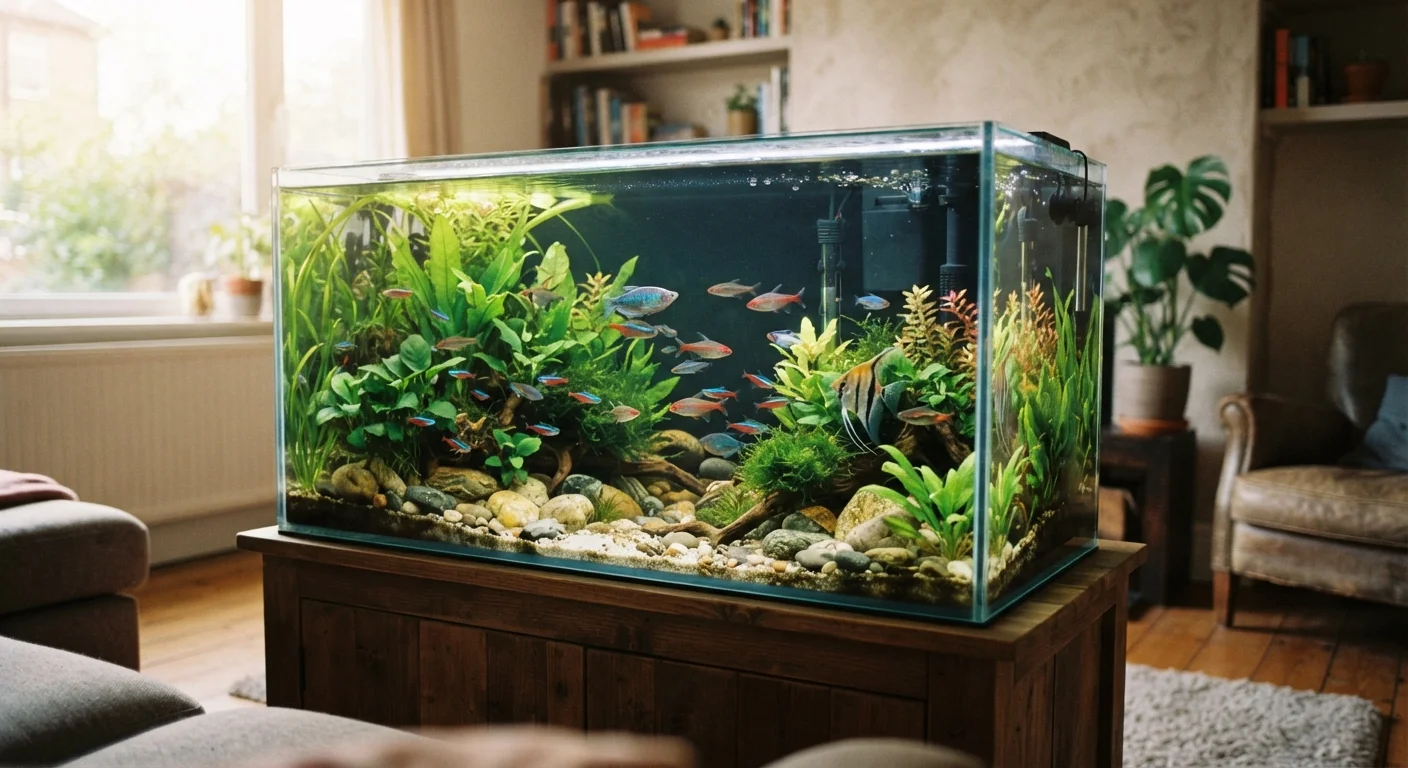
Why Most New Aquariums Fail — and How to Avoid It
Freshwater fishkeeping is genuinely rewarding, but the early weeks are where most setups go wrong. The two biggest mistakes new owners make are skipping the nitrogen cycle and adding too many fish too fast. Both problems share the same root cause: invisible chemistry.
Fish produce ammonia as a natural waste product. In an established tank, colonies of beneficial bacteria convert that ammonia into nitrite and then into nitrate — a process called the nitrogen cycle. Without those bacteria in place, ammonia accumulates rapidly and can kill fish within days. Understanding this biological reality is the foundation of everything else in aquarium care.
Never Skip the Nitrogen Cycle
Adding fish to an uncycled tank exposes them to lethal ammonia spikes — a condition called 'new tank syndrome.' The cycling process establishes beneficial bacteria that convert ammonia to nitrite and then to the far less toxic nitrate. Rushing this step is the most common reason new aquariums fail within weeks.
The good news is that once your tank is cycled and properly stocked, it becomes surprisingly self-regulating. Consistent weekly maintenance prevents the majority of problems that cause fish losses. Think of it less like managing a decoration and more like managing a small living ecosystem — because that's exactly what it is.
What You'll Need Before You Begin
Gathering the right equipment before you start saves you from costly restarts. The items below form the core setup for a functional beginner freshwater tank. You don't need the most expensive options, but skipping any of the required items creates gaps that compromise water quality.
What you will need
Aquarium tank (10–20 gallon recommended for beginners)
Provides the living environment for your fish; larger volume is more forgiving of water chemistry swings.
Hang-on-back or internal filter
Removes physical waste and houses beneficial bacteria that process ammonia and nitrite.
Aquarium heater with thermometer
Maintains a stable water temperature appropriate for tropical freshwater species.
Liquid water test kit
Measures ammonia, nitrite, nitrate, and pH so you can track the nitrogen cycle and ongoing water quality.
Dechlorinator/water conditioner
Neutralizes chlorine and chloramine in tap water before it enters the tank.
Gravel vacuum (siphon)
Removes debris and waste from the substrate during water changes.
Aquarium substrate (gravel or sand)
Lines the tank bottom, anchors plants, and provides surface area for beneficial bacteria.
LED aquarium light
Supports plant growth and provides a natural light cycle that regulates fish behavior.
One often-overlooked item is a liquid test kit — not test strips. Liquid kits are significantly more accurate for reading ammonia and nitrite levels during the cycling phase, when precision matters most.
Ongoing Care: What Healthy Tanks Actually Need
Once your aquarium is established, the maintenance rhythm is straightforward. Weekly water changes are non-negotiable — they dilute nitrate and replenish trace minerals. A gravel vacuum makes this faster and removes the decomposing debris that fuels ammonia spikes.
Live Plants Accelerate Cycling and Stability
Adding hardy aquatic plants like java fern, anubias, or hornwort speeds up the nitrogen cycle and competes with algae for nutrients. Plants also provide hiding spots that reduce fish stress. Even beginners can manage low-light species without special fertilizers or CO2 systems.
Feed sparingly. Overfeeding is the second most common cause of water quality problems after overstocking. Uneaten food decays quickly and drives ammonia up. Watch your fish eat and remove anything left over after a few minutes.
Monitor your fish's behavior daily. Clamped fins, unusual swimming patterns, loss of color, or reduced appetite are early signs of stress or illness — often reflecting a water quality issue that your test kit will confirm. Catching problems early gives you the best chance of addressing them before they become serious.
Tap Water Requires Treatment First
Tap water in most U.S. municipalities contains chlorine or chloramine, both of which damage fish gills and kill the beneficial bacteria your tank needs. Always treat tap water with a dechlorinator before adding it to the aquarium. Let treated water reach room temperature before use if possible.
Building a healthy aquarium takes patience in the early weeks, but the payoff is a stable, vibrant tank that can thrive for years. The habits you build in the first month — testing, water changes, careful stocking — carry the whole system forward.
The content on this site is for informational purposes only and is not a substitute for professional advice. Always consult a qualified professional for guidance specific to your situation.