

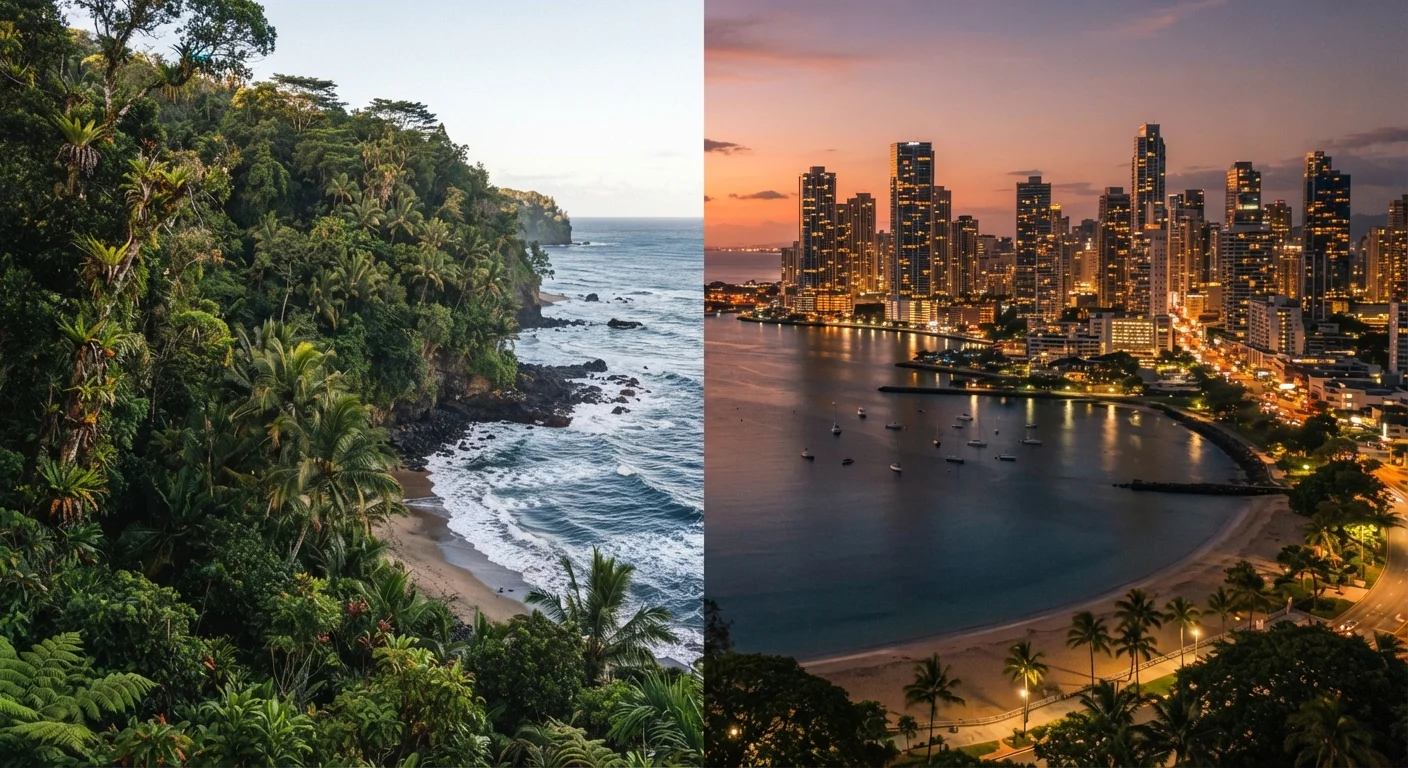
Our Verdict
Costa Rica and Panama are both outstanding Central American destinations for Americans, but they deliver meaningfully different experiences. Costa Rica excels at structured, immersive ecotourism with world-class wildlife reserves, while Panama rewards travelers who want urban energy, canal history, and nature rolled into one trip — often for less money per day.
| Best for | Recommended |
|---|---|
| Wildlife enthusiasts and dedicated eco-travelers | Costa Rica |
| Budget-conscious travelers seeking variety | Panama |
| First-timers wanting easy logistics and English support | Costa Rica |
| Travelers combining city culture with beach and jungle | Panama |
Nature and Wildlife: Depth vs. Diversity
Costa Rica has built its entire national identity around biodiversity. Roughly 25% of its land is protected as national parks or reserves, and that infrastructure shows — well-maintained trails, ranger stations, and established tour circuits make wildlife encounters relatively accessible. Monteverde's cloud forests, the Osa Peninsula's Corcovado National Park, and Tortuguero's sea turtle nesting beaches represent genuinely exceptional natural experiences. Birdwatchers in particular regard Costa Rica as one of the hemisphere's premier destinations.
Panama's natural credentials are less loudly marketed but equally compelling. The country spans two oceans and contains ecosystems ranging from the Darién jungle — one of the most biodiverse regions on Earth — to the highland forests of Chiriquí province. The Bocas del Toro archipelago offers snorkeling and Caribbean coastal beauty that rivals anything in the region. The key difference is that Panama's wild areas require more planning and travel time to reach, and tourist infrastructure outside the city is thinner.
| Costa Rica | Panama | |
|---|---|---|
| Wildlife & Nature Infrastructure | Extensive, well-developed park system | Exceptional but less accessible |
| Urban Highlights | San José (practical hub) | Panama City (global destination) |
| Typical Daily Budget | Higher (mid-range ~$120–180/day) | Lower (mid-range ~$80–130/day) |
| English Availability | Widely spoken in tourist zones | Common in Panama City, less outside |
| Visa for Americans | None (up to 90 days — verify) | None (up to 180 days — verify) |
| Ease for First-Time Visitors | Very beginner-friendly | Moderate — rewards extra planning |
Culture, History, and Urban Experience
Panama City is a genuine global city — its financial skyline, the Panama Canal, and the Casco Viejo historic district create a layered urban experience unlike anything in Costa Rica. The canal itself is a legitimately awe-inspiring feat of engineering, and the Miraflores Locks visitor center brings the spectacle of massive ships transiting live and in person. Panama's population reflects centuries of migration — West Indian, Spanish colonial, Indigenous, and Asian communities all shape the city's food, music, and architecture.
San José, Costa Rica's capital, is smaller and less polished as a city destination, but it serves as a practical hub rather than a draw in itself. Most travelers move quickly through it toward the coasts or highlands. Costa Rica's cultural strength lies more in its communities — the legendary pura vida (pure life) ethos is genuinely reflected in day-to-day interactions, and rural towns near nature reserves often have rich local food and craft scenes worth exploring.
Costs and Logistics for American Visitors
Both countries use the US dollar (Panama officially, Costa Rica de facto in tourist areas), which eliminates currency conversion headaches. Neither requires a visa for American citizens staying under 90 days, though entry requirements can change — always verify current rules through official government sources before you travel.
Costa Rica runs meaningfully higher on day-to-day costs. Mid-range lodging, guided tours, and park entrance fees have all risen alongside international demand, and quality accommodation in hotspots like Manuel Antonio or La Fortuna reflects that. Panama City offers a wider range of lodging price points, and outside the capital, costs drop significantly. Domestic flights within each country are available but add up quickly; buses are far cheaper but slow.
Time Your Visit Around Dry Season
Both Costa Rica and Panama experience distinct wet and dry seasons. December through April is generally drier across both countries, making it the most popular — and priciest — window for travel. The green season (May–November) brings lower crowds and reduced rates, particularly in Costa Rica, though you should expect afternoon rain and check road conditions before venturing to remote areas.
If resort-style convenience appeals to you at either destination, it's worth reading about the honest trade-offs of all-inclusive travel before booking — both countries have all-inclusive options, but they come with real limitations alongside the convenience.
Which Trip Fits Your Travel Style?
The honest answer is that Costa Rica rewards travelers who want a streamlined, well-signposted ecotourism experience. The path from booking to wildlife sighting is shorter here — tour operators are plentiful, English is widely spoken in tourist areas, and the country has invested in traveler-friendly infrastructure for decades. Expect to pay for that ease.
Panama suits travelers comfortable doing a bit more research and legwork. The payoff is a trip that can feel less crowded, more varied, and noticeably lighter on the wallet in many segments. Anyone drawn to history, maritime culture, and the novelty of standing where two oceans meet will find Panama genuinely hard to beat. Both destinations are safe for independent travel with standard precautions, though urban areas in both countries — as anywhere — warrant situational awareness. Check current US State Department travel advisories before finalizing plans.
The content on this site is for informational purposes only and is not a substitute for professional advice. Always consult a qualified professional for guidance specific to your situation.