

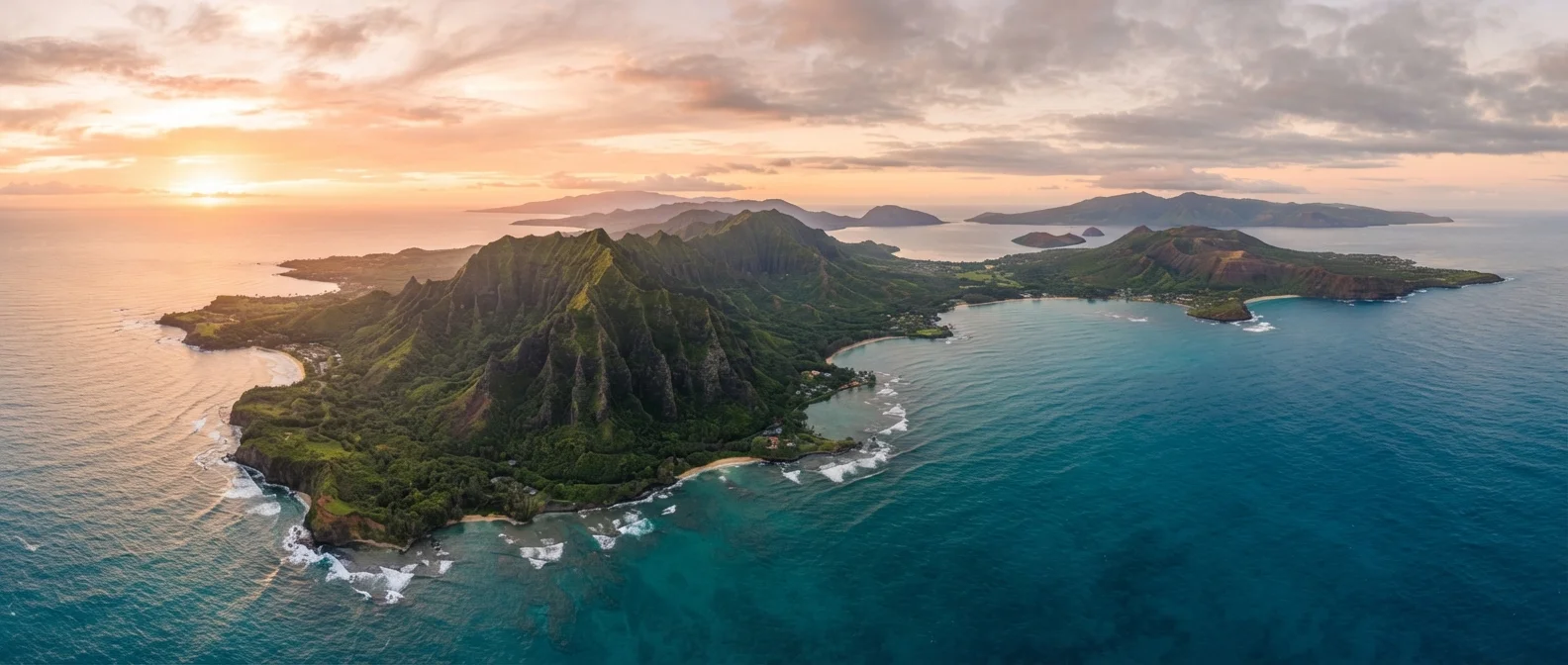
Our Verdict
No single Hawaiian island is universally 'best' — each genuinely suits a different traveler. Your ideal island depends on what you prioritize: nightlife and history, secluded wilderness, volcanic drama, or polished resort experiences. Matching your expectations to the island's actual character is the single most important planning step.
| Best for | Recommended |
|---|---|
| First-time visitors who want urban amenities and cultural history | Oahu |
| Travelers seeking dramatic natural scenery with fewer crowds | Kauai |
| Those wanting volcanic landscapes and geographic extremes | Big Island |
| Visitors who want a balance of resort comfort and outdoor adventure | Maui |
Why the Islands Feel Nothing Alike
Hawaii spans roughly 1,500 miles of Pacific Ocean, and its main islands formed at different geological ages — meaning they carry wildly different terrain, ecosystems, and even weather patterns. Oahu is the most densely developed; Kauai is the oldest and most eroded into jagged cliffs; the Big Island is the youngest and still actively growing. Treating them as interchangeable is one of the most common planning mistakes American travelers make. Each island rewards a specific travel mindset, and understanding those differences upfront saves real disappointment.
| Oahu | Maui | Kauai | Big Island | |
|---|---|---|---|---|
| Overall vibe | Urban, historic, bustling | Resort-meets-adventure | Remote, rugged, natural | Vast, geologically dramatic |
| Signature experience | Pearl Harbor, Waikiki, North Shore surf | Road to Hana, Haleakalā sunrise | Na Pali Coast, Waimea Canyon | Active volcanoes, 11 climate zones |
| Crowd level | High (most visited) | Moderate-high | Lower than average | Moderate, spread out |
| Nightlife & dining variety | Extensive | Good in resort zones | Limited outside resorts | Growing, especially Kona |
| Car rental necessity | Optional (bus available) | Recommended | Recommended | Essential |
| Best suited for | First-timers, city lovers | Broad appeal, couples | Nature-focused, independent | Adventurers, geology fans |
Oahu: History, Hustle, and Honolulu
Oahu is home to roughly 70% of Hawaii's population and its capital, Honolulu. It's where you'll find Pearl Harbor's historic sites, a globally recognized food scene in Chinatown, and the famous Waikiki Beach strip. The North Shore delivers serious surf culture and low-key farm stands. If you want reliable public transit, walkable neighborhoods, and access to a wide range of restaurants, museums, and nightlife, Oahu delivers what no other island can. The trade-off is density — peak-season crowds at Diamond Head and Waikiki are very real.
Match Your Expectations to the Island
Before booking, write down your top three priorities — beach relaxation, outdoor adventure, cultural experiences, nightlife — and cross-reference them with each island's actual offerings. Oahu and Maui handle a wider range of travel styles; Kauai and the Big Island reward travelers with a clear purpose. A single honest conversation with yourself here prevents a lot of post-trip disappointment.
Maui: The Resort-and-Adventure Blend
Maui draws travelers who want resort infrastructure alongside outdoor ambition. The Road to Hana — a 64-mile coastal highway with waterfalls, rainforest, and black sand beaches — is genuinely spectacular. Haleakalā National Park offers a sunrise above the clouds that visitors consistently describe as life-changing. West Maui's Kaanapali coast hosts polished resorts and calm, swimmable beaches. Maui does skew expensive relative to the mainland, and the 2023 Lahaina wildfires significantly impacted that historic town; travelers should research current conditions and respect recovery-zone boundaries before visiting.
Kauai: The Garden Isle's Honest Trade-offs
Kauai is the island for travelers who genuinely want to feel far away. The Na Pali Coast — accessible only by boat, helicopter, or strenuous trail — is among the most dramatic coastlines in the U.S. Waimea Canyon stretches 14 miles and drops over 3,600 feet, earning comparisons to the Grand Canyon. But Kauai has no major city, limited dining variety outside resort areas, and can receive significant rainfall on the wetter north shore. It suits independent travelers comfortable with a slower, nature-centered pace more than those expecting urban convenience.
Big Island: Scale, Extremes, and Active Geology
Officially named Hawaiʻi Island, the Big Island is larger than all other Hawaiian islands combined and encompasses 11 of the world's 14 climate zones. Hawaiʻi Volcanoes National Park offers access to active lava flows and calderas — experiences simply unavailable elsewhere in the U.S. The Kohala Coast has black, green, and white sand beaches within short driving distance of each other. Mauna Kea rises to nearly 14,000 feet and hosts world-class astronomical observatories. The island is large enough that travelers sometimes underestimate drive times between destinations; renting a car is essentially mandatory.
Practical Considerations Before You Book
Inter-island flights typically run 20–45 minutes and are operated by a small number of regional carriers; costs and schedules vary seasonally, so verify directly with airlines. If island-hopping, budget at minimum two full days per island — shorter stops often leave travelers feeling rushed rather than rested. Each island also has distinct microclimates: the wet and dry sides of a single island can feel like different destinations. Checking rainfall maps alongside resort locations before booking accommodation is a step most travelers skip and later wish they hadn't. Finally, respect closures, cultural sites, and trail conditions — Hawaii's natural environments are under genuine ecological pressure from overtourism.
The content on this site is for informational purposes only and is not a substitute for professional advice. Always consult a qualified professional for guidance specific to your situation.