

How a Car Battery Works
Your car battery is a 12-volt lead-acid unit that stores chemical energy and converts it to electrical energy on demand. Its primary job is to deliver a large burst of power to start the engine. Once the engine is running, the alternator — a generator driven by the engine — takes over, supplying electricity to the car's systems and recharging the battery simultaneously.
Most standard batteries contain six cells, each producing about 2 volts. Inside each cell, lead plates sit submerged in a sulfuric acid solution called electrolyte. A chemical reaction between the plates and acid produces the electrical current. Over time and through repeated charge-discharge cycles, those plates degrade — which is why no battery lasts forever.
What Drains a Car Battery
Understanding what depletes your battery helps you avoid preventable dead-battery situations.
- Parasitic drain: Even when a car is off, small electrical loads — clocks, alarm systems, keyless entry modules — draw a tiny, continuous current. A healthy battery handles this easily, but a weak one can go dead overnight.
- Short trips: If you only drive a few miles at a time, the alternator never fully recharges what the starter motor used. Over weeks, the battery slowly loses capacity.
- Accessories left on: Headlights, interior lights, or a phone charger left running with the engine off are common culprits.
- Extreme temperatures: Heat accelerates the internal chemical breakdown of battery cells. Cold thickens engine oil, forcing the starter to work harder and draw more power.
- Old age: An aging battery simply holds less charge, making it vulnerable to any of the above stressors.
Don't Ignore Slow Cranking
A slow engine start is rarely a one-time fluke — it usually signals a battery that is already struggling. Continuing to rely on a borderline battery increases the risk of a no-start situation at an inconvenient or unsafe location. Have the battery tested promptly rather than waiting for a complete failure.
How Long Does a Car Battery Last?
The industry-wide general expectation is 3 to 5 years for a conventional lead-acid battery under typical American driving conditions. However, geography plays a real role: drivers in hot-climate states like Arizona or Texas often see batteries fail closer to the 3-year mark, because sustained heat is especially destructive to internal battery components. Drivers in cooler northern climates may get closer to 5 years.
3–5 years
Typical car battery lifespan
Generally accepted industry range under normal US driving conditions; hot climates can shorten this to 3 years.
#1
Most common cause of roadside calls
Battery failure consistently ranks as the leading reason drivers call for roadside assistance, according to AAA.
~50°F drop
Temperature swing that cuts battery power
Cold weather can reduce a battery's cranking power by up to 50%, according to battery industry data.
Driving patterns matter too. A driver who takes long highway commutes — keeping the alternator running for extended periods — generally preserves battery health better than one who makes frequent short city errands. Everyday driving habits influence battery longevity more than most people realize.
Warning Signs of a Failing Battery
Catching a weak battery early prevents being stranded. Watch for these indicators:
- Slow or labored engine crank: The engine takes noticeably longer than usual to turn over, especially on cold mornings.
- Battery warning light: This dashboard light signals that the charging system — which includes the battery and alternator — needs attention.
- Swollen or bloated battery case: Excess heat can cause the battery housing to swell. A visibly deformed battery should be inspected by a mechanic promptly.
- Corrosion on terminals: A white or bluish powdery buildup on the metal posts can interfere with electrical connections and is a sign of battery stress.
- Electrical gremlins: Flickering lights, a radio that resets, or power windows moving slowly can all point to insufficient battery voltage.
Get your battery load-tested, not just voltage-checked. A battery can show 12.6 volts at rest yet fail completely under the load of starting the engine.
Resting voltage alone is a poor predictor of real-world performance; a load test reveals whether the battery can actually deliver adequate cranking amps.
If your car sits for more than two weeks without being driven, connect a battery maintainer rather than letting it self-discharge. Deeply discharging a lead-acid battery even once can permanently reduce its capacity.
Lead-acid batteries that are repeatedly discharged below 50% capacity suffer accelerated plate degradation, shortening overall lifespan significantly.
How to Jump-Start a Car Safely
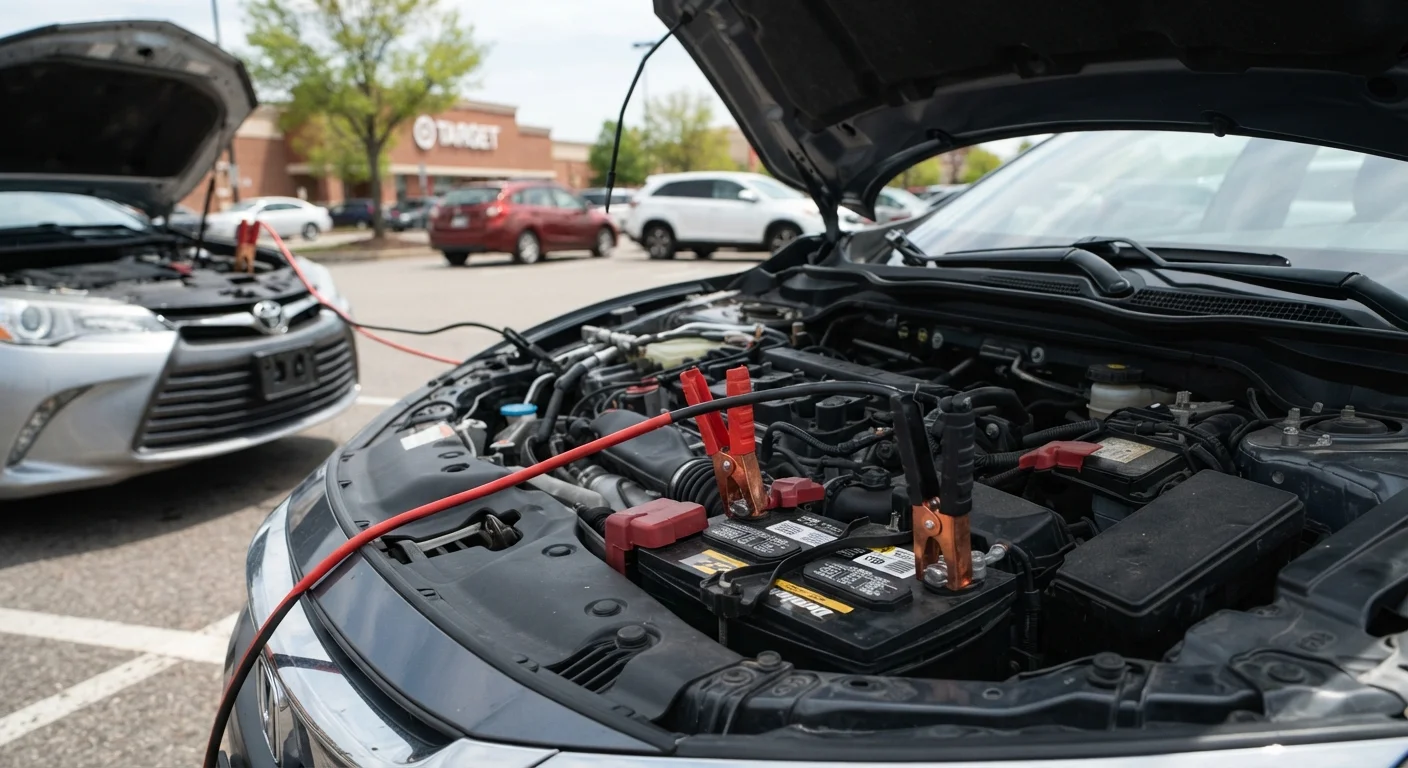
Jump-starting a modern vehicle incorrectly can damage sensitive onboard electronics. Follow this sequence carefully using a set of quality jumper cables (at least 4-gauge, 12 feet long).
- Position the vehicles: Park the working car close enough for cables to reach both batteries, but ensure the vehicles are not touching each other.
- Identify positive (+) and negative (−) terminals on both batteries. They are always labeled.
- Connect red cable to dead battery's (+) terminal.
- Connect the other red clamp to the good battery's (+) terminal.
- Connect black cable to the good battery's (−) terminal.
- Connect the other black clamp to an unpainted metal surface on the dead car's engine block — not directly to the dead battery's negative terminal. This reduces spark risk near the battery.
- Start the working car and let it idle for 2–3 minutes.
- Attempt to start the dead car. If it starts, let it run or drive for at least 20–30 minutes to allow the alternator to recharge the battery.
- Disconnect cables in reverse order: black from engine block, black from good battery, red from good battery, red from formerly dead battery.
Never Jump-Start a Damaged Battery
If the dead battery is visibly cracked, leaking fluid, or has a frozen electrolyte (indicated by a solid, icy appearance inside a translucent case), do not attempt to jump-start it. A damaged battery can release flammable hydrogen gas or rupture under charge. Call a roadside service professional instead.
Keeping Your Battery Healthy Longer
A few straightforward habits extend battery life meaningfully:
- Take longer drives periodically, especially if your routine involves mostly short trips, to give the alternator time to fully recharge the battery.
- Turn off all lights and accessories before shutting off the engine.
- Have the battery tested annually — many auto parts retailers offer free battery testing. Most manufacturers recommend testing after the 3-year mark.
- Keep terminals clean and free of corrosion. A mixture of baking soda and water, applied with an old toothbrush, safely removes buildup — disconnect the battery first and consult your owner's manual.
- If a vehicle will sit unused for more than a few weeks, consider using a battery maintainer (sometimes called a trickle charger), a device that keeps the battery at an optimal charge level without overcharging it.
Consistent attention to your battery is a small investment that avoids a frustrating breakdown. For a broader look at how routine behaviors protect your entire vehicle, see our guide on good driving habits that double as maintenance.
The content on this site is for informational purposes only and is not a substitute for professional advice. Always consult a qualified professional for guidance specific to your situation.