

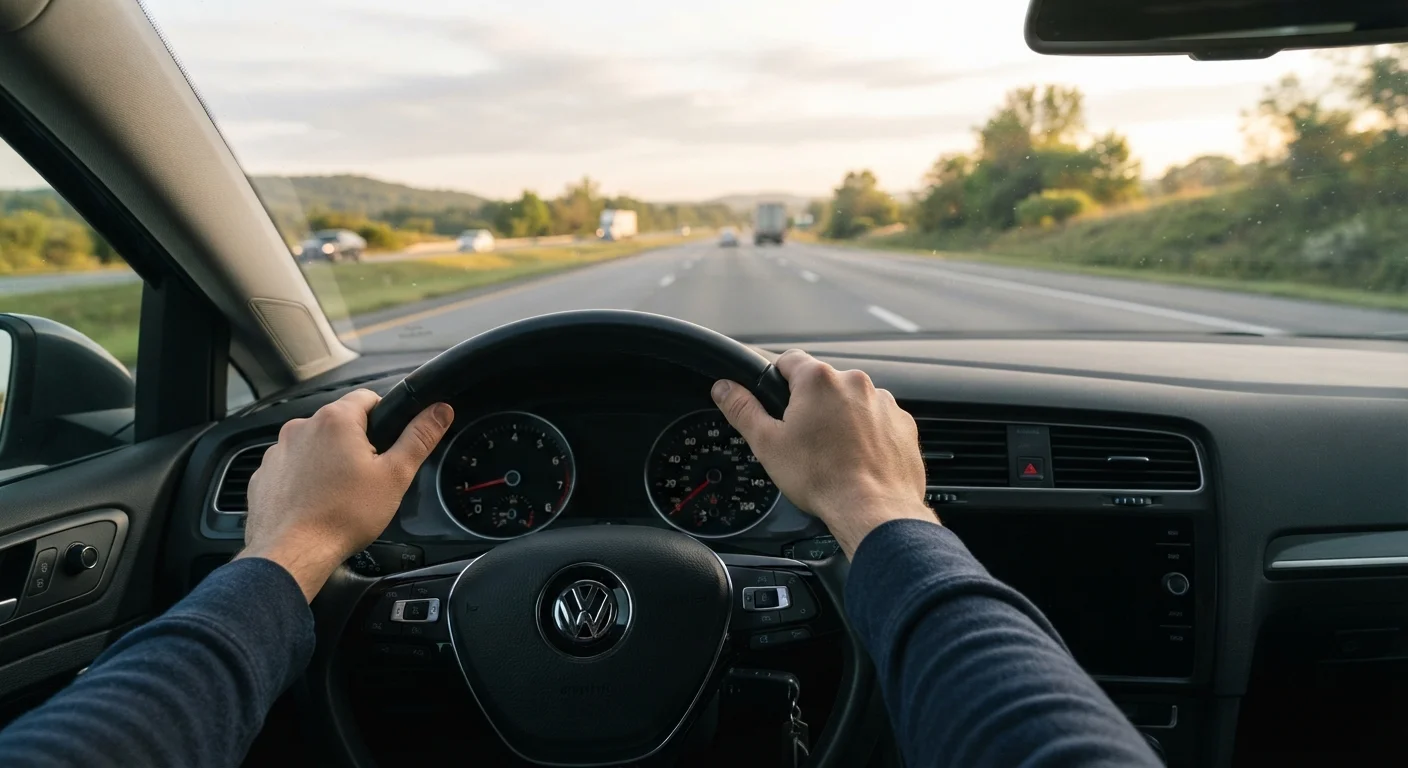
Your Driving Style Is a Maintenance Decision
Most drivers think of car maintenance as something that happens in a shop — oil changes, tire rotations, brake inspections. But the miles between those service appointments matter just as much. The way you accelerate, brake, idle, and corner determines how fast your components wear down.
Good driving habits don't replace scheduled service, but they extend the life of the work you've already paid for. Think of them as passive maintenance: habits that protect your investment every time you turn the key. For a full picture of what shop-based maintenance covers, see our guide on routine maintenance tasks that prevent bigger repair bills.
Accelerate gradually rather than flooring it from a stop.
Hard acceleration forces your engine and transmission to work at maximum load repeatedly, accelerating wear on internal components. Gradual acceleration keeps operating temperatures and mechanical stress within normal ranges, reducing the frequency of transmission and engine repairs.
Brake early and progressively, not hard at the last moment.
Late, hard braking heats your brake pads and rotors faster, shortening their service life significantly. It also puts stress on wheel bearings and suspension components each time. Consistent early braking extends the interval between brake jobs and keeps rotor surfaces smooth. Learn more about what your braking system endures in our piece on brake pads and rotors.
Avoid prolonged idling beyond what's necessary.
Extended idling runs the engine without moving the vehicle, which causes incomplete combustion and can allow unburned fuel to contaminate engine oil over time. It also drains your battery more than normal driving, since the alternator charges the battery less efficiently at idle speeds.
Take longer routes occasionally to let the engine fully warm up.
Frequent very short trips — under five minutes — don't allow the engine to reach full operating temperature. This means moisture and combustion byproducts don't fully evaporate from the oil, accelerating its breakdown. A battery that never gets a proper charge cycle will also weaken faster. Our overview of car battery basics explains how driving distance affects charge health.
Slow down smoothly before corners rather than braking mid-turn.
Braking while turning places simultaneous lateral and longitudinal stress on tires and suspension components, causing uneven wear and adding strain to wheel bearings. Slowing before entering a corner and accelerating gently out of it distributes forces more evenly. For more on how driving style affects tire condition, see our guide on reading your tires' wear patterns.
Don't overload your vehicle beyond its rated capacity.
Every vehicle has a maximum payload rating — typically found in the owner's manual or on the door placard — and exceeding it stresses the suspension, tires, and brakes beyond their design limits. Chronic overloading causes premature spring and shock absorber wear, and can lead to tire failure.
Quick Actions You Can Take Today
Not every maintenance-friendly habit requires relearning how you drive. Several changes take seconds to implement and start paying off immediately.
The Compounding Effect of Good Habits
No single habit listed here will transform your car overnight. The benefit is cumulative. Drivers who consistently brake early, load their vehicles thoughtfully, and avoid short cold-start trips tend to see less frequent brake replacements, longer-lasting tires, and fewer unplanned repairs over the life of a vehicle.
Habits Support Maintenance — They Don't Replace It
Even the smoothest driver still needs regular fluid checks, filter replacements, and inspections. Good habits slow wear; they don't eliminate it. Refer to your owner's manual for your vehicle's specific service intervals, and don't skip scheduled checkups just because the car feels fine. Skipping service has a well-documented cascade effect — our article on what happens when you skip routine maintenance explains how deferred tasks compound into bigger problems.
If you already own a higher-mileage vehicle, these habits matter even more. Components that have seen heavy use have less tolerance for aggressive driving. Our article on owning an older high-mileage car covers the real trade-offs of keeping that vehicle on the road longer.
Driving habits also intersect with safe driving practices more broadly — smooth, attentive driving protects both your car and everyone around you. The same behaviors that reduce component wear also give you more reaction time and better vehicle control in unexpected situations.
The content on this site is for informational purposes only and is not a substitute for professional advice. Always consult a qualified professional for guidance specific to your situation.