

Why Routine Maintenance Is Really Cost Management
Most drivers think of oil changes and tire rotations as annoying expenses — things dealerships push to make money. In reality, these services are the cheapest form of insurance you can buy for a car you already own. Neglecting them doesn't save money; it defers larger costs while interest accumulates under the hood.
The math is straightforward. An oil change typically runs between $40 and $100 depending on the oil type and where it's done. A seized engine from chronic oil neglect can cost $4,000 to $10,000 or more. Understanding that gap is the entire argument for preventive maintenance — and it applies to nearly every system on your vehicle. For a broader look at how deferred upkeep snowballs, see our article on what deferred maintenance really costs over time, which covers the same compounding principle in a different context.
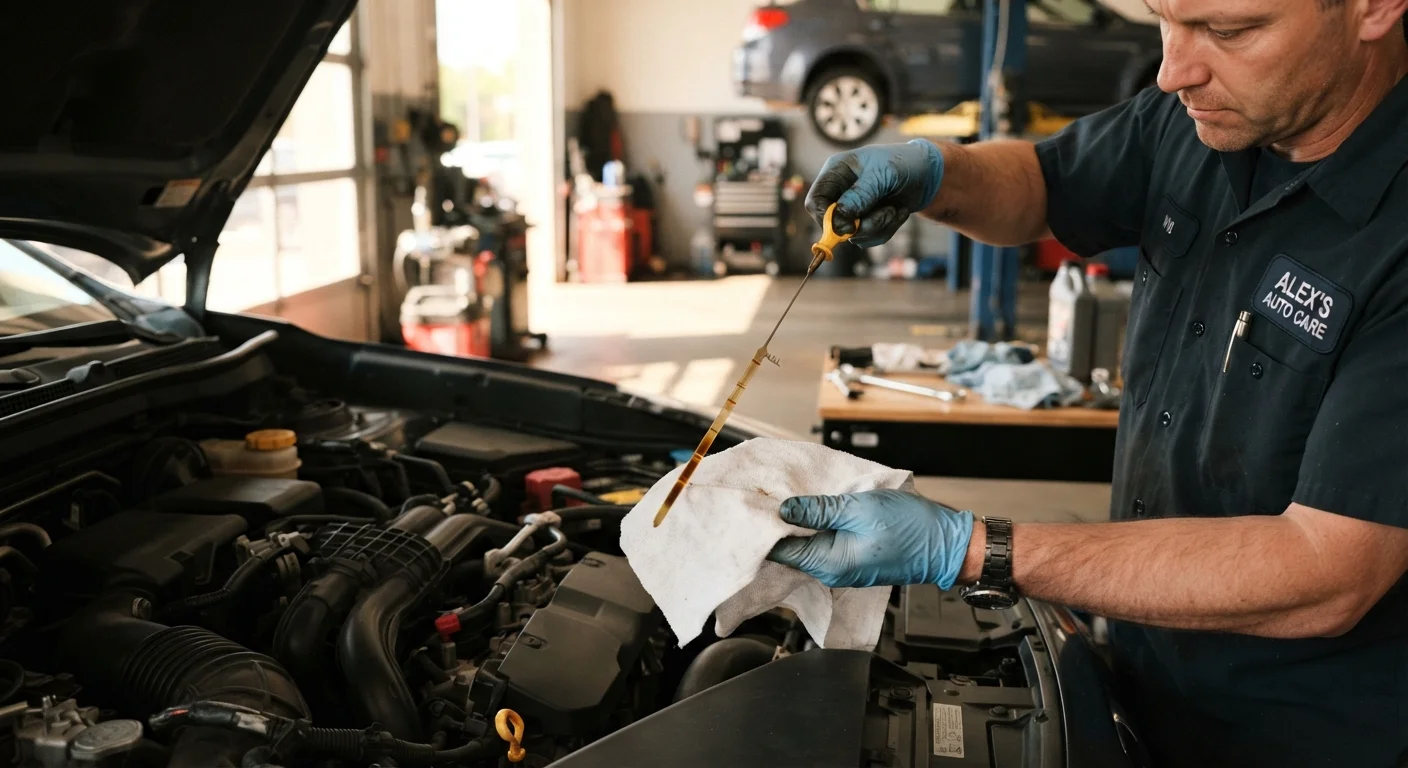
Follow your owner's manual's oil change intervals, not arbitrary mileage rules.
Engine oil degrades over time and mileage, losing its ability to lubricate and cool internal components. Dirty or low oil accelerates wear on critical parts like camshafts and bearings — damage that is often irreversible. Modern synthetic oils and engines are engineered for specific intervals; the manual reflects that engineering.
Rotate your tires every 5,000 to 7,500 miles to equalize tread wear.
Front and rear tires wear at different rates depending on drive configuration and steering load. Uneven wear shortens overall tire life, degrades handling, and can create blowout risk. Regular rotation spreads wear evenly across all four tires, extending their usable life by thousands of miles.
Check and top off all critical fluids — coolant, brake fluid, transmission fluid, and power steering fluid — at every oil change.
Each fluid serves a specific function, and low or contaminated fluid can cause overheating, brake fade, transmission slipping, or steering failure. Fluids don't just deplete — they degrade chemically. Catching a slow brake fluid leak early costs far less than replacing warped rotors or a failed master cylinder.
Replace cabin and engine air filters on schedule to protect air quality and engine performance.
A clogged engine air filter restricts airflow, forcing the engine to work harder and potentially affecting fuel economy and performance. A dirty cabin air filter reduces HVAC effectiveness and can worsen air quality inside the car. Both are inexpensive to replace and easy to overlook.
Inspect and replace brake pads before metal-on-metal contact occurs.
Brake pads are designed to wear down gradually. When they're fully depleted, metal calipers grind directly against rotors, destroying them rapidly and dangerously. Replacing pads at the right time costs a fraction of replacing both pads and rotors — and preserves stopping performance.
Have belts and hoses inspected according to your manufacturer's schedule, especially the timing belt.
Rubber components degrade silently — cracks, fraying, and hardening aren't always visible without a close inspection. A failed serpentine belt can disable the alternator, power steering, and cooling pump simultaneously. A broken timing belt on an interference engine can cause catastrophic internal engine damage.
The Services That Matter Most — and Why
Not every maintenance item carries equal weight. These are the tasks with the highest return on investment — the ones where skipping once or twice is low risk, but chronic neglect creates expensive, sometimes irreversible damage.
$792
Average unexpected vehicle repair cost per incident
AAA has reported that Americans frequently face unexpected repair bills averaging hundreds of dollars, which routine maintenance is designed to prevent.
3–4×
Cost multiplier when maintenance is deferred
Industry estimates suggest that neglected maintenance tasks commonly result in repair costs three to four times higher than the original service would have been.
77%
Vehicles found to need service or repairs during inspections
According to AAA vehicle inspection data, nearly eight in ten cars brought in for routine checks are found to need at least one service or repair.
If you're unsure which jobs to handle yourself and which to leave to a professional, this guide on DIY vs. shop work draws a clear line. And for a concrete schedule organized by season, keep the seasonal car maintenance checklist handy in your glove box.
Quick Wins You Can Act on Today
You don't need to overhaul your entire maintenance routine at once. A few targeted actions — done consistently — account for a large share of preventable repairs. Start here.
Your driving habits matter too. How you accelerate, brake, and idle affects wear on brakes, tires, and the drivetrain. Good driving habits that double as maintenance walks through the everyday choices that extend the life of your vehicle without spending a dollar.
If you drive an older, higher-mileage vehicle, the calculus shifts slightly — maintenance becomes even more important, but you also need to know when repairs outpace the car's value. Owning an older high-mileage car covers those trade-offs honestly. And if you want to see exactly what happens when services get skipped, What Happens When You Skip Routine Maintenance details the cascade effect in plain terms.
A Note on Maintenance Records
Keeping a simple log of every service performed — date, mileage, and what was done — has real value beyond staying organized. It helps you spot patterns (like a fluid that keeps running low), satisfies warranty documentation requirements, and can increase resale value by demonstrating to buyers that the car was cared for consistently. A basic notebook in the glove box or a free app works fine.
The content on this site is for informational purposes only and is not a substitute for professional advice. Always consult a qualified professional for guidance specific to your situation.