

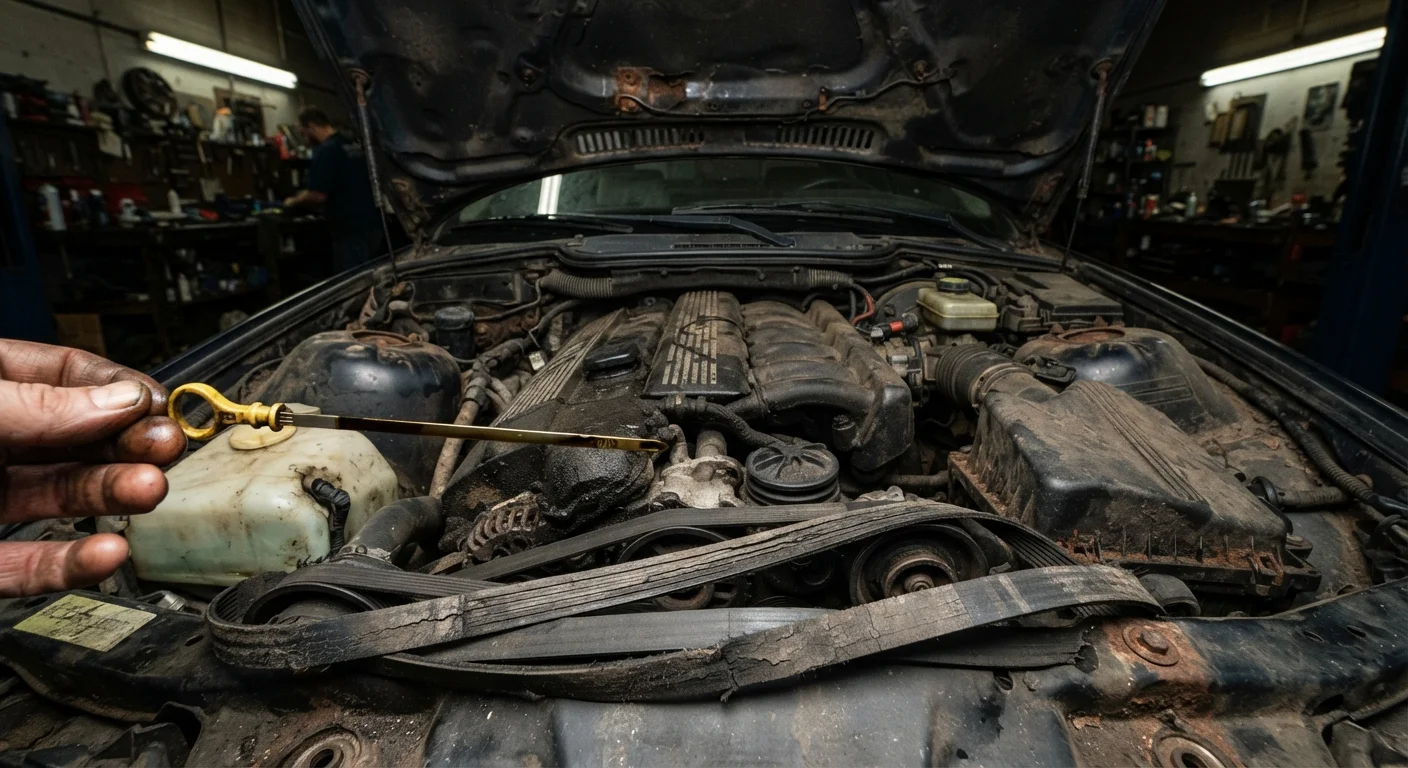
The Cascade Effect of Skipped Services
Routine maintenance feels easy to postpone — the car still starts, the drive still feels normal, and the cost of a service visit can seem like an inconvenience. But vehicle systems are interdependent, and when one falls behind, others absorb the strain. What begins as a missed oil change can quietly progress into worn piston rings, a seized engine, or a roadside breakdown that costs many times more than the original service.
Understanding why each task matters — and what specifically goes wrong when it's skipped — is the most practical thing any driver can do. The sections below walk through the most consequential maintenance mistakes, the reasons they're so common, and what you can do to avoid them.
For a full picture of what each service interval actually does for your vehicle, see our guide to routine maintenance tasks.
Delaying oil and filter changes beyond the manufacturer's recommended interval.
Why it happens: Drivers often assume that because the engine sounds fine, the oil is still doing its job. Modern synthetic oils also last longer, creating a false sense of flexibility.
Ignoring coolant flushes until overheating occurs.
Why it happens: Coolant (antifreeze) is out of sight in a closed reservoir, so it rarely prompts attention unless a warning light appears. Many drivers don't know it degrades chemically over time even if the level looks fine.
Skipping timing belt or serpentine belt inspections until the belt fails.
Why it happens: Belts look intact from a casual glance, and there's often no obvious symptom of wear until they snap. Because replacement can be expensive, drivers sometimes postpone it hoping the belt lasts a little longer.
Letting brake fluid absorb moisture for years without a flush.
Why it happens: Brake fluid is often overlooked because braking performance can feel normal even as fluid quality deteriorates. It isn't listed as prominently as oil or tires in general maintenance conversations.
Driving on tires that are underinflated or well past their tread life.
Why it happens: Tire pressure loss is gradual and subtle; many drivers simply don't check it regularly. Worn tread is also easy to rationalize, especially when replacing all four tires feels like a large expense.
Why Deferred Maintenance Compounds Over Time
One of the trickiest aspects of vehicle neglect is that its consequences aren't always immediate. A car can run adequately for months with dirty oil or a slightly worn serpentine belt — right up until it can't. By that point, a single failure has often stressed adjacent components enough to cause secondary damage.
~$4,500
Average engine replacement cost
Industry repair estimates consistently place engine replacement in the range of $3,000–$5,000 or more — a cost that routine oil changes are specifically designed to prevent.
35%
Of roadside breakdowns tied to maintenance neglect
Data from major roadside assistance programs has long indicated that a substantial portion of service calls involve issues — dead batteries, overheating, belt failures — directly linked to skipped maintenance.
Engines running on degraded oil, for example, generate more internal friction and heat, which accelerates wear on bearings, camshafts, and cylinder walls. Replacing those components costs far more than a consistent oil-change schedule ever would. The same logic applies across the board: a $20 cabin air filter neglected long enough can restrict airflow through the HVAC system, putting strain on the blower motor — a repair that can run into hundreds of dollars.
Driving style also intersects with maintenance in ways many owners overlook. Certain everyday driving habits reduce mechanical stress and extend the interval before wear becomes critical — but they can't compensate indefinitely for services that are simply skipped.
Dashboard Warning Lights Are Not Optional Notifications
A check engine light, oil pressure warning, or temperature gauge spike is not something to monitor for a few more days. These signals often indicate that a system is already under stress. Continuing to drive without diagnosis can turn a minor issue into a major repair. Have warning lights evaluated by a qualified mechanic promptly — not at the next convenient opportunity.
If you're driving a high-mileage vehicle, the stakes are even higher. Older cars with significant mileage have less tolerance for deferred maintenance, since components are already closer to the end of their service life. And if you've absorbed some automotive folklore along the way, it's worth separating fact from fiction — some widely held beliefs actually lead drivers to over-service or under-service their vehicles. Common car maintenance myths are worth reviewing before your next service visit.
The single most reliable resource is your vehicle's owner's manual. It lists manufacturer-recommended intervals for every fluid, filter, and inspection — tailored to your specific engine and drivetrain. Following it is the most straightforward way to avoid the cascade that starts with one skipped appointment.
The content on this site is for informational purposes only and is not a substitute for professional advice. Always consult a qualified professional for guidance specific to your situation.