

Why Small Problems Don't Stay Small
Most deferred maintenance doesn't start as a crisis. It starts as a gutter that needs cleaning, a hairline crack in caulking around a window, or an HVAC filter that's overdue for replacement. These are easy to overlook — they don't disrupt daily life, and addressing them feels optional in the moment.
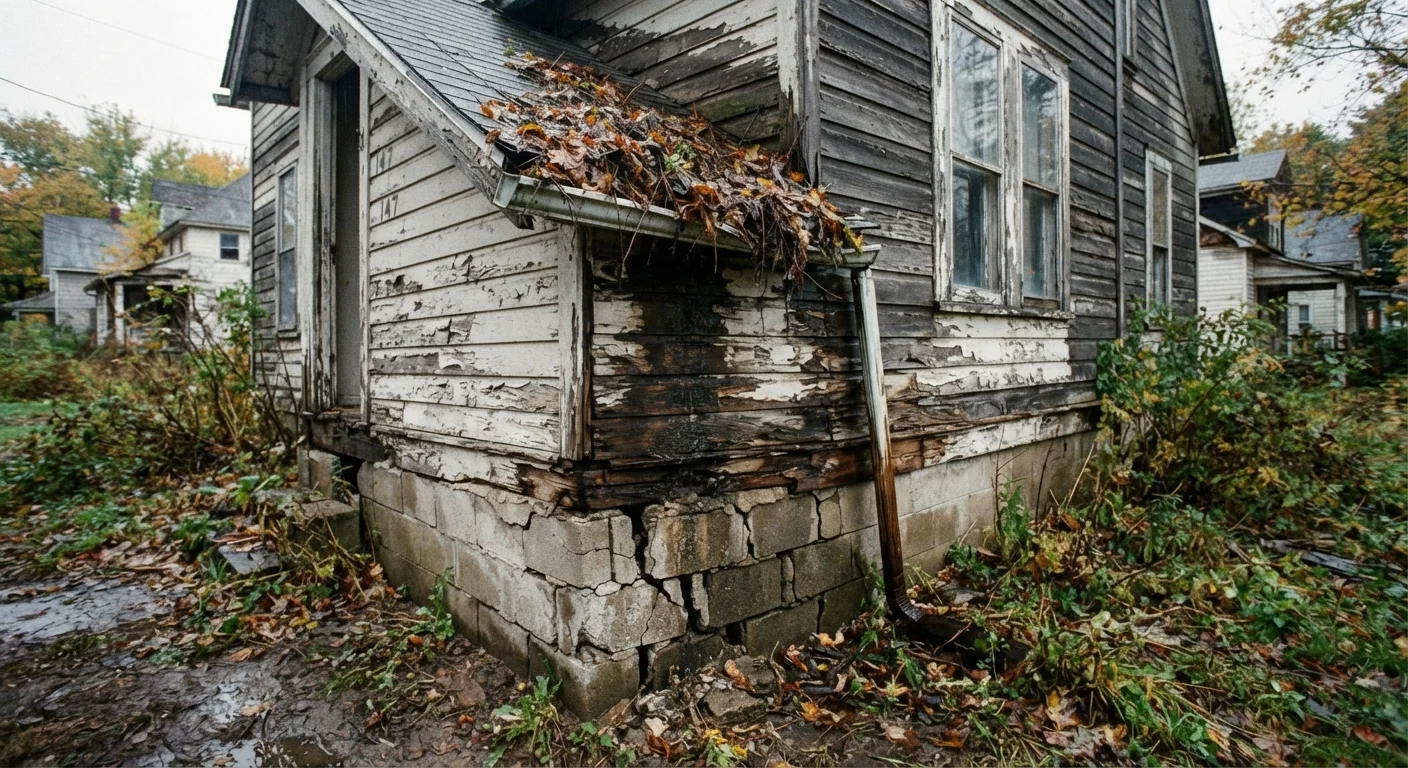
The problem is that homes are interconnected systems. A clogged gutter channels water against a foundation. That moisture gradually penetrates a wall cavity, feeding mold and softening framing. What started as a $50 gutter cleaning can develop into a $5,000 remediation project. This cascade effect — where one neglected task enables the next failure — is the core mechanic behind deferred maintenance costs.
Water is the most common accelerant. Leaks, condensation, and poor drainage are behind a disproportionate share of expensive home repairs. When waterproofing details (roof flashing, window seals, grading) are maintained, they hold water out of places it doesn't belong. When those details are ignored, the damage is often invisible until it's already extensive.
Deferred Maintenance Is Not Always Visible
Some of the costliest maintenance failures — roof sheathing rot, crawl space moisture, attic mold — are hidden from view and only discovered during a professional inspection or when damage is already extensive. Scheduling periodic professional inspections, even when nothing seems wrong, is a practical way to catch concealed deterioration before it compounds.
The Real Numbers Behind Deferred Repairs
Cost comparisons between prevention and repair tell a clear story. Sealing a small roof penetration might cost a homeowner a tube of roofing sealant and an afternoon. Replacing water-damaged sheathing, insulation, and ceiling drywall after a prolonged leak can easily run into the thousands — and that's before factoring in mold remediation if spores have taken hold.
The same logic applies across systems:
- HVAC neglect: Skipping annual servicing and filter changes reduces efficiency and strains components. A system forced to work harder wears out faster, turning a $100–$200 service call into a $3,000–$7,000 equipment replacement.
- Foundation drainage: Allowing soil to slope toward the foundation or ignoring downspout extensions invites hydrostatic pressure. Minor grading corrections cost very little; underpinning or waterproofing a failing basement wall does not.
- Exterior paint and caulking: Paint isn't decorative only — it's a moisture barrier. When it fails and is left untreated, wood siding absorbs water, swells, rots, and eventually requires full replacement.
For homeowners tracking where money unexpectedly disappears, the pattern often traces back to deferred tasks. This connects directly to the broader problem of spending leaks that quietly drain a household budget.
1%–2%
Of home value recommended for annual maintenance budgeting
A widely cited general guideline among housing and financial planning resources; actual costs vary by home age, size, and region.
10x
Estimated cost multiplier when repairs replace prevention
Industry observers frequently note that reactive repairs can cost ten times more than the preventive maintenance that would have avoided them, though ratios vary by system.
~35%
Of home inspection issues tied to water and moisture problems
Home inspection industry data consistently identifies moisture intrusion as among the most common and costly findings in residential property evaluations.
How Deferred Maintenance Affects Your Home's Value and Insurability
Beyond repair bills, deferred maintenance creates financial risk in two other significant areas: property value and insurance coverage.
When a home goes on the market or is refinanced, an appraiser and inspector will assess its physical condition. A home with a well-documented maintenance history tends to appraise more favorably than one showing signs of systemic neglect. Buyers negotiating after a rough inspection often request price reductions or repair credits — meaning postponed upkeep can translate directly into reduced sale proceeds.
On the insurance side, most standard homeowner's policies cover sudden and accidental damage, not gradual deterioration. A pipe that bursts unexpectedly may be covered; a pipe that corroded slowly over years due to unaddressed moisture issues may not be. Insurers can and do deny claims when evidence suggests a problem developed over time without intervention. Understanding common home maintenance myths can help homeowners avoid the false assurance that problems will resolve themselves.
Building a Maintenance Habit That Actually Sticks
The most effective antidote to deferred maintenance isn't a large budget — it's consistency. A seasonal inspection routine, even a brief one, catches problems at their cheapest and most manageable stage.
Start With a Simple Seasonal Checklist
Write down the five maintenance tasks most critical to your home each season and set a calendar reminder. Even a basic paper checklist reviewed twice a year catches most high-priority items before they escalate. Consistency matters far more than comprehensiveness — doing a few key tasks reliably outperforms a perfect list that never gets followed.
A practical approach is to divide maintenance tasks by season and focus on the systems most stressed by that time of year. In fall, that means gutters, roof inspection, and heating system service. In spring, it means checking for winter damage, clearing drainage paths, and inspecting window seals. Summer and winter fill in with tasks like pest prevention, attic ventilation checks, and water heater testing.
Homeowners working within tight budgets should prioritize by risk, not convenience. Tasks involving water intrusion, structural integrity, or life-safety systems (smoke detectors, carbon monoxide alarms, electrical panels) come first. Cosmetic items can wait. This kind of disciplined prioritization is part of what makes home maintenance a long-term investment rather than just an expense.
For tasks that involve electrical work, gas lines, or structural modifications, always consult a licensed professional. These are areas where the cost of getting it wrong — in safety terms — far exceeds any short-term savings from doing it yourself without proper training.
Frequently Asked Questions
A common example is ignoring a slow roof leak for months. What begins as a small soft spot can allow water intrusion that damages insulation, ceiling drywall, and structural framing — turning a few hundred dollars in shingle repair into thousands in restoration work.
Buyers and appraisers notice visible wear and systemic neglect. Homes with a backlog of deferred maintenance typically sell for less, face lower appraisals, and can encounter lender concerns — especially if mechanical systems or the roof are flagged during inspection.
Yes. Most homeowner's insurance policies exclude damage that results from gradual deterioration or lack of maintenance. If an adjuster determines that a problem developed slowly over time due to neglect, the claim may be partially or fully denied.
A widely cited rule of thumb suggests budgeting roughly 1% of the home's value per year for maintenance. Older homes, harsh climates, or properties with aging systems may warrant setting aside closer to 2% annually. These are general guidelines — actual costs vary by home.
Roof and gutter maintenance, HVAC servicing, caulking around windows and doors, and addressing foundation drainage issues tend to carry the steepest consequences when neglected. Each involves water management or structural integrity, where failure compounds quickly.
Many routine tasks — cleaning gutters, replacing filters, caulking, and testing smoke detectors — are well within reach for most homeowners. Tasks involving electrical panels, gas lines, structural elements, or roofing at height should typically be handled by a licensed professional for safety reasons.
The content on this site is for informational purposes only and is not a substitute for professional advice. Always consult a qualified professional for guidance specific to your situation.