

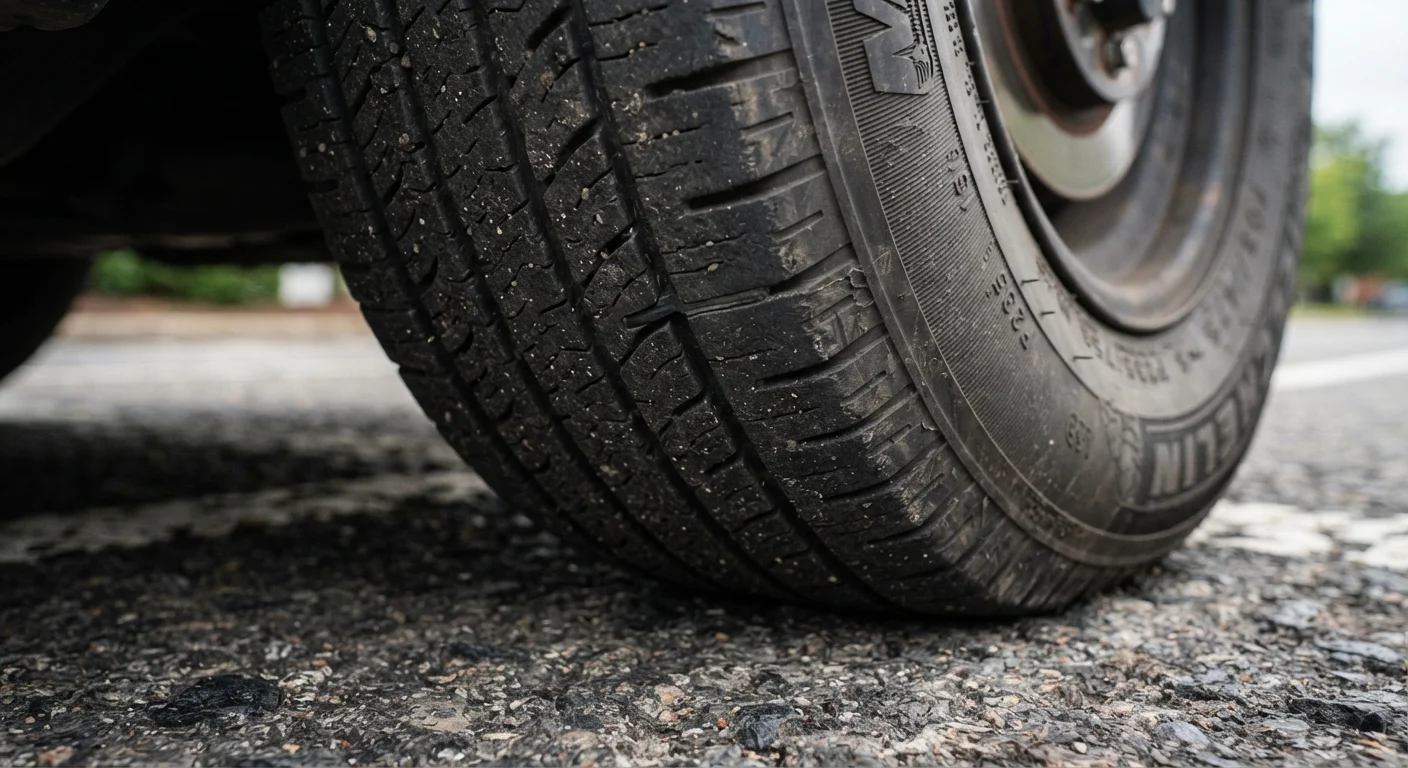
What Your Tires Are Trying to Tell You
Tires are your car's only contact with the road, yet most drivers never look at them closely. A quick visual check every month can reveal problems that aren't showing up on any dashboard — from low tire pressure to misaligned wheels. Understanding what worn tread and unusual wear patterns mean puts you in control before a minor issue becomes a breakdown or, worse, a blowout.
For context on how inflation affects tread wear and overall safety, see our guide on why tire pressure affects more than just your fuel economy.
What you will need
Tools and Materials You'll Need
Checking your tires requires almost nothing in the way of equipment. Most of what you need is likely already in your pocket or your glove compartment.
Penny or Quarter
Used to perform a quick tread depth check without any specialized equipment.
Tire Tread Depth Gauge
Provides a more precise tread depth reading in 32nds of an inch; useful for tracking wear over time.
Flashlight or Work Light
Helps illuminate sidewalls and inner tread edges that are hard to see in low light.
Tire Pressure Gauge
Confirms whether incorrect inflation is contributing to the wear pattern you observe.
Step-by-Step: Reading Tread Depth and Wear Patterns
Work through each tire in turn. Park on a flat, well-lit surface and take your time — this inspection takes only a few minutes per tire once you know what to look for.
Check Overall Tread Depth with the Penny Test
Insert a penny into a tread groove with Lincoln's head pointing down into the tire. If you can see the top of Lincoln's head, the tread depth is below 2/32 of an inch — the legal minimum in most U.S. states, and the point at which wet-road stopping distance increases significantly. For an earlier warning, use a quarter instead: if you can see the top of Washington's head, you're below 4/32 of an inch and replacement is advisable soon.
Test multiple grooves across the tire's width, not just the center — uneven readings across the width indicate a wear pattern worth investigating.
Identify Center Wear
If tread in the center of the tire is worn down more than at the edges, the tire has likely been consistently over-inflated. Excessive pressure causes the tire to contact the road primarily through its center, accelerating wear there. Check your vehicle's recommended pressure (found on the driver's door jamb sticker, not the tire sidewall) and adjust accordingly.
Identify Edge Wear (Both Shoulders)
Wear concentrated on both outer edges while the center remains relatively intact is a classic sign of chronic under-inflation. The tire bows outward under the car's weight, putting pressure on the shoulders instead of the full contact patch. Again, correcting tire pressure is the first step — but have the tires inspected if severe wear has already occurred.
Identify One-Sided (Camber) Wear
If one edge of the tire is worn significantly more than the other, this typically points to a camber issue — camber refers to the inward or outward tilt of the tire when viewed from the front of the car. Excessive camber is almost always a suspension or alignment problem. This type of wear will continue and worsen until the underlying alignment issue is corrected by a qualified mechanic.
Identify Cupping or Scalloping
Cupping — also called scalloping — produces a wavy, uneven surface across the tread, almost like scooped dips at irregular intervals. It typically indicates worn or damaged shock absorbers or struts, which allow the tire to bounce against the road rather than maintaining steady contact. You may also notice a vibration or thumping sound while driving. This pattern requires a suspension inspection, not just new tires.
Inspect the Sidewalls
Run your eyes — and carefully your hand — along each tire's sidewall. Look for cracks, bulges, cuts, or any area where the surface appears deformed. A bulge in particular signals internal structural damage, often from a hard impact with a pothole or curb. A bulging tire is at risk of sudden failure and should not be driven on.
Unusual wear patterns don't just mean you need new tires — they're diagnostic clues. Consistently acting on them can extend the life of your next set and improve your car's handling and fuel efficiency. Good driving habits that double as maintenance also play a role in how evenly your tires wear over time.
When Age Matters as Much as Tread
Even a tire that looks like it has plenty of tread may be unsafe if it's old enough. Rubber compounds degrade over time due to heat, UV exposure, and oxidation — a process called dry rot — which can cause structural failure even with adequate tread depth remaining.
Most tire manufacturers and safety organizations suggest having tires inspected by a professional once they reach six years of age, and replacing them by ten years regardless of appearance. You can find a tire's manufacture date on its sidewall: look for a four-digit code inside an oval (called the DOT code). The first two digits represent the week, the last two the year — so 2319 means the 23rd week of 2019.
Don't Rely on Looks Alone for Older Tires
A tire can appear visually acceptable while its internal structure has degraded due to age. Rubber hardens and micro-cracks develop inside the tire before they're visible on the surface. If your tires are six or more years old, have a qualified technician inspect them — even if tread depth looks fine. Never assume a tire is safe based on appearance alone.
If you notice bulges, cracks along the sidewall, or any visible cord showing through the rubber, stop driving on that tire immediately and have it assessed by a qualified tire technician. These are not cosmetic issues — they indicate structural compromise. For a broader list of symptoms worth catching early, see signs your car needs attention that aren't dashboard lights.
The content on this site is for informational purposes only and is not a substitute for professional advice. Always consult a qualified professional for guidance specific to your situation.