

Summary
22 items · 1–3 hours (plus mechanic visit)
Why This Checklist Matters
Buying a used car involves more uncertainty than buying new — and that uncertainty has a real dollar cost. A vehicle that looks great on the outside can hide a flood-damaged interior, a rolled-back odometer, or a lien that transfers to you at signing. Working through a structured checklist before you commit protects you from the most common and expensive pitfalls.
This guide walks through every stage of the process: researching the vehicle's background, evaluating its condition, confirming ownership and title status, and reviewing the purchase documents. It applies whether you're buying from a private seller or a dealership.
Keep in mind that the purchase price is only part of what you'll spend. Registration fees, insurance premiums, and maintenance costs add up quickly — see our article on ownership costs that catch new car buyers off guard for a fuller picture of what to budget for after you drive away.
Vehicle History Research
Title and Ownership Status
Exterior and Interior Condition
Mechanical Inspection
Paperwork and Final Review
Tools You'll Need
Having the right resources on hand makes the process faster and more reliable. Some of these are free; others involve a modest fee that's well worth it given the size of the purchase.
VIN History Report Service
Used to pull a comprehensive background report on the vehicle, including accident history, title events, and odometer readings.
NHTSA Recall Lookup (nhtsa.gov)
Free government tool to check whether the vehicle has any open safety recalls that haven't been repaired.
Independent ASE-Certified Mechanic
Performs a pre-purchase inspection to identify mechanical issues not visible to the untrained eye.
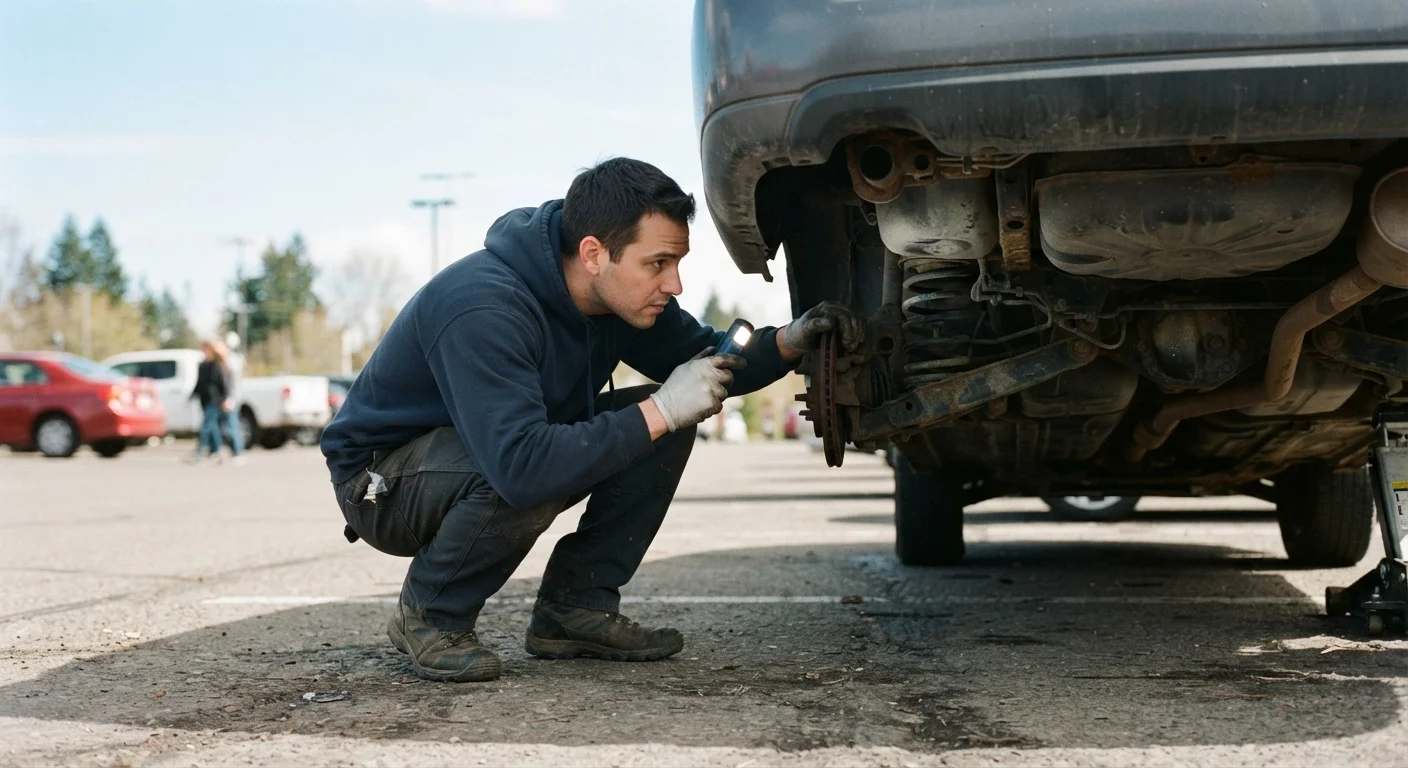
Flashlight or Inspection Light
Helps you see clearly under the vehicle and inside the engine bay during your visual inspection.
Smartphone with Camera
Document the vehicle's condition before purchase with dated photos in case disputes arise later.
OBD-II Diagnostic Scanner
Reads the vehicle's onboard diagnostic codes to flag any stored fault codes — a borrowed or inexpensive scanner works for this purpose.
After You've Agreed on a Price
Once you and the seller reach an agreement, the paperwork phase begins — and it deserves just as much attention as the mechanical inspection. Confirm that the name on the title matches the seller's government-issued ID exactly. Any discrepancy can create complications when you go to transfer ownership.
Never Pay Before the Title Is Verified
Do not hand over any funds — deposit or full payment — until you have personally reviewed a clear, original title in the seller's name. Paying for a vehicle with a lien, a title in someone else's name, or a salvage title you weren't aware of can result in losing both the car and your money. If something about the title situation feels off, walk away.
After the sale is complete, you'll need to handle title transfer, registration, and potentially a safety or emissions inspection depending on your state. Our walkthrough of registering a newly purchased car covers exactly what that process involves, state by state.
Once you own the car, staying on top of routine upkeep keeps it reliable and preserves its value. Our car maintenance hub is a practical starting point for understanding service intervals and what to prioritize.
This article is for general informational purposes only. It does not constitute legal, financial, or professional mechanical advice. Consult a licensed mechanic, attorney, or qualified professional for guidance specific to your situation.
The content on this site is for informational purposes only and is not a substitute for professional advice. Always consult a qualified professional for guidance specific to your situation.