

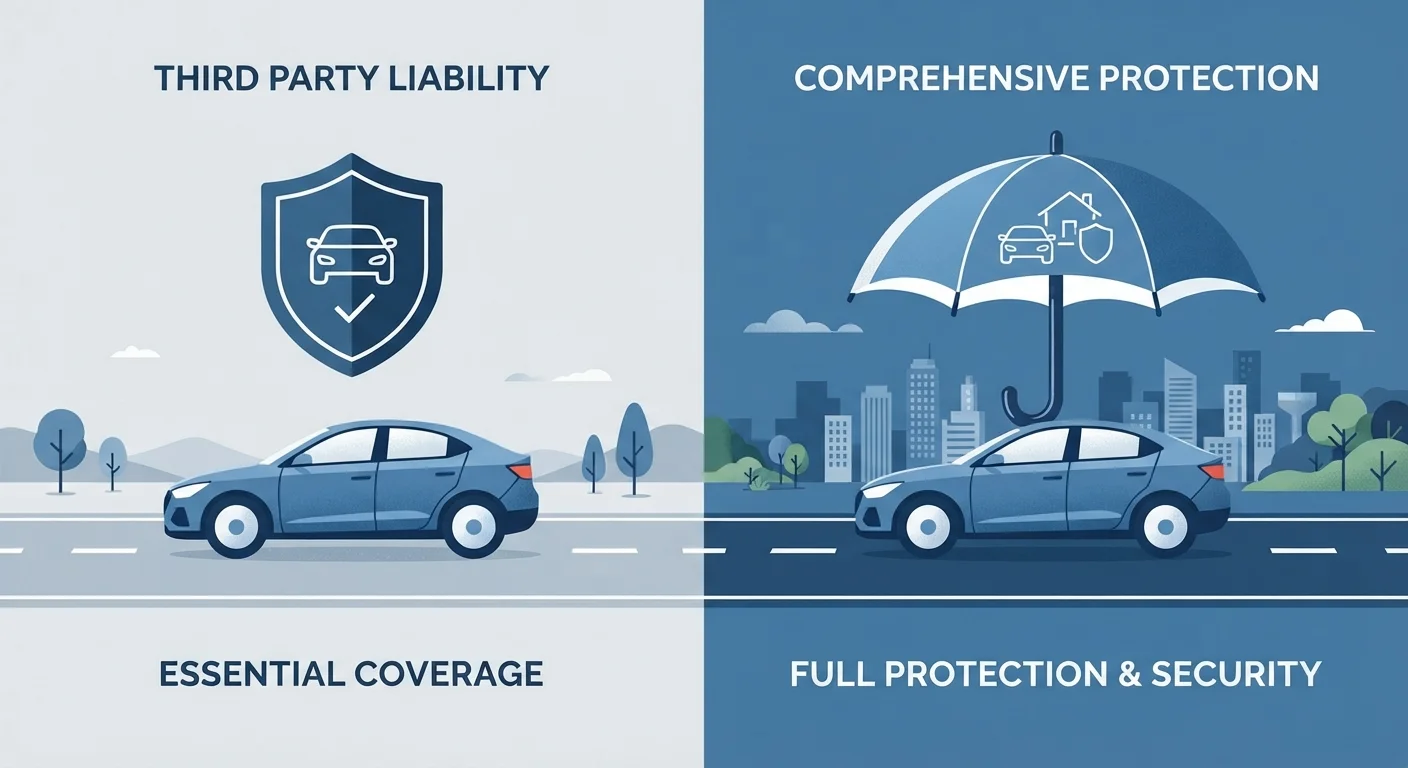
Option A
Liability-Only Coverage
The legal minimum that protects others, not your car.
Best for: Drivers of older, lower-value vehicles who can absorb out-of-pocket repair or replacement costs.
Option B
Full Coverage
Broader protection that covers your own vehicle too.
Best for: Drivers of newer or financed vehicles who need protection against collision, theft, and weather damage.
What Each Type of Coverage Actually Does
Auto insurance terminology can be misleading. The phrase "full coverage" isn't a formal insurance industry term — it's a shorthand that most people use to mean a policy combining three core components: liability, collision, and comprehensive coverage.
Liability-only coverage is exactly what it sounds like. If you cause an accident, it pays for the other party's vehicle repairs, medical bills, and related costs — up to your policy limits. It does not pay for damage to your own car or your own injuries. Every state requires drivers to carry at least a minimum level of liability insurance, though those minimums vary considerably by state.
Full coverage adds two additional layers on top of liability:
- Collision coverage pays to repair or replace your vehicle after an accident, regardless of who was at fault.
- Comprehensive coverage handles non-collision events — theft, vandalism, falling objects, fire, floods, and animal strikes.
Many full-coverage policies also include uninsured/underinsured motorist protection and medical payments coverage, though these are sometimes purchased separately. To fully understand what your current policy includes, it helps to read your declarations page carefully — it spells out exactly which coverages are active and at what limits.
| Criterion | Liability-Only | Full Coverage |
|---|---|---|
| Covers damage you cause to others | Yes | Yes |
| Covers your own vehicle in a collision | No | Yes (collision coverage) |
| Covers theft or weather damage to your car | No | Yes (comprehensive coverage) |
| Required by state law | Yes (minimum liability) | Not by states, but by lenders |
| Required for financed/leased vehicles | No — violates loan terms | Yes |
| Typical monthly cost | Lower | Higher |
| Best suited for | Older, low-value, paid-off cars | Newer, higher-value, or financed cars |
How to Decide Which Makes Sense for You
The central question isn't which coverage is "better" — it's which one matches your vehicle's value and your financial situation.
A commonly cited rule of thumb in personal finance circles suggests reconsidering collision and comprehensive coverage when annual premiums for those components approach or exceed 10% of your car's actual cash value (ACV). The ACV is what your insurer would pay if your car were totaled — depreciation included, not what you originally paid.
~$685
Average annual cost of full coverage vs. liability-only
According to industry analyses, full coverage policies tend to cost several hundred dollars more per year than liability-only, with the gap varying significantly by state and driver profile.
1 in 8
Drivers on U.S. roads are uninsured
The Insurance Research Council has estimated that roughly one in eight drivers operates without any auto insurance, underscoring the value of uninsured motorist coverage in a full coverage policy.
For newer vehicles, the math almost always favors full coverage. A car worth $25,000 that's totaled without collision coverage leaves you with nothing from your insurer. For a 15-year-old car worth $3,000, paying $600 or more per year in collision and comprehensive premiums starts to look questionable.
If your car is financed or leased, the decision is made for you. Lenders require full coverage because the vehicle serves as collateral on your loan. Dropping to liability-only while still making payments would violate your financing agreement and could trigger force-placed insurance — a lender-selected policy that tends to be more expensive and less favorable.
Auto insurance premiums are influenced by far more than just coverage type. How premiums are calculated involves your driving record, location, credit history in most states, and vehicle characteristics. Understanding those factors can help you make coverage decisions more confidently.
It's also worth framing insurance as one piece of the broader cost of owning a vehicle. Fixed versus variable car ownership costs — insurance falls into the fixed category, which means it affects your budget every month regardless of how much you drive.
This article provides general information about auto insurance concepts and is not a substitute for personalized advice from a licensed insurance professional. Coverage requirements, terms, and availability vary by state and individual policy. Consult a licensed agent or broker to evaluate options suited to your specific situation.
The content on this site is for informational purposes only and is not a substitute for professional advice. Always consult a qualified professional for guidance specific to your situation.