

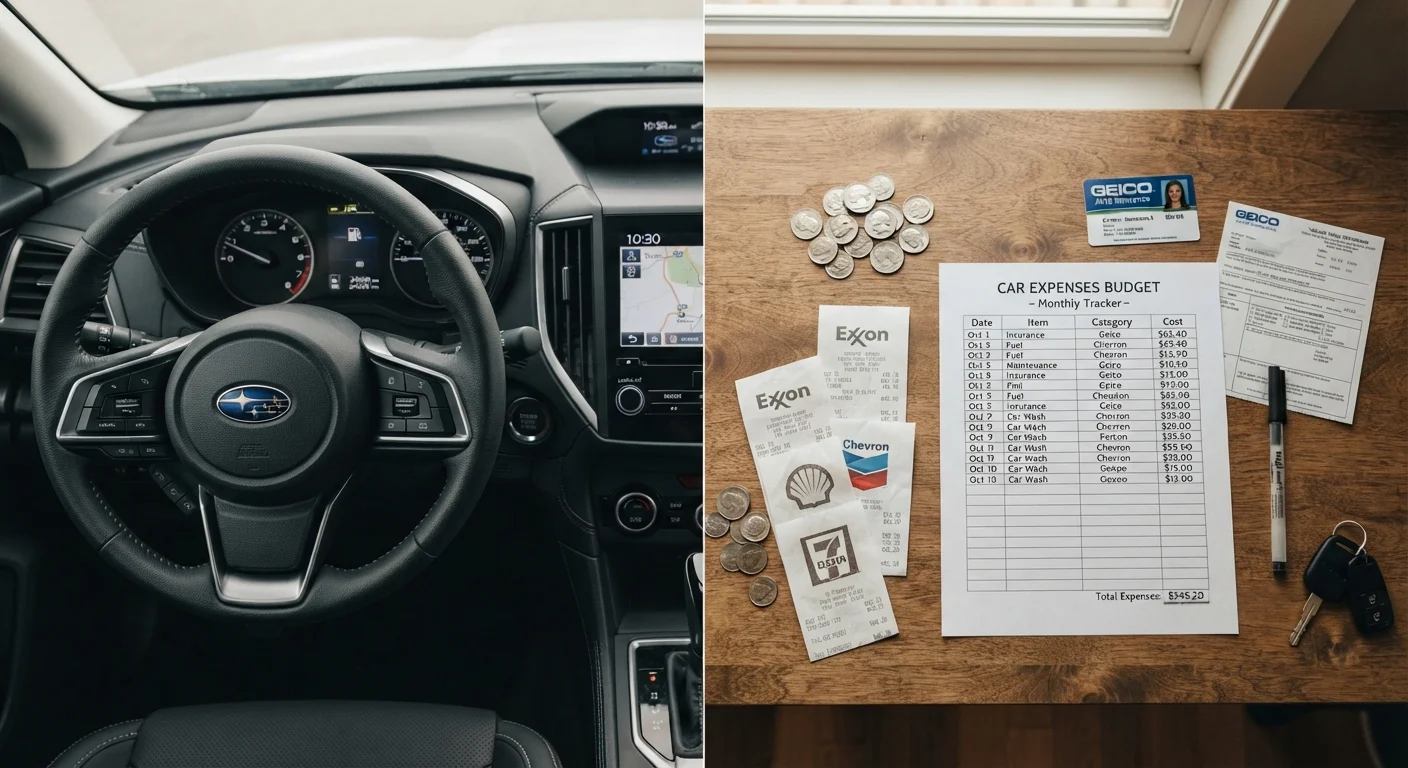
Option A
Fixed Car Ownership Costs
The predictable, non-negotiable expenses baked into ownership.
Best for: Drivers who want a clear baseline budget they can plan around each month.
Option B
Variable Car Ownership Costs
The fluctuating expenses tied to how, how much, and where you drive.
Best for: Drivers who want to understand where spending flexibility—and risk—actually lives.
What Makes a Car Cost 'Fixed' or 'Variable'?
When budgeting for a vehicle, not all expenses behave the same way. Fixed costs are expenses you owe on a regular, predetermined schedule regardless of whether you drive the car at all. Variable costs rise and fall based on your actual use — how far you drive, road conditions, how well you maintain the vehicle, and even local fuel prices.
The distinction matters because it changes how you plan. Fixed costs let you set a firm monthly floor. Variable costs require an estimate based on your driving habits, and that estimate can drift significantly from month to month. Most drivers who feel blindsided by car expenses have conflated the two — or failed to account for variable costs at all. For a full picture of every dollar car ownership can demand, see our breakdown of the true annual cost of owning a car.
| Criterion | Fixed Costs | Variable Costs |
|---|---|---|
| Examples | Loan/lease payment, insurance, registration, depreciation | Fuel, maintenance, tires, repairs, parking fees |
| Changes with mileage? | No — consistent regardless of use | Yes — higher mileage increases most variable costs |
| Predictability | High — known in advance | Moderate to low — fluctuates with habits and events |
| Driver control | Limited once committed (locked in at signing) | Meaningful — driving behavior and maintenance choices matter |
| Budget approach | Set as a firm monthly floor | Estimate conservatively; build a buffer for spikes |
| Grows with vehicle age? | Partially (loan ends; depreciation slows over time) | Generally yes — older vehicles need more repairs |
Fixed Costs: Your Baseline Financial Commitment
Fixed car costs are obligations that exist the moment you own or lease a vehicle. The most significant is typically your loan or lease payment, which is set at the time of signing and doesn't change month to month. Understanding how that payment is structured matters — see how financing, leasing, and paying cash each work differently.
Auto insurance premiums are also effectively fixed within a policy period, though they can be adjusted at renewal. Your coverage level significantly affects this number — liability-only vs. full coverage insurance is a real cost decision, not just a paperwork one.
Depreciation — the loss in a vehicle's market value over time — is often the largest single fixed cost, but most drivers never see it as a line item. It happens whether you park the car or drive it daily. Understanding how depreciation works helps explain why a car's sticker price is rarely its true cost. Annual registration fees and any applicable property taxes round out the fixed picture.
$12,000+
Average annual car ownership cost in the U.S.
AAA's annual Your Driving Costs study consistently finds total ownership expenses exceed $10,000–$12,000 per year for a typical new vehicle when all costs are included.
~50%
Share of ownership costs that are variable
Fuel, maintenance, and tires alone typically represent roughly half of lifetime vehicle operating costs, according to transportation research estimates.
20–30%
New car value lost in the first year
Industry data suggests most new vehicles depreciate by roughly 20–30% in their first year of ownership, making depreciation the largest single fixed cost for new car buyers.
Variable Costs: Where Your Habits Drive the Bill
Variable costs are directly linked to how you use your vehicle. Fuel is the most obvious — it scales directly with miles driven and fluctuates with local pump prices. A longer commute, a heavier vehicle, or aggressive driving habits all push fuel costs upward.
Routine maintenance — oil changes, fluid top-offs, filter replacements, and brake inspections — occurs on mileage-based or time-based intervals, so higher use accelerates these expenses. Skipping scheduled maintenance to save money short-term frequently leads to larger repair bills later, making it one of the areas where driver choices matter most. First-time owners often underestimate this category; these are the costs that most commonly catch buyers off guard.
Tires wear faster under heavier mileage, in extreme temperatures, and with poor inflation habits — all controllable variables. Unplanned repairs are the wild card in this category. Older vehicles carry higher repair exposure, making an emergency fund a practical part of any car budget. Good budgeting basics suggest reserving a monthly amount specifically for irregular vehicle expenses rather than treating every repair as a surprise.
The Repair Fund Rule of Thumb
A common personal finance guideline suggests setting aside 1–2% of a vehicle's current value per year as a repair and maintenance reserve — separate from budgeted routine costs like oil changes. This buffer helps absorb unexpected repairs without derailing your broader budget. The older and higher-mileage the vehicle, the more important this reserve becomes. For strategies on building that kind of savings buffer, the Saving & Debt hub covers practical approaches.
Building a Budget That Accounts for Both
A realistic vehicle budget lists fixed costs first — these are known and non-negotiable. Then layer in a conservative estimate for variable costs based on your typical monthly mileage and the vehicle's age and condition. Many financial guides suggest budgeting a separate monthly buffer for maintenance and repairs, distinct from routine fuel spending.
One useful exercise: total your fixed costs annually, then divide by 12 to find your true monthly baseline. Add your average variable costs on top. The result is usually meaningfully higher than your loan payment alone — which is precisely why so many drivers feel stretched after buying a car they thought they could comfortably afford. For a more complete walk-through of every financial phase of ownership, this financial overview covers the full arc from purchase to sale.
Understanding both cost types also informs smarter trade-off decisions — whether to repair an aging vehicle or replace it, whether to reduce coverage levels on a lower-value car, or how much driving reduction would meaningfully lower your monthly spend. These are the kinds of decisions where clarity about fixed vs. variable costs pays off directly.
The content on this site is for informational purposes only and is not a substitute for professional advice. Always consult a qualified professional for guidance specific to your situation.