

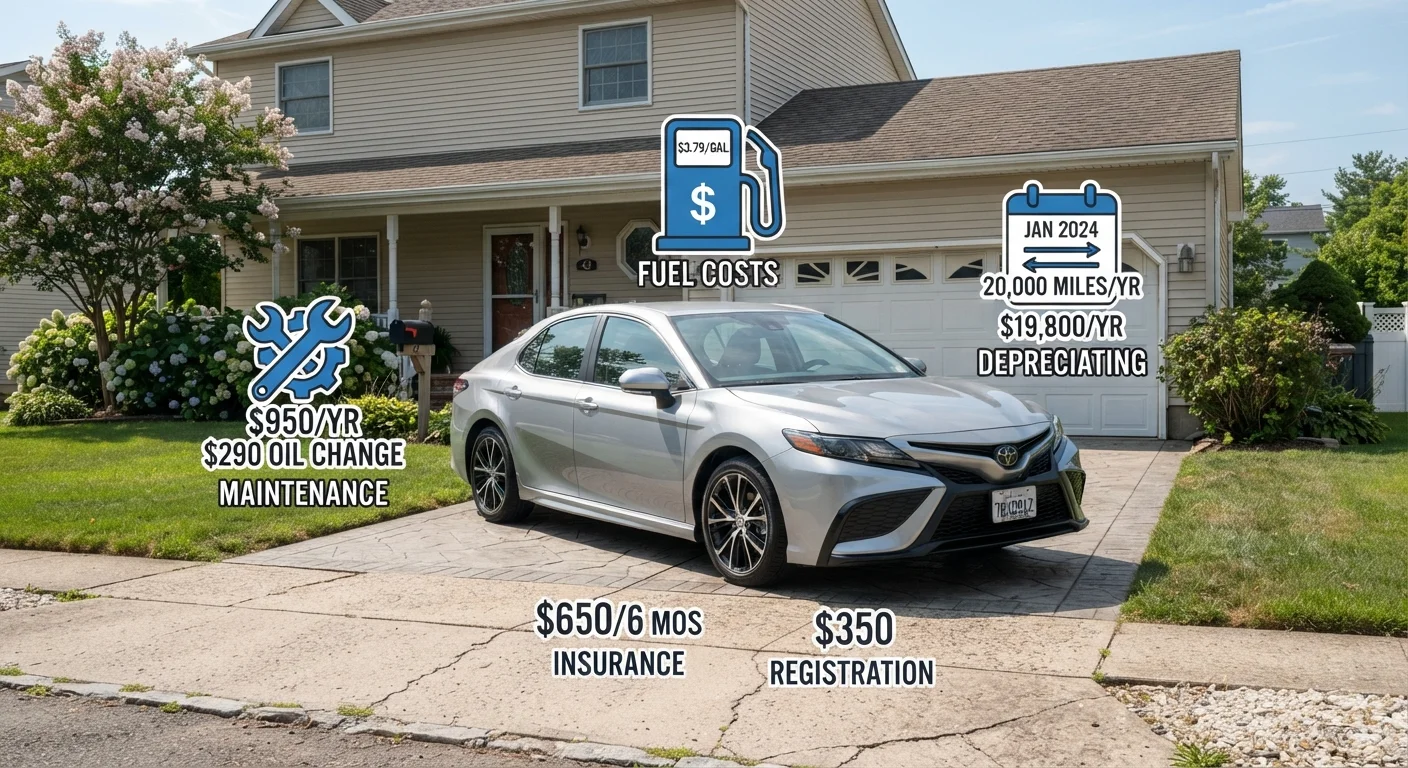
Why the Car Payment Is Just One Piece
When most people think about what a car costs, they picture the monthly payment. But that figure captures only a fraction of what you'll actually spend. A driver making a $450 monthly payment is spending $5,400 per year — yet the full annual cost of owning that vehicle is typically two to three times that amount once every expense is counted.
Understanding the complete picture matters before you buy, while you own, and when you decide to sell. It also shapes smarter decisions about how much vehicle you can truly afford. For a comprehensive look at every financial stage of ownership, see our complete financial overview of car ownership.
$12,182
Average annual cost to own a new vehicle
According to AAA's annual 'Your Driving Costs' study, average ownership and operating costs for a new vehicle have surpassed $12,000 per year in recent years.
~47%
Share of ownership cost attributed to depreciation
Industry analyses consistently find that depreciation accounts for the largest single portion of total vehicle ownership cost over the first five years.
15,000
Average miles driven annually by U.S. drivers
The Federal Highway Administration reports that Americans average approximately 15,000 miles per year, a benchmark used widely in cost-per-mile calculations.
The Six Major Cost Categories
1. Depreciation
Depreciation is the decline in your vehicle's market value over time, and it's typically the single largest annual expense. A new car can lose roughly 15–20% of its value in the first year alone. Even used vehicles depreciate, though at a slower rate. This cost is invisible day-to-day but becomes very real when you sell or trade in.
2. Insurance
Auto insurance is legally required in nearly every U.S. state. Annual premiums vary widely based on your location, driving history, vehicle type, and coverage level. Full coverage on a newer vehicle commonly runs $1,500–$2,500 per year nationally, though rates in urban areas or for younger drivers can exceed that significantly.
3. Fuel
Fuel costs depend on your vehicle's miles-per-gallon rating, how much you drive annually, and local gas prices. A driver logging 15,000 miles per year in a vehicle averaging 25 MPG at $3.50 per gallon spends roughly $2,100 on fuel annually — a number that shifts noticeably with gas price swings.
4. Maintenance and Repairs
Routine upkeep — oil changes, tire rotations, air filters, brake pads — is predictable and manageable. Unexpected repairs are not. Visit our car maintenance hub for guidance on keeping a vehicle in reliable shape. Annual maintenance and repair costs typically range from several hundred dollars for a well-maintained newer car to over $1,000 for older vehicles.
5. Financing Costs
If you carry an auto loan, the interest paid over the loan's life is a real cost of ownership. On a $30,000 loan at 6% interest over five years, a borrower pays roughly $4,800 in interest total — about $960 per year. A larger loan or higher rate increases this substantially.
6. Registration, Taxes, and Fees
Annual registration fees, state and local taxes, and inspection costs vary by state but typically add $200–$700 per year. Some states base registration fees on vehicle value, making this cost higher in the early years of ownership.
Track Every Car Expense for One Year
Many drivers are surprised when they tally their actual annual spending on their vehicle. Keeping a simple log — or using a budgeting app — that captures every fuel fill-up, insurance bill, repair, and registration fee gives you an accurate baseline. With that data, you can identify where to cut costs and plan more confidently for future vehicle purchases.
Fixed vs. Variable: Why the Distinction Matters
Not all car costs behave the same way. Some are fixed — they arrive on a schedule and stay relatively stable month to month. Others are variable, fluctuating with how much you drive, how your vehicle ages, and what breaks. Loan payments, insurance premiums, and registration fees fall into the fixed category. Fuel, tires, and repair bills are variable.
Knowing which costs are predictable and which can spike unexpectedly allows for more realistic budgeting. For a deeper breakdown of this distinction, see our driver's financial map of fixed vs. variable costs.
“The most dangerous number in car buying is the monthly payment. It narrows your focus to one variable while obscuring the true total cost of the decision.”
— Consumer Financial Protection Bureau, U.S. government agency providing consumer financial education and guidance
Costs That Catch Owners Off Guard
Even financially prepared drivers are sometimes blindsided by certain expenses. Tires, for instance, are a significant cost — a full set of replacement tires can run $400–$1,000 or more depending on the vehicle. Parking, tolls, and car washes add up quietly over a year. And for owners who don't set aside money for eventual repairs, a single unexpected breakdown can create a genuine financial strain.
Ownership costs that surprise new buyers are well-documented — and many of them apply equally to experienced owners who've stopped actively tracking what they spend. Awareness is the first step toward control.
This article is for general informational purposes only and does not constitute financial or legal advice. Consult a qualified financial professional for guidance tailored to your personal situation.
Frequently Asked Questions
Industry estimates from AAA consistently put the average annual cost of owning and operating a new vehicle above $10,000 per year. That figure covers depreciation, insurance, fuel, maintenance, financing costs, and registration fees. Actual costs vary widely depending on the vehicle type, location, and how much you drive.
Yes — depreciation represents real money lost whether you finance, lease, or own outright. A vehicle that loses $3,000 in value during a year is costing you that amount even if you never open your wallet. It matters most when you eventually sell or trade in the vehicle.
Choosing a vehicle with a strong resale value slows depreciation losses. Maintaining your car on schedule reduces costly repairs. Shopping around for insurance annually can prevent overpaying. Driving habits like avoiding hard braking also extend tire and brake life.
Eliminating a loan payment removes the financing cost, but all other expenses remain — insurance, fuel, maintenance, registration, and depreciation. Older paid-off vehicles often have lower insurance premiums but may carry higher maintenance bills as components age.
EVs typically have lower fuel and routine maintenance costs since they have fewer moving parts and don't require oil changes. However, purchase prices and insurance premiums can be higher, and depreciation varies by model. Total cost of ownership depends heavily on local electricity rates and available incentives.
Fixed costs — like registration, loan payments, and comprehensive insurance — stay roughly the same each month regardless of how much you drive. Variable costs — like fuel, tires, and repairs — fluctuate based on mileage and vehicle condition. Understanding the difference helps you build a more realistic annual budget.
The content on this site is for informational purposes only and is not a substitute for professional advice. Always consult a qualified professional for guidance specific to your situation.