

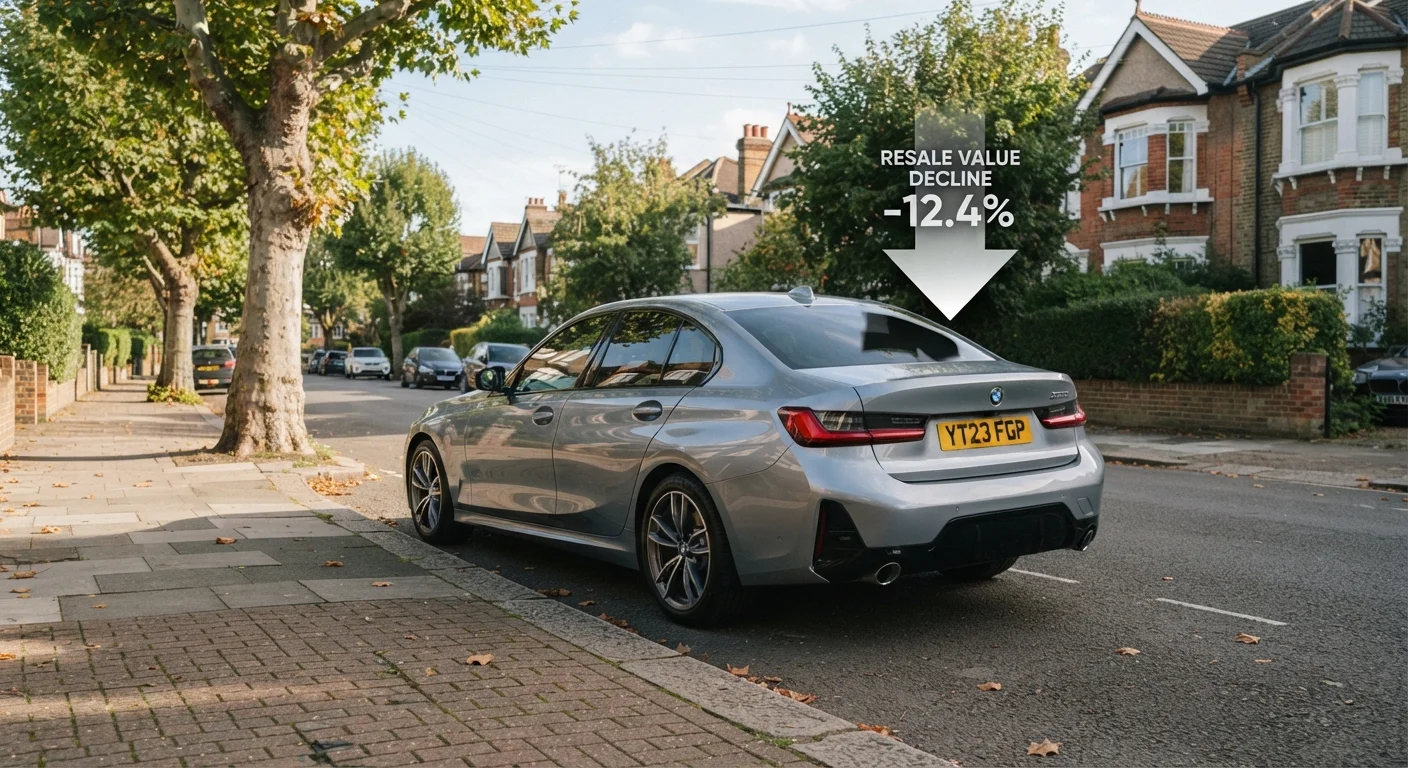
Why Depreciation Is the Cost Most Buyers Ignore
When most people buy a car, they focus on the sticker price, the monthly payment, and maybe fuel costs. Depreciation — the steady loss of the vehicle's value — rarely enters the conversation. Yet according to data from automotive research organizations, depreciation accounts for roughly a third or more of the total cost of owning a new car over five years.
That makes it the dominant financial force in car ownership, and understanding it changes how you think about every vehicle-related decision you make. See how it fits into the broader picture in our breakdown of the true annual cost of owning a car.
15–25%
Value lost in a new car's first year
Industry estimates from automotive research organizations consistently show new vehicles lose the most value in year one.
40–60%
Typical value loss over five years
Most new passenger vehicles depreciate to roughly half their original purchase price within five years, depending on model, condition, and market demand.
~⅓
Share of ownership cost attributable to depreciation
Automotive cost analyses frequently identify depreciation as the single largest component of total five-year ownership cost for new vehicles.
How Depreciation Actually Works
Depreciation is not linear — it accelerates early and slows over time. A new vehicle typically loses the most value in its first year, often somewhere between 15% and 25% of its purchase price. By the end of year five, many vehicles have shed 40% to 60% of what was paid for them.
The mechanics are straightforward: a car's market value is determined by what a willing buyer would pay for it at any given moment. As time passes, miles accumulate, newer models arrive, and wear occurs — all of which reduce that figure. The gap between what you paid and what you could sell for today is your depreciation loss to date.
Think in Terms of Cost Per Mile
Dividing your total depreciation loss by the miles you drove gives a per-mile depreciation cost — a useful way to compare the real expense of different vehicles. A vehicle that holds its value well and is driven many miles spreads its depreciation more efficiently than one that loses value quickly and sits in a driveway.
What Drives Depreciation Faster — or Slower
Several factors influence how quickly a vehicle loses value:
- Mileage: Higher mileage signals more wear and reduces resale appeal. Vehicles driven significantly above average annual mileage (typically estimated around 12,000–15,000 miles per year in the U.S.) depreciate faster.
- Brand and model reputation: Vehicles from manufacturers with strong reliability records tend to hold value better because buyer demand remains higher over time.
- Condition: Accident history, cosmetic damage, and deferred maintenance all accelerate value loss.
- Market demand: Supply and demand dynamics matter. A vehicle type that's suddenly popular — or suddenly out of fashion — will depreciate differently than historical patterns might suggest.
- Fuel type and efficiency: As fuel prices shift or new technologies emerge, the desirability of certain powertrains can change, affecting resale values.
These variables mean two identical vehicles driven differently can have meaningfully different resale values after a few years.
Depreciation and the New vs. Used Decision
One of the most practical implications of understanding depreciation is reconsidering the appeal of buying new. When you purchase a brand-new vehicle, you absorb the steepest part of the depreciation curve. A buyer who purchases a two- or three-year-old vehicle lets the first owner absorb that early loss.
This doesn't mean buying new is always the wrong choice — new vehicles come with warranties, the latest safety technology, and no unknown ownership history. But it means the financial trade-off should be understood clearly before you decide. Our comparison of financing, leasing, and paying cash explores how each approach interacts with depreciation differently.
Making Depreciation Work in Your Favor
You can't stop depreciation, but you can manage your exposure to it. A few practical considerations:
- Keep the vehicle longer: The longer you own a car in good working condition, the more years of utility you extract from its initial depreciation hit — improving your cost-per-mile over time.
- Maintain it well: Regular maintenance and a clean vehicle history help preserve resale value. A car with complete service records commands more on the resale market.
- Consider resale markets before buying: Researching how specific vehicles hold their value over three to five years is a reasonable part of any purchase decision.
- Watch for "gap" situations: If you finance a new car and it depreciates faster than you pay down your loan, you can end up "underwater" — owing more than the car is worth. This is a real financial risk worth anticipating.
For a complete picture of how depreciation interacts with all the other costs of ownership, see our full financial overview of car ownership from purchase to sale. And if you're a newer car owner, these are the costs that most frequently catch first-time owners off guard.
Frequently Asked Questions
A new car commonly loses several thousand dollars in value the moment it's driven off the dealership lot. This happens because the vehicle transitions from 'new' to 'used' status instantly, which significantly reduces what a buyer would pay for it on the open market.
No — used cars generally depreciate more slowly than new ones. The steepest depreciation typically occurs in the first one to three years. Buying a vehicle that's already absorbed that initial loss can reduce your total depreciation cost over your period of ownership.
Vehicles with strong reliability reputations, high consumer demand, and limited supply tend to retain value better. Trucks, SUVs, and certain well-regarded nameplates historically hold value better than many sedans, though market conditions vary and past trends are not guarantees.
Depreciation affects your total cost of ownership regardless of how long you keep a vehicle. However, the longer you keep a car, the more you spread that sunk cost across years of use — which can improve the overall financial picture if maintenance costs remain manageable.
Lease payments are largely based on the expected depreciation of the vehicle over the lease term. You're essentially paying for the value the car loses during the time you drive it, which is why vehicles that hold their value well often have lower lease payments relative to their price.
A rough estimate: subtract your car's current market value from what you originally paid, then divide by the number of years you've owned it. This gives you an average annual depreciation cost. Automotive research resources can help you look up estimated current market values for your specific vehicle.
The content on this site is for informational purposes only and is not a substitute for professional advice. Always consult a qualified professional for guidance specific to your situation.