

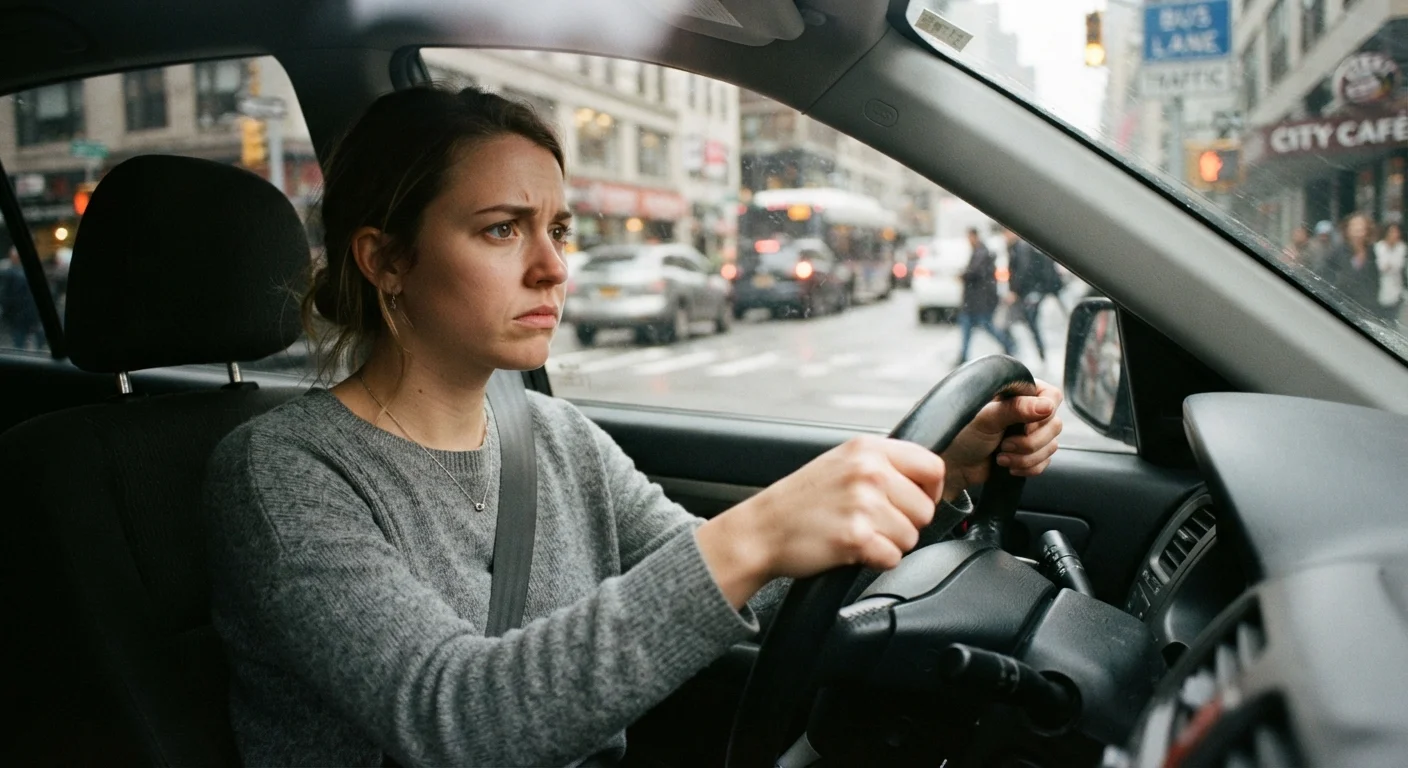
Why the First Year Is the Riskiest
Getting a license marks the start of independent driving — but it doesn't mean a driver is ready for every scenario the road presents. The first year is consistently the most dangerous period for new drivers, not because they're reckless by nature, but because experience gaps and overconfidence often appear at the same time.
During supervised practice, new drivers tend to perform well in controlled conditions. On their own, they encounter unfamiliar intersections, highway merges, night driving, and bad weather — often for the first time without a coach in the passenger seat. The mistakes that follow aren't random. They're predictable.
Identifying these patterns early — before they calcify into habit — is the most effective intervention available. Safe driving habits worth building from the start offers a practical framework for what to reinforce alongside avoiding what's covered here.
New Drivers Face Disproportionate Crash Risk
According to the CDC, motor vehicle crashes are a leading cause of death among teenagers in the United States, and drivers aged 16–19 are nearly three times more likely to be in a fatal crash than drivers aged 20 and older. This risk is highest in the first months of independent driving. Recognizing and correcting early mistakes is one of the most effective ways to reduce this risk.
The Most Common Mistakes New Drivers Make
The errors below appear consistently across crash data, driving instructors' feedback, and insurance records. Most stem from attention gaps, incomplete mental models of traffic rules, or underestimating physical forces involved in driving at speed.
Following too closely behind the vehicle ahead.
Why it happens: New drivers tend to focus heavily on what's directly in front of them and underestimate stopping distances at speed. The instinct is to stay close to seem like a confident driver.
Not checking mirrors and blind spots before changing lanes or merging.
Why it happens: Early drivers are cognitively overloaded — managing speed, steering, signs, and traffic simultaneously — so mirror checks get dropped when attention is stretched.
Using a phone — even hands-free — in ways that divide attention.
Why it happens: New drivers often underestimate cognitive distraction. They've grown up with constant connectivity and may believe that a hands-free call or a quick glance is safe.
Misunderstanding right-of-way rules at intersections and during merging.
Why it happens: Driver's ed covers these rules briefly, but new drivers rarely encounter every scenario during supervised practice. Ambiguous situations — four-way stops, zipper merges, uncontrolled intersections — create real confusion.
Driving too fast for conditions — especially at night or in rain.
Why it happens: Posted speed limits reflect ideal conditions. New drivers often treat the speed limit as a target rather than a ceiling, not yet understanding how wet pavement or darkness extends stopping distances significantly.
Underestimating the full cost of car ownership in the first year.
Why it happens: Many new drivers focus only on the car payment or gas costs and are blindsided by insurance, maintenance, registration, and unexpected repairs.
Habits Form Faster Than You Think
Research consistently shows that behavioral patterns behind the wheel tend to solidify within the first year of driving. A shortcut taken repeatedly — skipping mirror checks, rolling through stop signs, holding a phone — quickly becomes automatic. Catching and replacing these patterns early is far easier than breaking them later.
Correcting even two or three of these significantly changes a new driver's risk profile. The goal isn't perfection — it's deliberate awareness before automatic habits take over.
Building Safer Patterns Before Bad Ones Stick
The encouraging reality is that all of these mistakes are correctable. Unlike more complex skill deficits, they mostly require awareness, a reliable routine, and a willingness to slow down — mentally and physically — in the early months.
A few practical strategies help:
- Debrief after every drive. Spend 60 seconds thinking through any moment that felt uncertain. Did you hesitate at a merge? Miss a mirror check? Naming it once makes it less likely to happen again.
- Drive in unfamiliar conditions intentionally. Night driving, rain, and highways are where new drivers are least prepared. Seek those conditions out early, ideally with an experienced passenger, before encountering them alone.
- Treat every distraction as a real cost. The temptation to glance at a phone feels low-stakes until it isn't. Treating it as a non-negotiable rule — not a judgment call — removes the decision entirely.
The first year behind the wheel is the window when driving identity forms. What gets practiced becomes permanent. The drivers who navigate it most safely aren't necessarily the most talented — they're the ones who take the learning seriously before they stop thinking of themselves as new.
3x
Crash risk for drivers aged 16–19 vs. older drivers
According to the CDC, teen drivers are nearly three times more likely to be involved in a fatal crash than drivers aged 20 and over.
~50%
Of teen crashes involve driver distraction
The AAA Foundation for Traffic Safety has estimated that distraction is a factor in roughly half of teen driver crashes captured on in-vehicle cameras.
The content on this site is for informational purposes only and is not a substitute for professional advice. Always consult a qualified professional for guidance specific to your situation.