

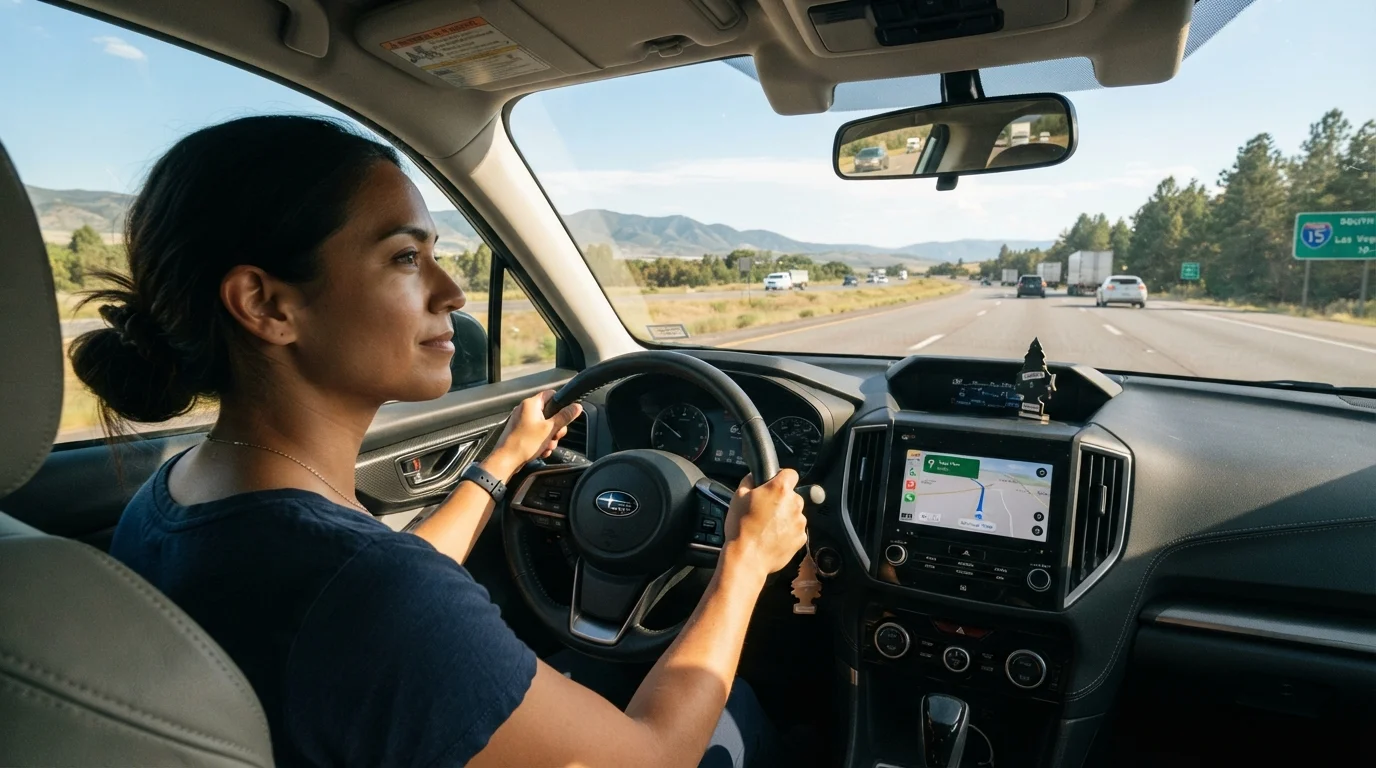
Why Habits Matter More Than Reactions
Most collisions aren't caused by drivers who lack skill — they're caused by drivers who weren't paying attention, following too closely, or operating on autopilot. The difference between a cautious driver and a reactive one usually comes down to a handful of consistent behaviors practiced long enough to become automatic.
Whether you've held a license for two months or twenty years, there's real value in auditing your habits. Defensive driving isn't about paranoia — it's about giving yourself enough time and space to respond when something unexpected happens. The habits below are practical, learnable, and effective regardless of your experience level.
Habits Form Faster With Intentional Practice
Research on habit formation suggests that deliberate, repeated practice accelerates the point at which a behavior becomes automatic. For driving, this means consciously narrating your actions early on — 'checking mirrors, signaling, shoulder check' — until the sequence requires no conscious effort. A few weeks of deliberate practice can make safe habits feel effortless.
Habits Worth Building — and Keeping
Maintain a consistent following distance
The three-second rule is one of the most effective and straightforward habits in driving safety. Choose a fixed landmark ahead — a sign, overpass, or shadow — and count the seconds from when the vehicle in front passes it to when you do. If you reach three full seconds, your spacing is adequate in normal conditions. In rain, fog, or heavy traffic, extend that buffer to four or five seconds.
Tailgating is among the most common driver errors and significantly reduces your reaction window. Even at moderate speeds, closing that gap by a car length can mean the difference between a near-miss and a collision.
Three seconds of following distance is the minimum — extend it whenever conditions aren't ideal.
Scan ahead, not just in front
Novice drivers tend to focus on the vehicle directly ahead. Experienced safe drivers look further — scanning 12 to 15 seconds down the road to read traffic flow, spot hazards, and anticipate slowdowns before they become emergencies. This forward scanning gives you time to ease off the accelerator gradually rather than brake hard.
Use peripheral vision actively and check your mirrors every 5 to 8 seconds. Situational awareness isn't passive — it requires deliberate, repeated scanning of your full environment.
Looking further ahead gives you time to respond gradually rather than react abruptly.
Eliminate distraction before you move
Distraction-related crashes remain a persistent problem on U.S. roads. The most effective approach isn't willpower in the moment — it's preparation before departure. Set your navigation, adjust your mirrors, and connect your phone to hands-free mode before shifting out of park. If you need to respond to a message, pull over safely.
Manual, visual, and cognitive distractions each impair driving, and they compound. A phone in hand checks all three boxes simultaneously. Forming a habit of addressing potential distractions at the start protects you throughout the trip. See what new drivers commonly get wrong — distraction management is consistently on that list.
Managing distraction before you move is far more reliable than resisting it while driving.
Signal early and brake gradually
Turn signals are a communication tool, not an afterthought. Signaling well in advance — before you begin the lane change or turn, not during it — gives other drivers time to adjust. This is especially important at highway speeds, where a car can travel hundreds of feet in just a couple of seconds.
Similarly, gradual braking rather than hard stops reduces rear-end collision risk and signals your deceleration clearly to drivers behind you. Smooth inputs are also gentler on brake components and tires, making this one of those habits that pays off mechanically as well.
Signaling and braking early communicate your intentions clearly — reactive drivers do neither.
Manage your speed relative to conditions
Posted speed limits represent maximum legal speeds under ideal conditions — not targets to meet in rain, construction zones, or low-visibility situations. Adjusting your speed to reflect actual road and weather conditions is a foundational safe driving principle that experienced drivers apply intuitively.
Speed also affects stopping distance dramatically. At 60 mph, a typical passenger vehicle requires roughly 240 to 300 feet to stop fully under dry conditions — that's longer than a football field. In wet or icy conditions, that distance increases substantially. Understanding your vehicle's limits — not just the posted limit — is what separates adaptive drivers from overconfident ones. For a broader treatment of these principles, the Complete Road Safety Handbook for American Drivers is a practical reference.
Speed limits reflect ideal conditions — adjust downward whenever conditions are anything but ideal.
Check blind spots physically, every time
Mirrors reduce blind spots but don't eliminate them. A shoulder check — briefly turning your head to look directly into the blind spot zone beside and slightly behind your vehicle — is the only reliable way to confirm the lane is clear before merging or changing lanes. This applies even when your vehicle is equipped with blind spot monitoring technology, which can miss motorcycles, cyclists, and fast-approaching vehicles in certain configurations.
Making the shoulder check a non-negotiable habit regardless of how confident you feel is one of the simplest ways to reduce merge-related incidents.
Mirrors reduce blind spots — only a physical shoulder check confirms they're actually clear.
These Habits Apply at Any Experience Level
It's common to assume safe driving habits are primarily for new drivers. In practice, experienced drivers are often more susceptible to complacency — familiarity with a route or vehicle can quietly erode the vigilance that keeps a driver safe. Periodically revisiting these fundamentals is useful at every stage of driving life.
Making These Habits Stick
The challenge with safe driving isn't knowing what to do — it's doing it consistently, especially on familiar routes where complacency tends to set in. Building a brief mental routine before each trip helps. A pre-trip checklist covering mirrors, lights, and blind spots takes under two minutes and frames your mindset before you move an inch.
Keep in mind that driving context matters too. The habits that keep you safe in city traffic differ from those needed on an interstate. Reviewing how safety habits shift between highway and city driving can sharpen your situational awareness considerably. And if you regularly carry passengers, it's worth understanding how rider dynamics affect driver safety — social pressure is a real and underappreciated risk factor.
These behaviors also carry a secondary benefit: smooth, attentive driving is easier on your vehicle. Habits that double as maintenance extend component life and reduce repair costs over time — a practical bonus to an already strong case for changing how you drive.
The content on this site is for informational purposes only and is not a substitute for professional advice. Always consult a qualified professional for guidance specific to your situation.