

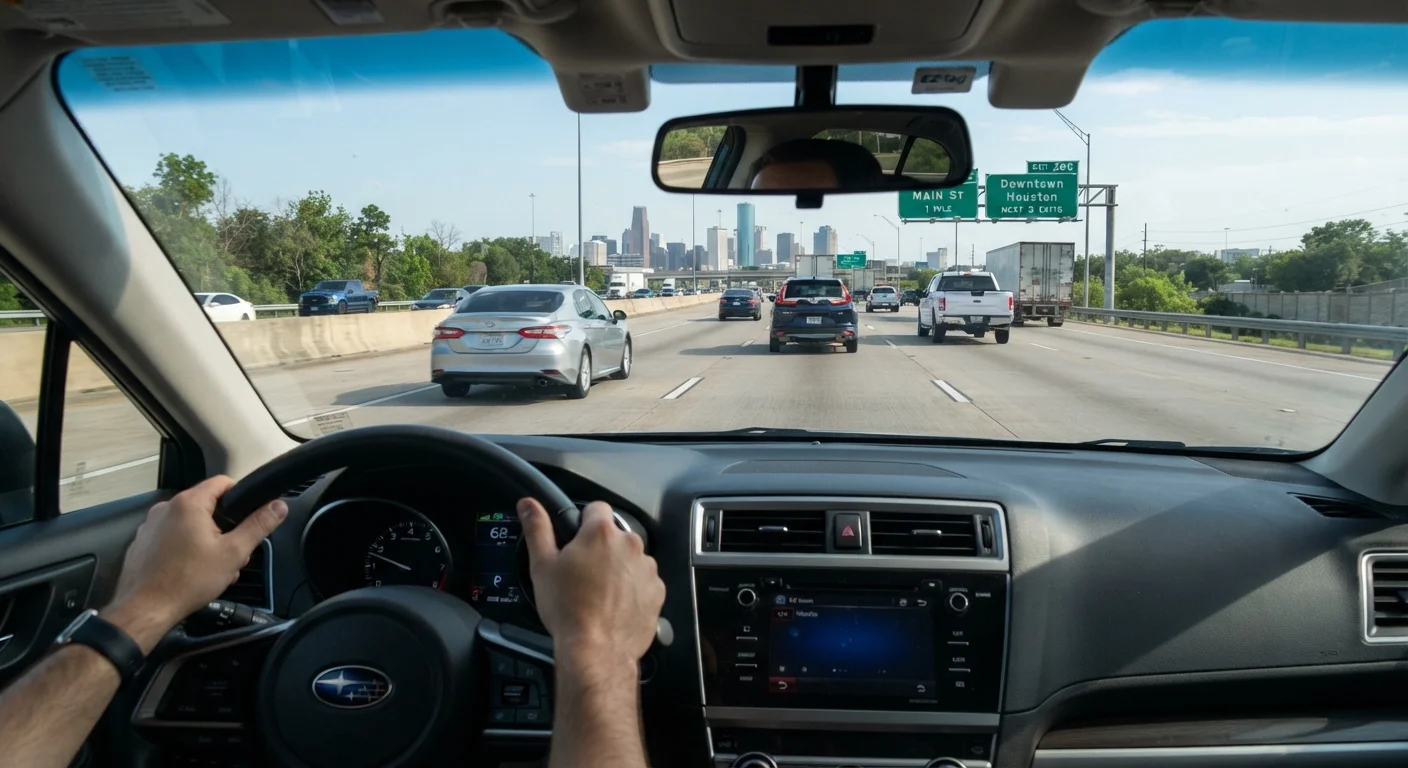
The Core Idea Behind Defensive Driving
Most drivers think of safe driving as following the speed limit and stopping at red lights. Those rules matter — but defensive driving asks more of you. It's built on a simple premise: you cannot control other drivers, but you can control how you position yourself, how much attention you pay, and how much time you give yourself to respond.
The National Safety Council describes defensive driving as driving to save lives, time, and money despite the conditions around you and the actions of others. That framing is useful — it shifts the focus from compliance to strategy. A defensive driver is always asking: What could go wrong here, and what's my exit if it does?
For a broader foundation of safe driving principles, see The Complete Road Safety Handbook for American Drivers.
94%
Of crashes involving human choice or error
According to the National Highway Traffic Safety Administration (NHTSA), approximately 94% of serious crashes involve human factors — underscoring why driver behavior matters more than road conditions alone.
3 seconds
Minimum recommended following distance
Safety experts and driver education programs widely recommend a minimum three-second gap between vehicles, extendable to four or more in adverse conditions.
~40,000
Annual U.S. traffic fatalities
NHTSA data consistently shows tens of thousands of traffic deaths occur on U.S. roads each year, the majority of which involve preventable behaviors such as speeding, impairment, and distraction.
The Five Pillars of Defensive Driving
Defensive driving isn't one skill — it's a cluster of habits that work together. Here are the five most essential principles:
- Scan ahead, not just in front. Look 10–15 seconds down the road. This gives you time to identify slowing traffic, road debris, or hazards at intersections before you're on top of them.
- Maintain a following distance cushion. The three-second rule — keeping at least three seconds of space between you and the vehicle ahead — is a minimum. In rain, fog, or at highway speeds, extend it further. Wet and icy conditions demand even more space and slower speeds.
- Expect the unexpected. Assume other drivers may run red lights, change lanes without signaling, or brake suddenly. Treat every intersection as a potential conflict point, even on a green light.
- Eliminate distractions. A phone glance that lasts two seconds at 55 mph means you've traveled the length of a football field without watching the road. Defensive driving and distracted driving are mutually exclusive.
- Manage your own emotions. Frustration, rushing, and fatigue all degrade decision-making. Recognizing when your mental state is compromising your attention is itself a defensive skill.
Practice the Three-Second Rule Every Drive
Choose a fixed point on the road — a sign, an overpass — and count how long after the car ahead passes it before you reach the same point. If it's less than three seconds, ease off the accelerator. Do this check a few times per trip until it becomes second nature.
Where Defensive Driving Plays Out Differently
The principles of defensive driving stay consistent, but how they apply shifts depending on where you're driving. On urban streets, the main threats are pedestrians stepping into traffic, cyclists in blind spots, and cars pulling out of driveways or parking spots. On interstates, the risks involve higher-speed merges, tailgating, and fatigue on long stretches.
Our guide to highway vs. city driving safety habits breaks down how to adapt your approach to each environment. Similarly, sharing the road with motorcycles, cyclists, and pedestrians calls for specific awareness — vulnerable road users face disproportionate risk in mixed traffic, and defensive drivers account for that.
Building the Habit: It's Learnable at Any Stage
Defensive driving isn't an innate talent — it's a practiced set of behaviors. New drivers absorb these habits most easily when they're introduced from the start. Experienced drivers often benefit from revisiting them, especially after a long gap or a near-miss incident.
Formal defensive driving courses — offered by organizations like the NSC and AAA, as well as many state DMVs — provide structured instruction and are often accepted by courts or insurers. But formal training isn't the only path. Consistent attention to your own driving habits builds the same muscle over time.
Start with the fundamentals outlined in safe driving habits worth building from the start: mirror checks, space cushions, and signal use. These small, repeatable behaviors are the building blocks of a genuinely defensive driver.
“The goal of defensive driving is not to drive in fear, but to drive with awareness — to recognize that the road is a shared space where anticipation protects everyone.”
— National Safety Council, U.S. nonprofit focused on eliminating preventable injuries and deaths
Frequently Asked Questions
Normal driving often means following traffic rules and reacting to what's immediately in front of you. Defensive driving goes further — it involves actively scanning for potential hazards, maintaining buffers of space and time, and anticipating what other drivers might do next. It's a proactive mindset rather than a reactive one.
Many auto insurers offer discounts to drivers who complete an approved defensive driving course, though policies vary by insurer and state. Check with your provider directly to find out what courses qualify and how much of a discount may apply.
Not at all. Defensive driving principles benefit drivers at every experience level. In fact, experienced drivers can develop overconfidence or complacency over time, making a refresher in defensive habits especially valuable.
The three-second rule means maintaining at least three seconds of following distance between your vehicle and the car ahead. Pick a fixed landmark and count how long it takes you to reach it after the vehicle in front passes it. In poor weather or at higher speeds, extend this to four or more seconds.
Yes. Part of defensive driving is managing your own behavior and avoiding confrontation. This means not retaliating, not making eye contact with aggressive drivers, and giving them space. See our related article on <a href="/cars-driving/safe-driving/road-rage-and-aggressive-driving-understanding-and-avoiding-escalation">road rage and aggressive driving</a> for more detail.
Yes — the risks differ significantly between environments. City driving involves more intersections, pedestrians, and stop-and-go traffic, while highway driving involves higher speeds and merging hazards. Defensive habits adapt to each setting.
The content on this site is for informational purposes only and is not a substitute for professional advice. Always consult a qualified professional for guidance specific to your situation.