

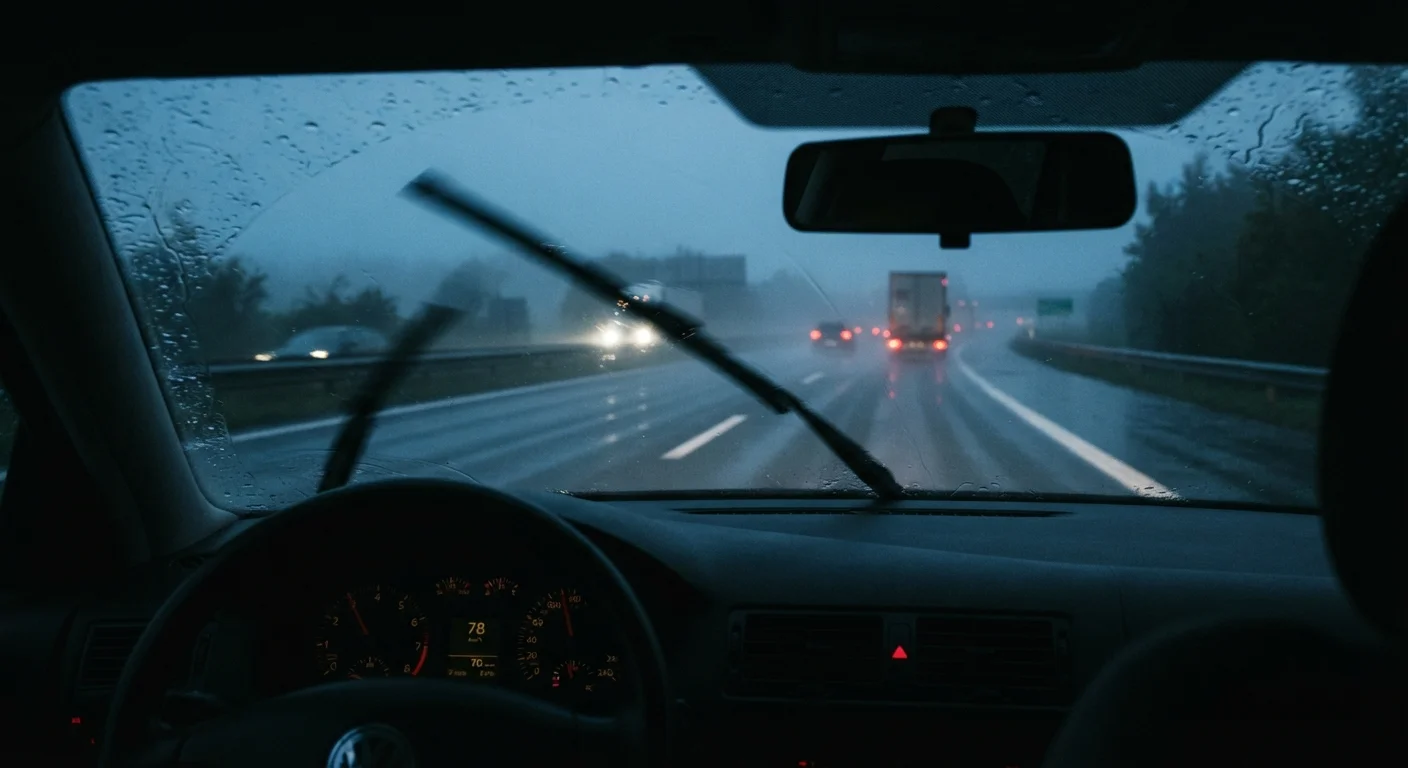
Why Weather Changes the Rules — Not Just the Risk
Most of us learned to drive in relatively controlled conditions. But weather does not just make the same driving slightly more dangerous — it changes the fundamental physics of how your vehicle behaves. Wet asphalt reduces tire grip. Snow compresses under tires differently than rain. Fog removes the visual information your brain uses to judge speed, distance, and lane position. Adapting to these conditions is not just about slowing down; it requires adjusting every aspect of how you interact with your vehicle and the road.
For a broader framework of safe driving principles that complement weather awareness, see The Complete Road Safety Handbook for American Drivers. Understanding defensive driving principles is equally valuable — anticipating hazards before they materialize is especially critical in bad weather.
What you will need
What You Need Before You Drive
Safe weather driving starts before you leave the driveway. A vehicle in poor mechanical condition will not respond predictably even when the driver does everything right. Verify your equipment is ready for the conditions you are about to face.
All-Season or Winter Tires
Provide grip on wet, slushy, or icy road surfaces where standard tires lose traction.
Ice Scraper and Snow Brush
Clear snow and ice from all windows, mirrors, and lights before driving in winter conditions.
Windshield Washer Fluid (winter-rated)
Prevents the washer fluid reservoir and lines from freezing and keeps visibility clear in sleet or road spray.
Emergency Kit (blanket, flashlight, jumper cables)
Provides basic safety resources if you become stranded in severe weather.
Use the Two-Second Rule — Then Double It
In dry conditions, a following distance of three seconds is a common baseline. In rain, snow, or fog, extend that to at least six seconds to account for longer braking distances and reduced reaction time. See our guide to stopping distance for the math behind why this matters.
Step-by-Step: Adapting to Rain, Snow, and Fog
The following steps apply across weather types, with specific notes where rain, snow, and fog each require a different approach. Work through them in order — preparation and speed management come before technique, because the right setup reduces the chance you will need a recovery technique at all.
Check Your Vehicle Before the Weather Hits
Weather-related crashes are often caused by pre-existing vehicle problems — worn tires, failing wipers, or burned-out lights — rather than driver error alone. Before driving in adverse conditions, confirm that your tires are properly inflated and have adequate tread, your windshield wipers clear the glass cleanly without streaking, and all lights (headlights, taillights, brake lights) are functioning. Our pre-trip safety checklist covers this process in detail.
Adjust Speed Proactively, Not Reactively
Posted speed limits reflect dry, daylight, clear-condition driving. In rain, snow, or fog, those limits are not appropriate targets. Reduce speed before entering a stretch of compromised road — not after you feel the car skid or lose traction. A common guideline is to reduce highway speed by at least one-third in moderate rain and by half or more in snow or heavy fog. Your actual safe speed depends on road type, traffic, tire condition, and visibility.
Increase Following Distance Significantly
Stopping distance increases dramatically on wet or icy surfaces. Water, snow, and ice reduce the friction between your tires and the road, which is what allows braking to work. At highway speeds on wet pavement, stopping distance can double compared to dry conditions. On ice, it can increase by ten times or more. Increase your following gap to at least six seconds in rain, and more in snow or ice. Count seconds from when the car ahead passes a fixed object (a sign, overpass) until you reach it.
Use Lights Correctly for the Condition
In rain or fog, turn on your headlights even during daylight — many states legally require this. In fog specifically, use low beams, not high beams. High beams scatter light back from the fog particles, reducing how far you can see. If your vehicle has dedicated fog lights, use them. In heavy snow, keep lights on and ensure all external lights remain clear of snow buildup during stops. If visibility drops to near zero, pull off the road, turn off your driving lights, and activate hazard flashers so other drivers do not follow your taillights into a stopped position.
Handle Skids and Hydroplaning Without Overcorrecting
Hydroplaning occurs when a film of water builds between your tires and the road surface, causing the tires to ride on water rather than pavement. If you feel this happen — the steering goes light and the engine may rev — ease off the accelerator smoothly and hold the steering wheel straight. Do not brake hard. Allow the tires to slow naturally until they regain contact with the road.
In a rear-wheel skid (the back of the car slides out), steer gently in the direction you want the front of the car to go. With ABS (Anti-lock Braking System), apply firm, steady brake pressure — do not pump the brakes. Without ABS, apply threshold braking: press the brake pedal just short of the point where the wheels lock up.
Know When to Pull Over and Wait
Some weather conditions are genuinely too dangerous to drive through regardless of skill level. Whiteout snow, zero-visibility fog, or severe ice storms present risks that no amount of careful technique fully eliminates. If conditions deteriorate to the point where you cannot see lane markings, cannot judge stopping distance, or feel the vehicle is not responding predictably, find a safe place to pull off — a parking lot, rest stop, or wide shoulder — and wait. Check local road condition reports or weather updates before continuing.
Black Ice Gives Almost No Warning
Black ice is a thin, transparent layer of ice that forms on road surfaces, particularly on bridges, overpasses, and shaded stretches. It looks like ordinary wet pavement. If your steering feels unexpectedly light or your car begins to drift without input, you may be on black ice. Ease off the accelerator gently — do not brake hard or jerk the steering wheel.
Additional Hazards to Keep in Mind
Weather conditions interact with other driving challenges in ways that compound risk. At night, reduced visibility from fog or rain combines with the already limited sight distances of darkness — a combination that demands extra caution. Our article on night driving challenges covers the specific adjustments that matter most after dark.
Road behavior also differs significantly between highway and city driving in poor weather. High-speed highway rain requires early lane changes and generous following gaps, while city driving in snow or ice introduces intersection hazards and pedestrian risk. The safety differences between highway and city driving article addresses this distinction in depth.
Never Drive on Bald Tires in Wet Conditions
Tires with worn tread can lose contact with the road surface in as little as a light rain, a phenomenon called hydroplaning. When a vehicle hydroplanes, the driver loses steering and braking control. Check tire tread depth regularly and replace tires that fall below the legal minimum of 2/32 of an inch — though safety experts generally recommend replacement at 4/32 of an inch for wet-weather driving.
Finally, staying calm when conditions worsen is itself a safety skill. Stress, frustration, or pressure from other drivers can push people toward speed or risks they would otherwise avoid. If you are feeling rushed in bad weather, that is a signal to slow down — not speed up.
The content on this site is for informational purposes only and is not a substitute for professional advice. Always consult a qualified professional for guidance specific to your situation.