

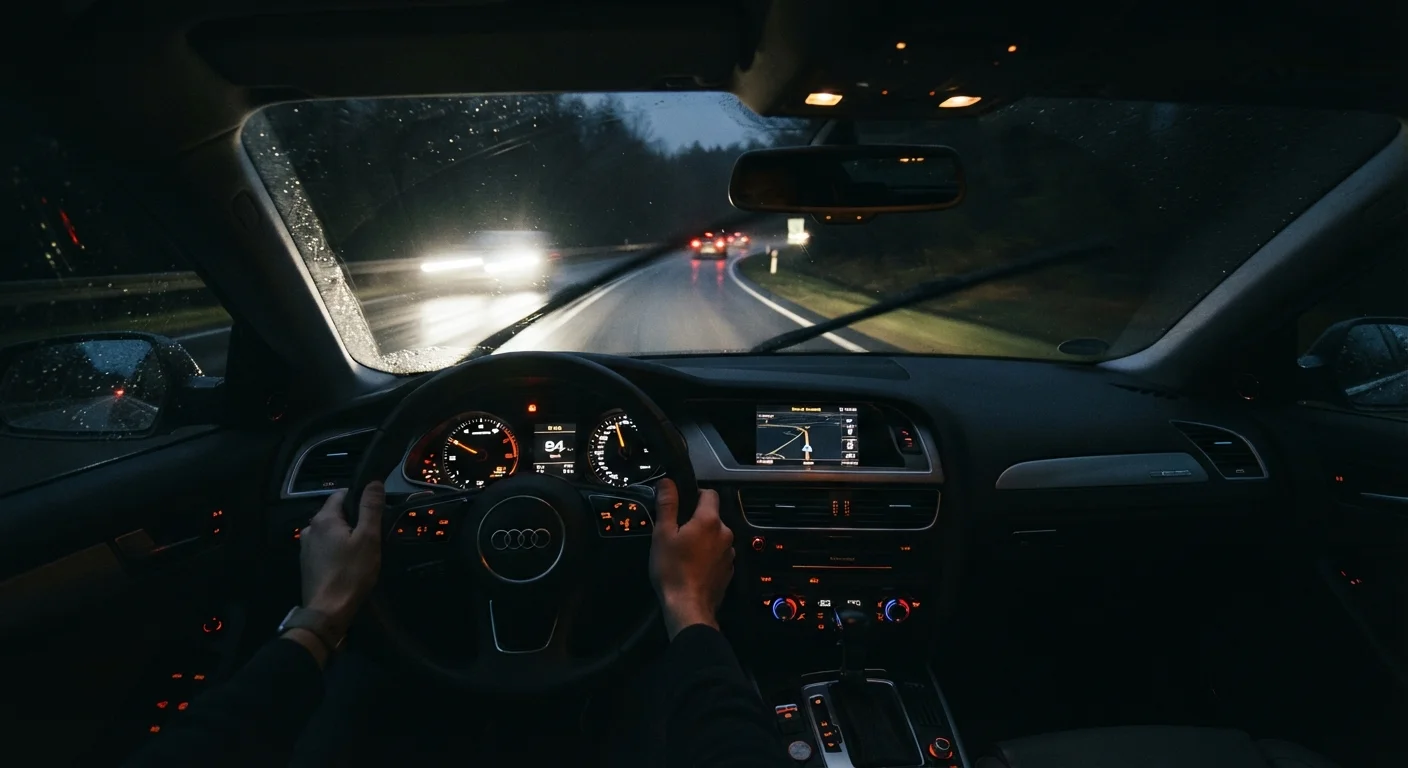
The Visibility Problem Drivers Underestimate
Most drivers know it's darker at night — but few appreciate how dramatically that darkness degrades driving performance. The human eye relies on two types of photoreceptors: cones (used in daylight for sharp, color vision) and rods (used in low light for peripheral and motion detection). At night, cones become far less effective, which means your ability to judge distance, read road edges, and spot hazards drops considerably even under normal streetlit conditions.
Standard low-beam headlights illuminate roughly 160 to 200 feet ahead. At 60 mph, a vehicle covers about 88 feet per second — meaning your reaction window shrinks to little more than two seconds. That's before factoring in wet pavement or an unexpected obstacle. This mismatch between what headlights reveal and the distance needed to stop safely is sometimes called overdriving your headlights, and it's a common night-driving hazard that many experienced drivers never consciously recognize. For a deeper look at stopping distances and reaction time, see the math behind stopping distances.
How Fatigue Multiplies the Risk
Darkness and drowsiness are a dangerous pairing. The body's circadian rhythm — its internal 24-hour clock — naturally dips between roughly midnight and 6 a.m., and again in the early afternoon. Driving during these windows means fighting biology, not just road conditions. Reaction time slows, microsleep episodes (brief, involuntary lapses in awareness lasting a few seconds) become more likely, and the ability to track multiple hazards simultaneously degrades.
What makes this especially risky is that fatigued drivers are often poor judges of their own impairment. Research has consistently found that sleepiness impairs driving in ways that are measurably similar to alcohol intoxication. See how drowsy driving compares to drunk driving — the similarities are striking and worth understanding before any long night trip.
Plan Around Your Energy Level
If you know you'll be driving late, avoid large meals beforehand and plan a rest stop if your trip exceeds 90 minutes. Caffeine can provide a temporary boost but is not a substitute for sleep. Whenever possible, schedule long nighttime drives for earlier in the evening when alertness is higher.
Glare: The Hazard That Recovers Slowly
Oncoming headlights — especially modern LED and HID (high-intensity discharge) systems — can cause temporary blindness that lasts longer than drivers expect. The eye may need 5 to 10 seconds to recover full sensitivity after bright glare exposure. At highway speeds, that recovery window covers significant ground.
The practical response: avoid looking directly at oncoming headlights. Instead, shift your gaze to the right edge of the lane and use the white line as a guide until the vehicle passes. Keeping your windshield clean — inside and out — also helps. A film of dust or grease on the inside of the glass scatters light dramatically and intensifies perceived glare, even from moderate sources.
When to Have Your Headlights Inspected
Headlight lenses made of polycarbonate plastic can yellow and cloud over time, significantly reducing light output without the driver noticing the gradual change. If your headlights look noticeably dimmer or your low beams seem to fall short, have a qualified mechanic inspect both the lenses and the aim alignment. Misaimed headlights — even new ones — can direct light into oncoming drivers' eyes rather than the road ahead.
Best Practices That Make a Measurable Difference
Adjusting your behavior for nighttime conditions isn't about driving timidly — it's about calibrating to what your eyes and vehicle can actually handle. The following practices address the specific ways darkness raises risk.
Reduce your speed after dark, even on familiar roads.
Night conditions shorten your usable reaction window. Reducing speed extends the time available to identify and respond to hazards that headlights reveal late. Even a 5–10 mph reduction materially increases stopping margin.
Increase your following distance to at least four seconds behind the vehicle ahead.
The standard three-second following rule is designed for daylight. At night, reduced visibility and slower reaction times make additional buffer essential. Four to five seconds gives you a meaningful safety margin if the car ahead brakes suddenly.
Use high beams on unlit roads whenever traffic allows, and dim them promptly for oncoming vehicles.
High beams can illuminate 300–500 feet ahead — roughly double the range of low beams. Many drivers underuse them on dark rural roads out of habit, leaving significant visibility on the table.
Dim your dashboard and instrument cluster lighting to a comfortable level.
Bright interior lighting forces your eyes to constantly re-adapt between the bright dash and the dark road ahead. Lowering interior brightness reduces this contrast and helps your eyes maintain better night adaptation.
Actively scan for pedestrians and cyclists well ahead of your vehicle.
Pedestrians are far less visible at night, particularly when wearing dark clothing and walking away from lit areas. The eye tends to focus on well-lit zones, making it easy to miss figures at the road's edge. Deliberate, wide scanning compensates for this.
For drivers building these habits from the ground up, safe driving habits worth building from the start provides a strong baseline to work from.
Quick Actions You Can Take Before Your Next Night Drive
Some of the most effective night-driving adjustments take only minutes to implement before you leave. These quick wins don't require any special equipment — just deliberate preparation.
Night driving conditions also overlap with weather-related hazards. If you're navigating rain, fog, or ice after dark, the combination is even more demanding — how conditions change the rules is a useful companion read.
The content on this site is for informational purposes only and is not a substitute for professional advice. Always consult a qualified professional for guidance specific to your situation.