

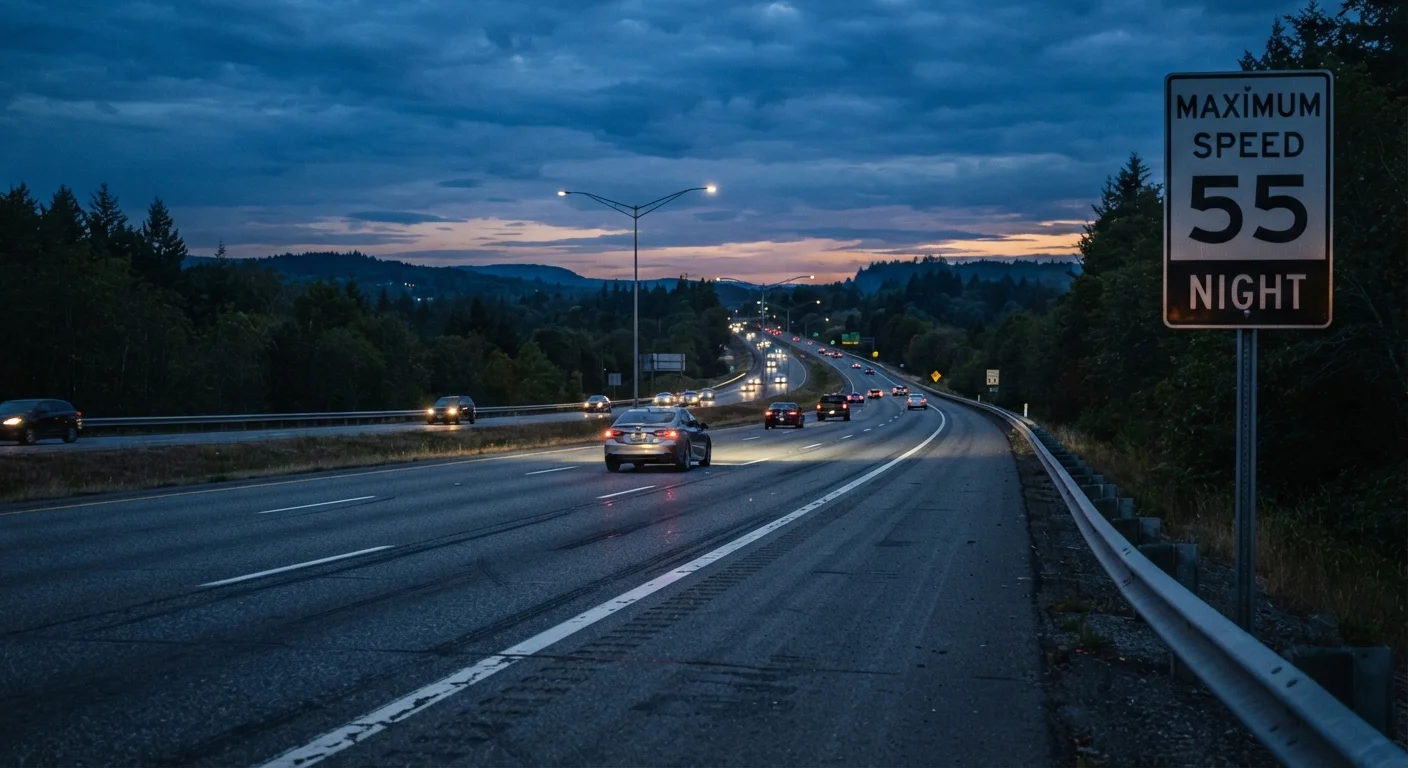
Why Stopping Takes More Distance Than Most Drivers Expect
When you see a hazard and hit the brakes, stopping isn't instantaneous — it's a two-stage process that covers far more ground than intuition suggests. The first stage is reaction distance: the feet your car travels while your brain processes the danger and your foot moves to the brake pedal. The second is braking distance: how far the car continues moving while the brakes are actively slowing it.
At 60 mph, a driver with an average 1.5-second reaction time covers roughly 132 feet before braking even begins. Add the braking distance — which can be another 180 feet or more under ideal dry conditions — and total stopping distance can exceed 300 feet. That's longer than a football field.
The relationship between speed and stopping isn't linear. Because braking distance scales with the square of velocity, a modest speed increase carries a disproportionate stopping penalty. Traveling at 70 mph instead of 60 mph adds meaningful feet to both phases. This is the core physics that speed limits and following-distance rules are designed to account for.
~300 ft
Typical stopping distance at 60 mph
Based on widely cited driver education data assuming 1.5-second reaction time and dry pavement braking.
4×
Braking distance increase when speed doubles
Because braking distance scales with the square of velocity, doubling speed roughly quadruples the braking portion of stopping distance.
1.5 sec
Average driver reaction time
Commonly cited in traffic engineering and driver education; fatigue, distraction, or impairment can increase this substantially.
2×+
Braking distance increase on wet pavement
Reduced tire-road friction on wet surfaces can more than double the distance required to stop compared to dry conditions.
The Three-Second Rule — and When to Extend It
The three-second following distance rule is a practical way to maintain a buffer that accounts for your reaction time. To apply it, watch for the car ahead to pass a fixed landmark — a sign, a shadow, a bridge joint — then count. If you reach that same point before three seconds have passed, close that gap.
Three seconds is calibrated for dry roads at highway speeds. It gives an average driver time to perceive, react, and begin braking before reaching the space a stopped or slowing car occupied. But it's a minimum, not a target. Wet or icy roads dramatically extend braking distance, so many driving safety organizations recommend doubling the following distance in rain and increasing it further on snow or ice.
Heavy trucks, drivers experiencing fatigue, and older vehicles with worn brake systems all benefit from even greater margins. Following distance isn't just about your reaction time — it's also about giving yourself room to choose a response other than emergency braking, such as steering around an obstacle.
Count the Seconds, Not the Car Lengths
Car-length estimates vary wildly depending on vehicle size and speed. The time-based three-second method works at any speed because it automatically scales with how fast you're traveling. Use a roadside marker and count 'one-one-thousand, two-one-thousand, three-one-thousand' — it takes only a moment and gives you an accurate read on your following gap.
How Speed Limits Are Set — and What They're Protecting
Speed limits can feel arbitrary when roads appear wide and clear, but they're derived from engineering studies that account for road curvature, visibility sight lines, intersection spacing, pedestrian exposure, and the expected mix of vehicles. The goal is to set a limit at which a typical driver can respond to foreseeable hazards within the available stopping distance.
Residential streets are posted at lower limits partly because parked cars, driveways, and children create sudden, short-range hazards. A driver on a 25 mph block has a much smaller stopping-sight-distance budget than one on a controlled-access freeway, even if the street feels empty.
Research consistently shows that collision severity rises sharply with speed. A pedestrian struck at 40 mph faces a substantially higher fatality risk than one struck at 25 mph — a difference rooted directly in the stopping-distance math. Even a few mph matter when space is limited.
For a broader framework on anticipating hazards before they become emergencies, see our guide on defensive driving principles.
Keeping Your Vehicle's Stopping Ability in Good Shape
All the awareness in the world is less effective if your vehicle's brakes can't deliver their designed performance. Worn brake pads reduce clamping force; degraded rotors increase stopping distance; tires with low tread depth lose grip before the braking system is even the limiting factor.
Regular maintenance inspections should include brake pad thickness, rotor condition, and tire tread depth. If you notice longer stopping distances, a soft or pulsing brake pedal, or unusual noises when braking, have a qualified mechanic evaluate the system before assuming it's fine. Our overview of how brake pads and rotors work explains what warning signs mean and when professional attention is warranted.
Building good distance habits and maintaining your braking system are two sides of the same coin. Speed limits and following distance rules assume a vehicle performing to design specifications — keeping yours there is your responsibility as a driver. For a complete picture of the habits that distinguish cautious drivers, see safe driving habits worth building from the start.
This article provides general educational information about driving safety and is not a substitute for your state's driver education requirements or guidance from a certified driving instructor.
Frequently Asked Questions
The three-second rule means you should stay at least three seconds behind the vehicle ahead. Pick a fixed point the lead car passes, then count — if you reach that point before three seconds elapse, you're following too closely. In adverse conditions, extend this to four or five seconds.
Stopping distance grows faster than speed because braking distance increases with the square of your velocity. Going from 30 to 60 mph doesn't double your stopping distance — it roughly quadruples the braking portion. This is why highway speeds demand much larger safety margins.
Most drivers have a reaction time of roughly 1.5 seconds under normal conditions. At 60 mph, that translates to about 132 feet traveled before brakes are even applied. Fatigue, distraction, or impairment can push this significantly higher.
Speed limits reflect engineering assessments of each road's geometry, sight distance, intersection density, and typical traffic mix. A residential street has far shorter stopping sight lines and more unpredictable hazards than a limited-access interstate, so limits are set accordingly.
Absolutely. Wet pavement can double braking distance; ice can increase it dramatically further. The three-second rule is a minimum for dry conditions — in rain, snow, or fog, most safety guidelines recommend four to eight seconds of following distance.
Yes, significantly. Worn brake pads, degraded rotors, and low-tread tires all reduce a vehicle's ability to stop quickly. Keeping your braking system in good condition is one of the most direct ways to maintain stopping performance.
The content on this site is for informational purposes only and is not a substitute for professional advice. Always consult a qualified professional for guidance specific to your situation.