

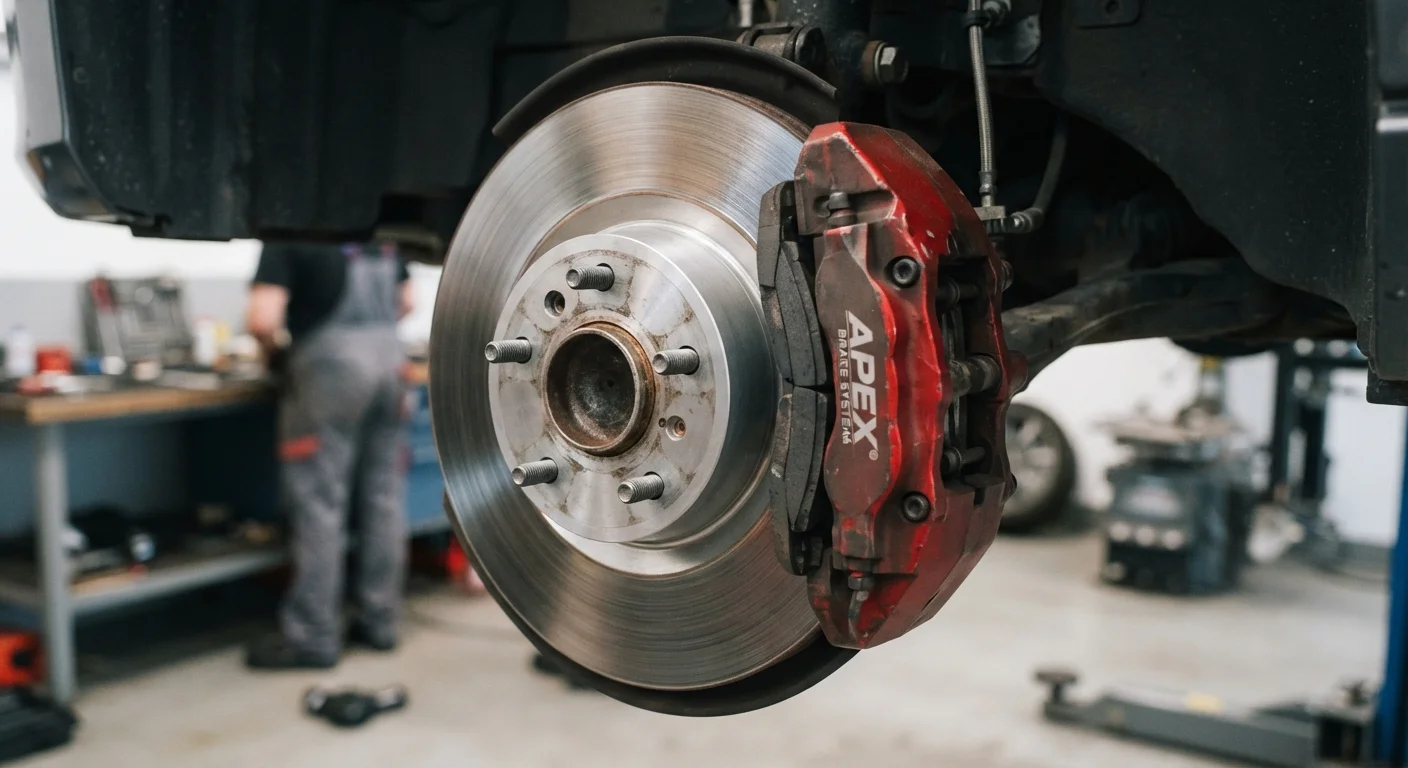
How the Braking System Works
When you press the brake pedal, hydraulic pressure travels through brake lines filled with brake fluid to the brake calipers at each wheel. The caliper acts like a clamp, squeezing the brake pads against both sides of the spinning rotor. That friction is what slows the wheel — and the car.
The rotor (also called a disc) is bolted to the wheel hub and rotates with the wheel. Most rotors are vented — meaning they have internal channels between two metal faces — which helps dissipate the enormous heat generated during braking. The brake pad itself consists of a friction compound bonded to a metal backing plate. As pads wear down through normal use, that friction material gradually thins until it reaches the wear indicator, triggering the familiar squeal that signals it's time for attention.
Understanding this system helps explain why braking distance increases with speed — the faster you're going, the more energy the system must absorb and convert to heat.
25,000–65,000 mi
Typical brake pad lifespan range
Lifespan varies widely based on driving style, pad material, and vehicle type — city driving accelerates wear significantly.
~2–3 years
Recommended brake fluid change interval
Many vehicle manufacturers suggest flushing brake fluid every two to three years as moisture absorption degrades its performance over time.
1 in 5
Vehicles with unsafe brake conditions
According to the Car Care Council, approximately one in five vehicles inspected during National Car Care Month events show brake-related issues requiring attention.
Warning Signs You Shouldn't Ignore
Your braking system communicates through sound, feel, and sometimes smell. Recognizing these signals early can prevent a minor maintenance item from becoming a costly repair — or worse, a safety failure.
- Squealing or squeaking: A high-pitched noise when braking is often the wear indicator doing its job. It doesn't mean immediate danger, but it does mean inspection soon.
- Grinding: A harsh metal-on-metal grinding sound means the pad material is likely gone. Continuing to drive risks damage to the rotors and a serious reduction in stopping power.
- Pulsing pedal: A rhythmic vibration felt through the brake pedal usually points to warped rotors. Extreme heat — from heavy braking on long descents or repeated hard stops — can cause the rotor surface to become uneven.
- Pulling to one side: If the car veers left or right under braking, one caliper or pad may be sticking or wearing unevenly. This also warrants a professional look.
- Soft or spongy pedal: A pedal that sinks further than usual before engaging suggests a possible issue with brake fluid — air in the lines or low fluid level. This is a safety concern requiring immediate attention.
For a broader look at how unusual sounds and sensations can flag vehicle problems, see signs your car needs attention that aren't dashboard lights.
Test Your Brakes in a Safe Spot
Periodically, in a safe, low-traffic area such as an empty parking lot, do a slow test stop from around 15–20 mph to check for unusual sounds, pulling, or pedal feel. Catching changes in braking behavior early, before they worsen, is one of the simplest ways to stay ahead of brake wear.
What Affects Brake Pad Wear
Brake pad lifespan varies considerably depending on several factors drivers can actually influence. Frequent hard braking — common in stop-and-go city traffic — wears pads far faster than gentle, progressive slowing. This is one reason good driving habits directly double as maintenance: looking ahead, coasting down before applying brakes, and avoiding late, heavy stops all extend pad life.
The type of pad material also matters. There are three common types: organic (quieter, gentler on rotors, shorter lifespan), semi-metallic (durable and effective across a wide temperature range), and ceramic (quiet, long-lasting, and cleaner, though typically at a higher cost). A qualified mechanic can advise which type is appropriate for a given vehicle and driving pattern.
Vehicle weight plays a role too — heavier vehicles generate more braking force and wear pads more quickly. Towing or carrying heavy loads regularly accelerates this wear further.
The Role of Brake Fluid
Brake fluid is the often-overlooked element of the braking system. It transmits the force from your pedal through hydraulic lines to the calipers. Without clean, properly pressurized fluid, even new pads and rotors can't deliver reliable stopping power.
Brake fluid is hygroscopic — meaning it absorbs moisture from the air over time. As water content increases, the fluid's boiling point drops, which can cause brake fade (a sudden reduction in braking effectiveness) during heavy or repeated use. Most manufacturers recommend flushing and replacing brake fluid every two to three years, though this varies by vehicle. Checking fluid condition is one of the fluid checks you can do in your driveway — though topping it off without addressing the underlying reason for a low level can mask a more serious leak.
If the brake fluid reservoir is visibly low, or if the fluid appears dark brown rather than clear or light amber, have the system inspected by a mechanic promptly.
When to Involve a Mechanic
While visually checking pad thickness through the wheel spokes is something many drivers can do, brake work itself is not typically a DIY task. Improper installation of brake components can lead to brake failure — a serious safety risk. Tasks like compressing calipers, torquing hardware to spec, and bleeding the hydraulic system require tools, experience, and an understanding of how these components interact.
Have a qualified mechanic inspect your brakes at a minimum of once per year or at every tire rotation. If you hear or feel any of the warning signs described above, don't wait for a scheduled appointment — have the vehicle looked at promptly. Catching worn pads before they reach the backing plate can also protect your rotors from scoring, which often means the difference between a pad swap and a more expensive full rotor replacement.
Maintaining your brakes is one of the routine maintenance tasks that prevent much bigger repair bills. The stopping system is your vehicle's most critical safety feature — keeping it in good shape protects you, your passengers, and everyone else sharing the road.
Frequently Asked Questions
Brake pads generally last between 25,000 and 65,000 miles, but this varies by driving style, pad type, and vehicle weight. City driving with frequent stops wears pads faster than highway driving. Have them inspected at every tire rotation or at least once a year.
A high-pitched squeal when braking is most commonly caused by a wear indicator — a small metal tab built into the pad that contacts the rotor when the pad is getting thin. It's a warning sign to have your brakes inspected soon.
No. A grinding noise typically means the brake pad material has worn away entirely and metal is contacting metal. This severely reduces braking effectiveness and can damage the rotors. Have the vehicle inspected by a mechanic as soon as possible.
Not always. Rotors have a minimum thickness specification, and if they are still within that measurement and not warped or deeply grooved, they may be reused after cleaning. A mechanic can measure rotor thickness and advise whether replacement is needed.
A pulsing pedal often indicates warped rotors — the disc has developed an uneven surface from heat cycling or stress. This causes the caliper to move in and out slightly as the rotor spins, creating that rhythmic pulsation you feel.
On many vehicles, you can see brake pad thickness through the wheel spokes by looking at the caliper and rotor assembly. If the pad material appears to be less than a quarter-inch thick, it's time for an inspection. When in doubt, have a mechanic take a closer look.
The content on this site is for informational purposes only and is not a substitute for professional advice. Always consult a qualified professional for guidance specific to your situation.