

Why Driveway Fluid Checks Matter
Your car runs on a handful of fluids that each do a specific job — lubricating, cooling, stopping, steering, and cleaning. When any one drops too low or degrades, it can quietly cause damage long before a warning light appears. The good news: checking all five takes about 15 minutes, costs nothing, and requires only what you already have at home.
This is one of the most accessible forms of preventive care a driver can do. As part of a broader routine — see the seasonal maintenance checklist for a fuller picture — fluid checks help you catch small issues before they become expensive repairs. If you want to understand the bigger financial case for staying on top of these tasks, our guide on routine maintenance and repair costs explains what each service actually protects.
What you will need
How to Check Each Fluid
Work through these checks in the order listed. Most are visual and straightforward; the notes below each step explain what you're looking for and when to act.
Check the Engine Oil
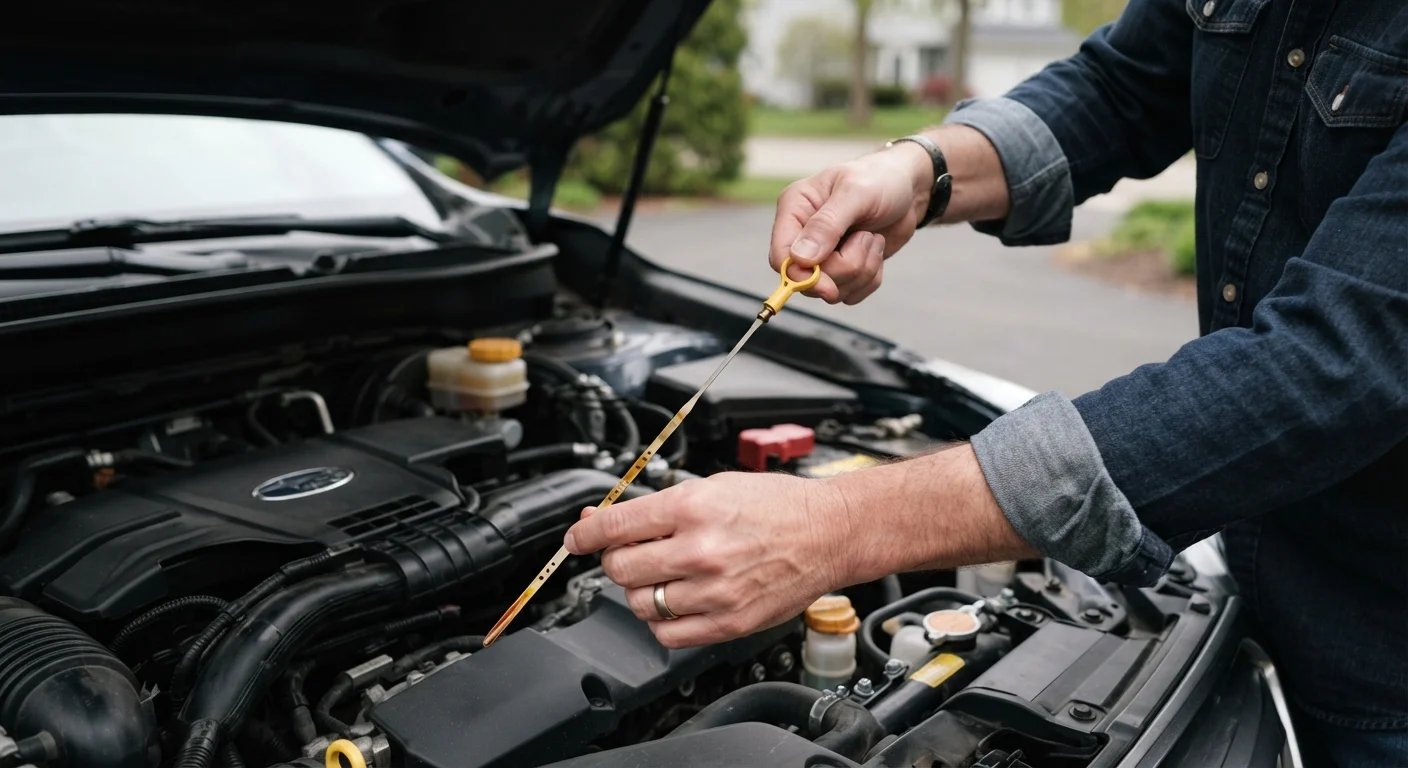
Pop the hood and locate the oil dipstick — it typically has a brightly colored ring handle labeled "OIL." Pull it out, wipe it clean with your rag, reinsert it fully, then pull it out again. The oil level should fall between the two marks (MIN and MAX, or similar) near the bottom of the dipstick.
Also look at the oil's color. Fresh oil is amber; dark brown or black oil is aged but still functional. Oil that looks milky or foamy can indicate coolant contamination — a sign to see a mechanic promptly.
Check the Coolant (Engine Coolant/Antifreeze)
Locate the coolant reservoir — a translucent plastic tank usually connected to the radiator by a hose. You can read the level through the tank wall without opening it; look for MIN and MAX lines on the side. The fluid should be between them.
Coolant is typically green, orange, or pink depending on the type your vehicle uses. Avoid mixing types, and consult your owner's manual before topping up.
Check the Brake Fluid
The brake fluid reservoir sits on top of the brake master cylinder, usually near the back of the engine bay on the driver's side. It's a small translucent plastic container with a cap marked "BRAKE FLUID." Check the level against the MIN/MAX markings on the outside.
Brake fluid is normally pale yellow to clear. Dark or murky fluid may indicate it has absorbed moisture over time — a common reason manufacturers recommend periodic replacement. For more context on your braking system, see our article on brake pads and stopping power.
Check the Power Steering Fluid
On vehicles with traditional hydraulic power steering (not electric power steering, which needs no fluid), find the power steering reservoir — often a small capped cylinder with a steering wheel icon. Many have a dipstick built into the cap; others have MIN/MAX markings on the translucent reservoir wall.
If your car has electric power steering, this step doesn't apply — your owner's manual will confirm which system your vehicle uses.
Check the Windshield Washer Fluid
The washer fluid reservoir is typically easy to spot — a blue-capped tank with a windshield wiper symbol. Look through the translucent wall or use a flashlight to gauge the level. If it's low, you can top it up with commercially available windshield washer solution — never plain water, especially in cold climates, as it can freeze in the lines.
This is the one fluid on this list that poses the least mechanical risk if it's low, but running out on a road trip in poor visibility is a real safety issue.
Make It a Monthly Habit
Running through these five checks once a month — or before any long drive — takes very little time and gives you a reliable picture of your car's condition. Pair it with a quick walk-around to look for anything unusual under the vehicle, such as puddles or drips, which can indicate a leak that won't show up on a dipstick check.
If you notice any fluid that's significantly low, discolored, or has a burnt smell, it's worth a conversation with a qualified mechanic. Some symptoms that show up alongside fluid issues — like odd smells or handling changes — are covered in our article on signs your car needs attention. And if a warning light does come on after your checks, decoding your dashboard lights can help you respond appropriately.
Not sure whether a fluid concern crosses the line from DIY into shop territory? Our guide on DIY vs. professional maintenance can help you decide. Before any longer trip, it's also smart to add fluid checks to your pre-trip safety checklist.
The content on this site is for informational purposes only and is not a substitute for professional advice. Always consult a qualified professional for guidance specific to your situation.