

Our Verdict
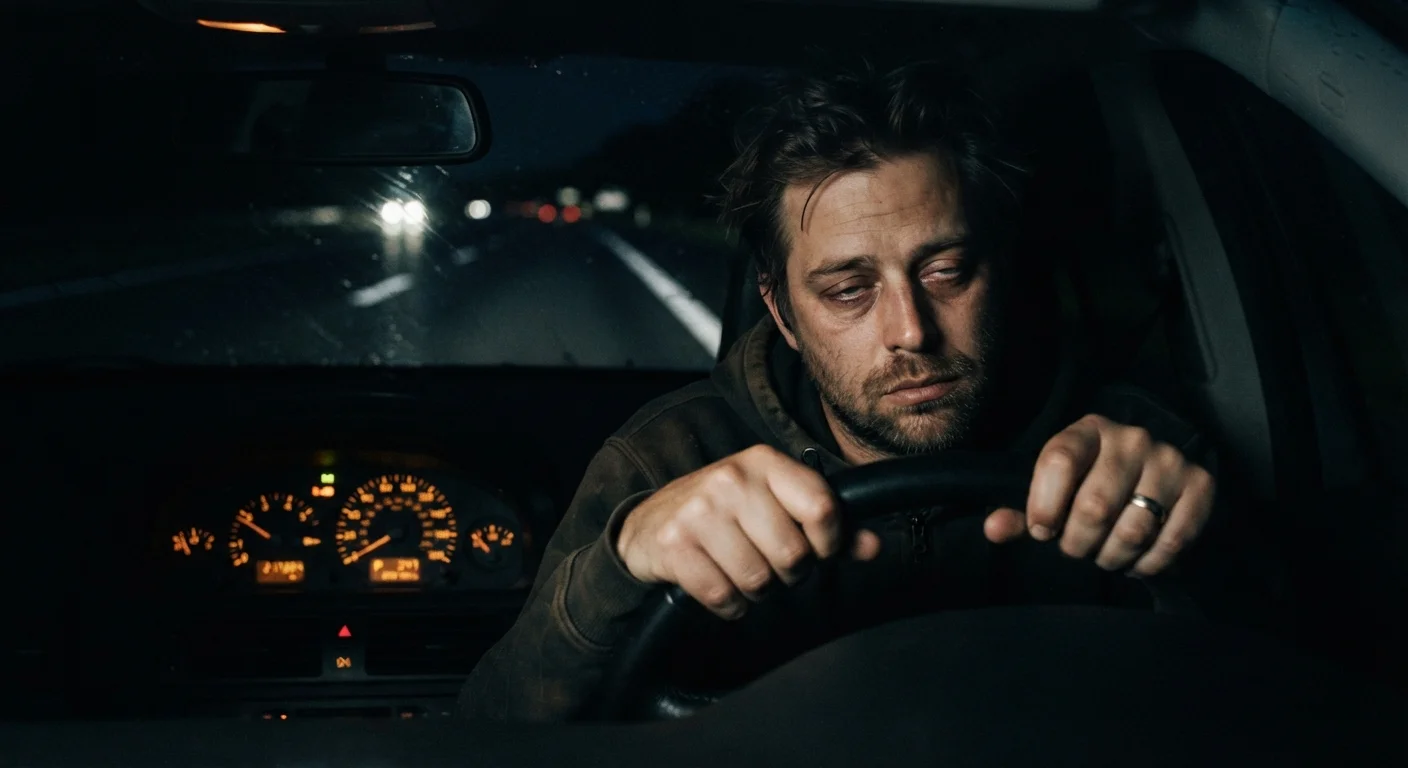
Both drowsy driving and drunk driving pose serious, measurable dangers on American roads. Research suggests that severe sleep deprivation can impair driving ability to a degree that parallels legal intoxication. The key difference is that drowsy driving is far less understood by the public and much harder to self-diagnose, making it a hidden risk that deserves as much attention as impaired driving from alcohol.
| Best for | Recommended |
|---|---|
| Drivers who regularly get fewer than 7 hours of sleep | Prioritize sleep before driving — no substitute exists |
| Long-distance or overnight travelers | Schedule planned rest stops and share driving duties when possible |
| Drivers who have consumed alcohol | Arrange a sober ride — there is no safe workaround |
| Shift workers or new parents with disrupted sleep | Avoid driving when acutely sleep-deprived; plan trips around rest |
The Science Behind Both Types of Impairment
Alcohol and sleep deprivation affect the brain through different mechanisms, but their impact on driving-relevant functions is strikingly similar. Alcohol is a central nervous system depressant — it slows signal transmission in the brain, dulling reaction speed, loosening inhibitions, and reducing the ability to process multiple pieces of information at once. Sleep deprivation, on the other hand, depletes the brain's capacity for sustained attention and complex decision-making by disrupting the restorative processes that occur during sleep.
Research published in scientific literature has found that staying awake for approximately 17–18 hours produces cognitive and motor impairment roughly equivalent to a blood alcohol concentration (BAC) of 0.05%, and that going beyond 24 hours of wakefulness pushes impairment toward the 0.10% range — above the legal driving limit of 0.08% in every U.S. state. Both states degrade the prefrontal cortex's ability to manage judgment, risk assessment, and situational awareness.
| Drowsy Driving | Drunk Driving | |
|---|---|---|
| Primary brain effect | Depletes attention and decision-making capacity | Depresses CNS; slows signals and loosens inhibitions |
| Reaction time | Significantly slowed | Significantly slowed |
| Self-awareness of impairment | Often very low — drivers underestimate severity | Also low — alcohol increases overconfidence |
| Unique danger | Microsleeps with zero vehicle control | Coordination loss and visual distortion |
| Peak crash times | Midnight–6 a.m. and mid-afternoon | Late night, especially weekends |
| Measurable by law enforcement | No standardized roadside test available | Breathalyzer provides objective BAC reading |
| Reliable countermeasure | Adequate sleep before driving; nap if needed | Do not drive; arrange alternative transport |
How Each Impairment Shows Up Behind the Wheel
Drunk driving impairment is well-documented in roadside studies and crash data. Alcohol compromises coordination, blurs vision, and — crucially — causes overconfidence. Drunk drivers frequently underestimate their impairment, leading them to take risks they would otherwise avoid.
Drowsy driving produces a subtler but equally dangerous set of effects. Fatigue causes microsleeps — brief, involuntary episodes of sleep lasting from a fraction of a second up to several seconds. At 60 mph, a two-second microsleep means traveling roughly 176 feet with no conscious control of the vehicle. Unlike drunk driving, the drowsy driver rarely perceives these gaps in awareness. There is also a phenomenon called lane drift, where fatigued drivers gradually wander out of their lane without recognizing it.
Both conditions impair braking reaction time, reduce peripheral vision effectiveness, and compromise the driver's ability to respond to sudden hazards. The difference is largely in how they are experienced: alcohol distorts perception actively, while fatigue quietly erodes it. See how common distracted driving myths compare to these impairments for a fuller picture of road risk.
What the Data Shows About Crash Risk
The National Highway Traffic Safety Administration (NHTSA) estimates that drowsy driving is responsible for tens of thousands of crashes each year in the United States, resulting in thousands of deaths annually — though experts believe this figure is substantially undercounted because fatigue is difficult to confirm after a crash in the way that alcohol can be measured with a breathalyzer.
~91,000
Police-reported drowsy driving crashes per year (U.S.)
According to NHTSA estimates, the actual number is believed to be much higher due to underreporting.
0.05% BAC
Impairment equivalent after 17–18 hours awake
Multiple peer-reviewed studies have found this approximate equivalence in reaction time and cognitive performance tests.
176 feet
Distance traveled in a 2-second microsleep at 60 mph
A vehicle at highway speed covers roughly 88 feet per second, meaning even brief lapses involve substantial uncontrolled distance.
Alcohol-related driving fatalities are tracked with greater precision. According to NHTSA data, drunk driving crashes account for a significant share of all U.S. traffic deaths each year. The consistency of this tracking has made drunk driving the subject of major public awareness campaigns and strict legal enforcement — infrastructure that simply does not yet exist for drowsy driving at the same scale.
Fatigue-related crashes follow a predictable pattern: they peak between midnight and 6 a.m. and have a secondary spike in the early-to-mid afternoon, aligning with natural circadian low points. Alcohol-related crashes peak later in the night, typically on weekends. Night driving carries compounded risks when fatigue and low visibility combine.
The Limits of Common Countermeasures
A widely held belief is that drinking coffee, opening a car window, or turning up the radio can counteract drowsiness well enough to make driving safe. Research does not support these methods as reliable safety measures. Caffeine can provide a modest, temporary alertness boost — studies suggest it may help slightly in the very short term — but it does not restore the reaction speed, sustained attention, or judgment that sleep deprivation removes.
By contrast, alcohol impairment has no equivalent short-term fix. Time is the only way the body processes alcohol, and no amount of coffee or food changes a driver's BAC meaningfully over a short period.
The reliable countermeasures for drowsy driving are limited but clear: getting adequate sleep before a trip (adults generally need seven or more hours), pulling over to take a short nap of 20 minutes or less when drowsiness sets in during a journey, and planning long trips to include scheduled rest stops. For alcohol, the approach is straightforward — do not drive after drinking, and arrange alternative transportation.
This article is for general informational and educational purposes only. It is not a substitute for professional safety guidance, legal counsel, or medical advice. Always comply with local traffic laws and consult qualified professionals regarding health or legal matters.
The content on this site is for informational purposes only and is not a substitute for professional advice. Always consult a qualified professional for guidance specific to your situation.