

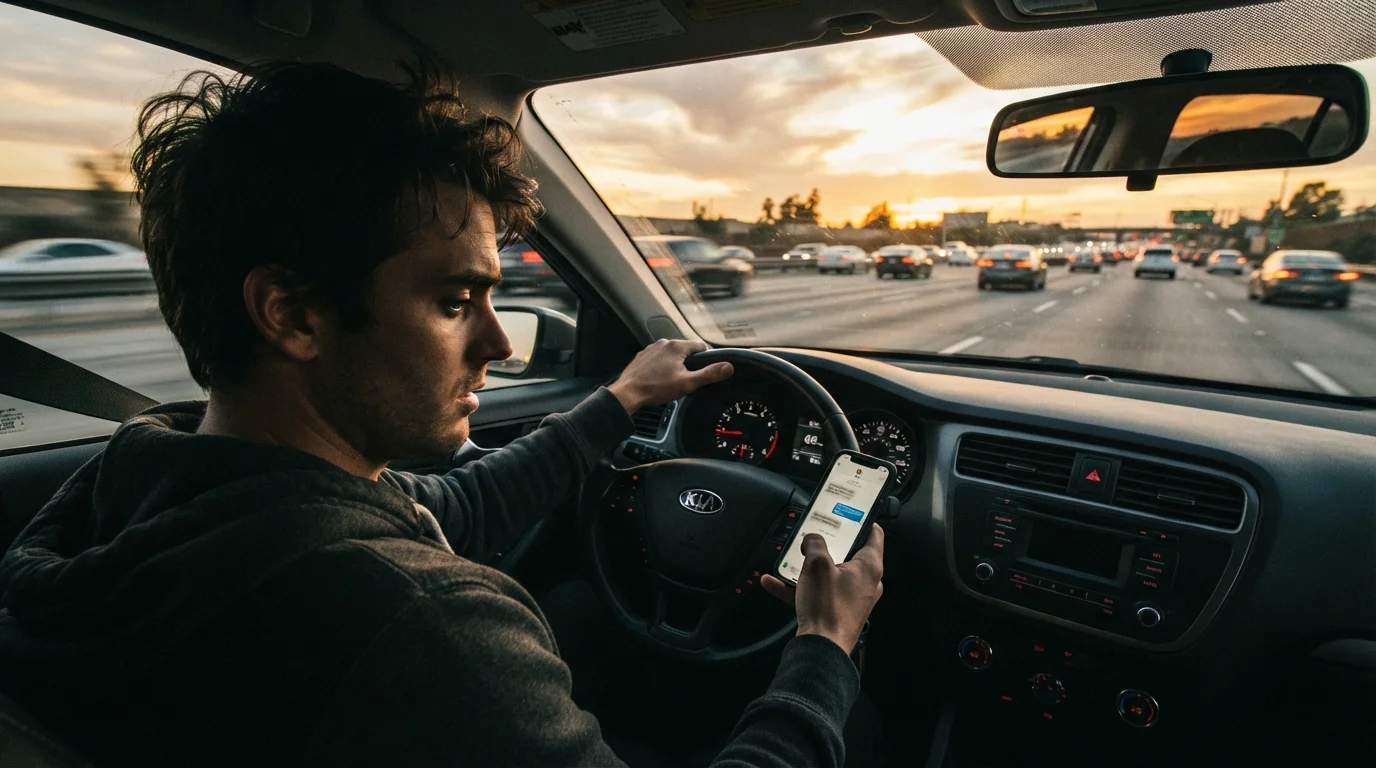
Why Distracted Driving Myths Are So Dangerous
Distracted driving is one of the leading contributors to traffic crashes in the United States. Yet a surprising number of drivers operate under beliefs that actively undermine road safety — not out of recklessness, but because the myths feel logical. If you believe hands-free calling is genuinely safe, or that your years of experience protect you from distraction, you may be taking risks you're not even aware of.
The consequences are real. According to the National Highway Traffic Safety Administration (NHTSA), distracted driving claimed thousands of lives in a recent reporting year. Understanding where the misconceptions come from — and why they're wrong — is one of the most practical things a driver can do to stay safer. For new drivers especially, catching these misconceptions early matters most; see what other habits can go wrong in our guide on what new drivers get wrong in their first year.
Myth
Hands-free calling is safe to do while driving because your hands stay on the wheel.
Fact
Hands-free calls still cause significant cognitive distraction, which impairs driving performance even when both hands remain on the wheel.
The danger of phone calls while driving isn't primarily about where your hands are — it's about where your mind is. Research from institutions including the AAA Foundation for Traffic Safety has shown that cognitive distraction causes drivers to miss visual cues, react more slowly, and fail to process information in their peripheral field, a phenomenon sometimes called "inattention blindness." A hands-free setup removes the manual distraction but leaves the cognitive distraction largely intact. Talking to a passenger, by contrast, tends to be safer partly because passengers naturally pause conversation during complex traffic situations — a phone caller cannot.
Myth
Glancing at your phone for just a second or two is essentially harmless.
Fact
Even a two-second glance is long enough to travel significant distance at highway speeds, and drivers consistently underestimate how long they look away.
At 55 mph, two seconds covers roughly 160 feet — more than half the length of a football field. At 70 mph, the distance is even greater. Studies have found that drivers tend to underestimate how long they look away from the road during any given glance at a device. What feels like a brief check often lasts three to five seconds, particularly if a message requires reading or a response is typed. The NHTSA has cited sending or reading a text message as one of the most dangerous distraction-related behaviors because it combines all three distraction types simultaneously.
Myth
Experienced drivers can handle distractions better than less experienced drivers.
Fact
Experience does not protect against the neurological effects of distraction, and familiarity with a route can actually reduce alertness.
While experience improves many driving skills, it does not rewire how the brain processes competing demands. All drivers — regardless of years behind the wheel — are subject to the same cognitive limits when attention is divided. In fact, research suggests that highly familiar routes can induce a form of "highway hypnosis," where the driver operates on autopilot and is less consciously engaged with road conditions. This lower baseline alertness can make the addition of a distraction more consequential, not less.
Myth
Multitasking while driving is fine as long as the secondary task is simple.
Fact
The brain does not truly multitask; it switches rapidly between tasks, reducing performance on both — including driving — during each switch.
Cognitive science is clear that human brains are not built to perform two attention-demanding tasks simultaneously. What we call multitasking is actually rapid task-switching, and each switch carries a small but real cost in processing speed and accuracy. When driving is one of the tasks, those costs translate directly into slower reaction times and reduced hazard detection. Even tasks that seem simple — adjusting a GPS, choosing a song, reaching for a drink — pull cognitive resources away from the primary task of safe vehicle operation.
Myth
Voice-to-text is safe because you're not looking at your phone.
Fact
Voice-to-text systems still demand cognitive attention and can leave drivers mentally distracted for several seconds after the task is complete.
Voice-to-text was widely assumed to eliminate distraction by removing the need to look at or physically interact with a device. However, studies supported by the AAA Foundation found that using voice-based text systems was still categorized as a moderately high level of mental distraction. Composing a message mentally, listening for confirmation, and correcting errors all require focused thought. Additionally, research has identified a "residual distraction" effect — the brain remains partially distracted for up to 27 seconds after completing a voice-based task, a window during which hazard detection is noticeably reduced.
The Science Behind Distraction — and What Drivers Can Do
Distraction while driving isn't simply about where your eyes are pointed. Researchers distinguish between three types: visual (eyes off the road), manual (hands off the wheel), and cognitive (mind off the task of driving). Many distracting activities involve all three at once, which compounds risk sharply.
The human brain does not truly multitask. What feels like doing two things simultaneously is actually the brain rapidly switching between tasks — and during each switch, one task receives reduced processing. At highway speeds, even fractions of a second matter. A vehicle traveling 55 mph covers roughly the length of a football field in under four seconds. That's the distance lost during what a driver might call a "quick" distraction.
~3,300
U.S. lives lost to distracted driving annually
The NHTSA reports thousands of fatalities each year attributed to distracted driving crashes on American roads.
27 sec
Residual cognitive distraction after voice tasks
AAA Foundation for Traffic Safety research found drivers remain mentally impaired for up to 27 seconds after completing voice-based interactions.
~160 ft
Distance traveled in a 2-second glance at 55 mph
At typical highway speeds, even the briefest phone glance covers more road than most drivers intuitively realize.
Practical steps that genuinely reduce distraction include silencing phone notifications before starting the car, using your vehicle's do-not-disturb or driving mode settings, and pulling over safely to address anything that requires attention. These aren't just suggestions — they reflect how the brain actually functions under divided attention. Distracted driving parallels other forms of impairment in important ways; the comparison with drowsy driving is worth understanding, as explored in our article on drowsy driving vs. drunk driving impairments.
This article provides general road safety information and is not a substitute for official driver education or legal guidance. Always follow the laws of your state regarding phone use, hands-free devices, and safe vehicle operation.
The content on this site is for informational purposes only and is not a substitute for professional advice. Always consult a qualified professional for guidance specific to your situation.