

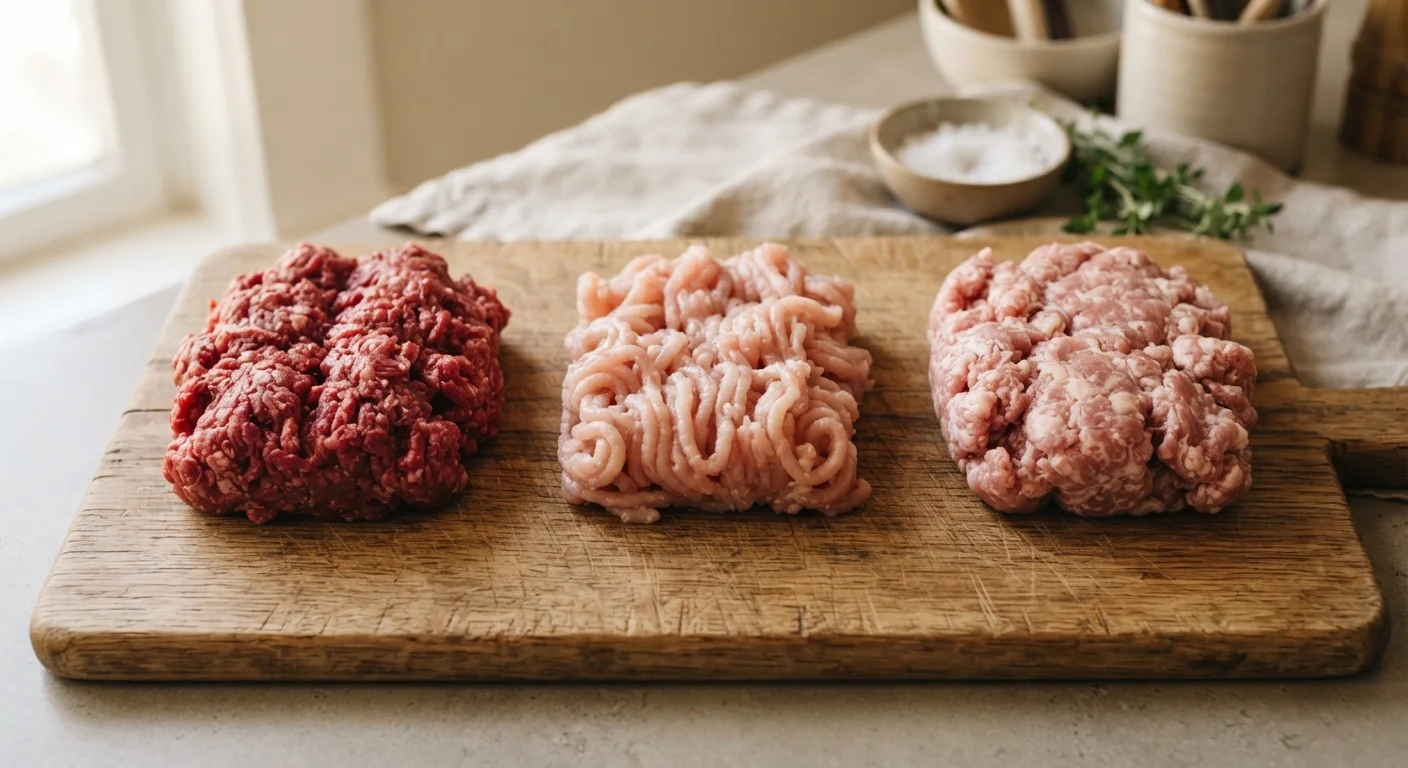
Our Verdict
No single ground meat is universally superior — each excels in different cooking contexts. Ground beef remains the most forgiving all-purpose choice, while ground turkey works well when managed carefully for moisture, and ground pork shines in recipes that benefit from its natural sweetness and fat.
| Best for | Recommended |
|---|---|
| Everyday burgers, tacos, and pasta sauces | Ground beef (80/20) |
| Lower-fat weeknight meals without sacrificing heartiness | Ground turkey (93/7 with added moisture) |
| Dumplings, meatballs, and blended meat dishes | Ground pork |
| Meatloaf and meatballs needing balanced fat and flavor | Ground beef and pork blend |
Why the Swap Isn't Always One-to-One
Swapping ground meats mid-recipe feels simple until the texture turns crumbly or the dish comes out dry. The reason isn't just flavor — it's fat content, protein structure, and moisture levels working together. Each ground meat has a distinct fat-to-protein ratio that determines how it browns, binds, and holds together in the pan.
Ground beef at the common 80/20 blend (80% lean, 20% fat) contains roughly 17–20 grams of fat per 3-ounce serving. Standard ground turkey (93% lean) sits closer to 3–4 grams. Ground pork lands in the middle, typically around 14–16 grams of fat per serving. These differences aren't cosmetic — fat carries flavor, prevents sticking, and creates the juicy mouthfeel most people associate with a satisfying meal. Understanding this helps you compensate intelligently rather than just swapping by weight. See our protein comparison guide for a broader look at how these meats stack up nutritionally.
| Ground Beef (80/20) | Ground Turkey (93/7) | Ground Pork | |
|---|---|---|---|
| Typical fat content (per 3 oz) | ~17–20g fat | ~3–4g fat | ~14–16g fat |
| Flavor profile | Rich, savory, beefy | Mild, neutral | Mildly sweet, savory |
| Browning performance | Excellent, consistent | Moderate; needs hot pan | Good, fat aids browning |
| Moisture retention | High due to fat content | Low; dries quickly | Moderate to high |
| Best dishes | Burgers, tacos, pasta sauce | Chili, stuffed peppers, tacos | Dumplings, meatballs, meatloaf |
| Forgiveness for beginners | Most forgiving | Least forgiving | Moderately forgiving |
| Safe internal temp | 160°F | 165°F | 160°F |
Ground Beef: The Reliable Standard
Ground beef's fat content does most of the heavy lifting in familiar American dishes. In a skillet, that fat bastes the meat as it renders, producing deep browning and a savory crust. In meatballs or meatloaf, it keeps the interior moist through the entire bake time. This is why 80/20 ground beef is so forgiving — even slightly overcooked, it stays palatable.
If you're using a leaner ground beef (90/10 or 93/7), treat it more like ground turkey: add a tablespoon of olive oil to the pan, avoid overcooking, and consider mixing in a panade (bread softened in milk) for meatballs. The closer you get to 100% lean, the more deliberate your technique needs to be. For more on why overcooking causes toughness, see our article on why meat turns tough.
The Panade Trick for Leaner Meats
A panade — one or two slices of bread soaked in a splash of milk until soft, then mashed — mixed into ground turkey or lean beef meatballs dramatically improves moisture and tenderness. The starch absorbs juices that would otherwise escape during cooking. Use about one slice of bread per pound of meat for best results.
Ground Turkey: Lean but Demanding
Ground turkey is popular for reducing saturated fat, but it punishes inattention. Its low fat content means it goes from properly cooked to dry and chalky quickly — and it releases more water during cooking, which can inhibit browning if the pan isn't hot enough.
To compensate when using ground turkey in place of beef:
- Add fat back in: A tablespoon of olive oil per pound helps browning and moisture.
- Use aromatics generously: Onion, garlic, and herbs help fill the flavor gap that fat normally provides.
- Deglaze or add sauce: Turkey in pasta sauce or chili works well because the liquid medium keeps it moist.
- Avoid pressing it: In burgers, handle gently and resist flattening — it has less fat to protect it from drying out.
Ground turkey works best in heavily seasoned dishes like tacos, turkey chili, or stuffed peppers where bold seasonings and moisture-rich sauces compensate for its neutral flavor profile.
Ground Pork: The Underused Workhorse
Ground pork brings a mild sweetness and a fat content that falls between beef and turkey, making it a natural team player. It's the foundation of countless dumpling and dim sum traditions, and it's standard in Italian and American sausages for good reason — it binds well, stays moist, and picks up seasonings readily.
In meatloaf or meatballs, mixing equal parts ground beef and ground pork is a classic technique that produces better texture and flavor than either alone. The pork fat keeps the mixture tender while the beef provides savory depth. In Asian-inspired dishes like lettuce wraps or noodle stir-fries, ground pork is often the better choice over beef because its lighter flavor doesn't compete with soy, ginger, or sesame.
One thing to keep in mind: ground pork should always be cooked to an internal temperature of 160°F, the same standard as ground beef and ground turkey. Use an instant-read thermometer rather than guessing by color.
Always Cook Ground Meat to a Safe Temperature
Unlike whole cuts, ground meats are more susceptible to bacterial contamination because surface bacteria gets mixed throughout during grinding. The USDA recommends cooking all ground beef and ground pork to 160°F and ground turkey to 165°F. Color alone is not a reliable indicator of doneness — an instant-read thermometer is the only accurate way to verify.
Practical Rules for Swapping Successfully
When you need to substitute one ground meat for another, these principles help maintain the result the recipe intends:
- Match fat percentages, not just meat type
- 80/20 ground beef and a fattier ground turkey (85/15) will behave more similarly than 80/20 beef and 99% lean turkey.
- Adjust cooking temperature
- Leaner meats need a hotter pan to brown properly, but they also overcook faster. Work quickly.
- Compensate for missing fat in baked dishes
- Add a tablespoon of oil or a panade when using turkey in meatballs or meatloaf.
- Lean into the flavor profile
- Don't fight what each meat does naturally — let pork's sweetness complement Asian sauces, and let beef's savoriness anchor tomato-based dishes.
Swapping ground meats successfully is less about following a strict substitution chart and more about understanding what fat and flavor are doing in your specific dish — then deciding how much of that to preserve or redirect.
The content on this site is for informational purposes only and is not a substitute for professional advice. Always consult a qualified professional for guidance specific to your situation.