

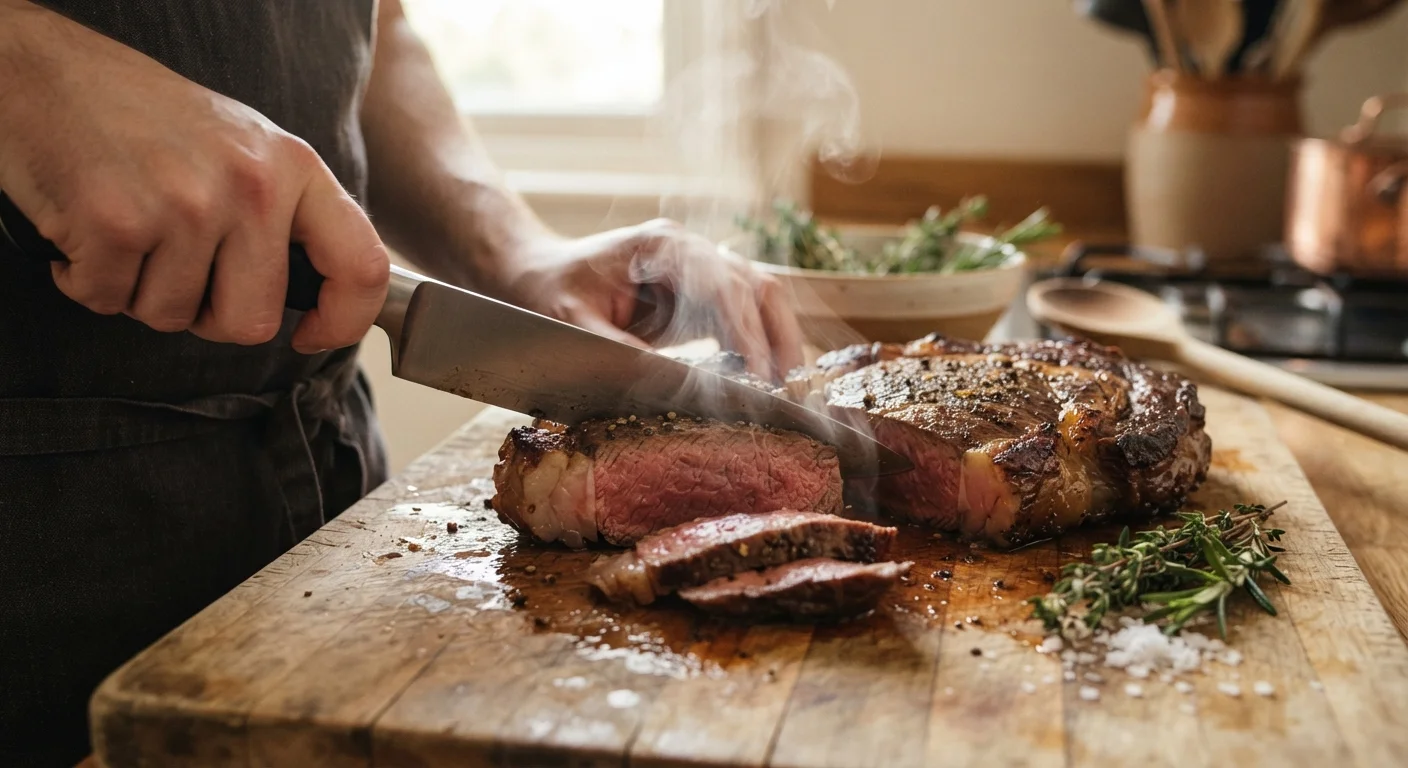
Why Meat Toughness Happens in the First Place
Tough meat almost always comes down to one of three things: the wrong cooking method for the cut, heat applied incorrectly, or the way the cooked meat was handled afterward. Understanding the basic structure of meat helps clarify why each mistake matters.
Meat is made up of muscle fibers bundled together and held in place by connective tissue — primarily collagen. Cuts that come from muscles the animal used frequently (legs, shoulders, neck) have more connective tissue and are inherently tougher raw. Cuts from less-worked areas (loin, rib) are naturally more tender. Neither is better; they simply need different cooking approaches.
When heat is applied, muscle proteins begin to contract and push out moisture. Collagen, by contrast, breaks down into gelatin over extended low heat — which is what makes a properly braised short rib feel almost silky. Knowing which process you're triggering is the foundation of cooking meat well. The mistakes below all interfere with one of these processes in a predictable way.
Cut Selection Determines Cooking Method
No amount of technique will fully compensate for applying the wrong cooking method to a cut. Tough, collagen-rich cuts like chuck or brisket need long, moist, low-temperature cooking to break down connective tissue. Tender cuts like tenderloin or ribeye need quick, high-heat cooking and will become dry and stringy if braised for hours.
The Most Common Mistakes — and How to Fix Them
Each of the errors below has a clear mechanical explanation, which means each one also has a straightforward fix. Work through these and you'll have a reliable framework for diagnosing and preventing tough meat in your own kitchen.
Using a quick, high-heat method on a tough, collagen-heavy cut.
Why it happens: Home cooks often treat all cuts interchangeably — if it's beef, they assume a hot pan or grill will work. But cuts from heavily worked muscles (shoulder, shank, brisket) are loaded with connective tissue that only breaks down slowly.
Skipping or shortening the resting period after cooking.
Why it happens: When food is on the table, waiting feels unnecessary — especially when the meat smells done. But cutting too soon forces the juices, which have been pushed toward the center by heat, to spill out onto the cutting board instead of redistributing through the meat.
Slicing meat with the grain rather than against it.
Why it happens: The grain — the direction of the muscle fibers — isn't always obvious, and many cooks simply don't think about it. Cutting with the grain leaves long, intact fibers that require significant chewing force to break down.
Overcooking lean cuts by cooking them at high heat for too long.
Why it happens: Many home cooks, worried about undercooked meat, default to longer cooking times. Lean cuts like chicken breast, pork loin, or top-round beef have little fat to buffer heat, so even modest overcooking drives out moisture and firms up proteins quickly.
Marinating too briefly — or with too much acid for too long.
Why it happens: Marinades are often treated as an afterthought, either rushed (30 minutes when hours are needed) or over-applied (leaving acidic marinades on delicate proteins for many hours). Acid does begin to denature proteins, but prolonged exposure can make the outer layer mushy rather than tender.
~30%
Moisture lost when meat skips resting
Food science research indicates that cutting into meat immediately after cooking can cause significantly more juice loss compared to allowing an adequate rest period.
160°F+
Temperature at which muscle proteins tighten dramatically
Culinary science generally holds that cooking lean cuts beyond approximately 160°F causes muscle fibers to contract aggressively, squeezing out moisture and producing a tough, dry texture.
One often-overlooked variable is how different proteins behave under the same conditions. If you frequently swap ground meats in recipes, keep in mind that fat content affects moisture retention and perceived tenderness — our article on how ground beef, turkey, and pork differ covers what to expect when substituting one for another.
Don't Rely on Color Alone for Doneness
Judging doneness by color — looking for clear juices or a browned exterior — is unreliable and can lead to both undercooked and overcooked meat. Use an instant-read thermometer inserted into the thickest part of the cut for accuracy. This is especially important for poultry and ground meats, where food safety depends on reaching a minimum internal temperature.
A final note: some persistent kitchen beliefs about tenderizing — like the idea that searing locks in juices — aren't supported by how cooking actually works. Revisiting those assumptions can prevent decisions that seem logical but lead to tougher results. Our piece on common cooking myths worth letting go is a useful companion read.
The content on this site is for informational purposes only and is not a substitute for professional advice. Always consult a qualified professional for guidance specific to your situation.