

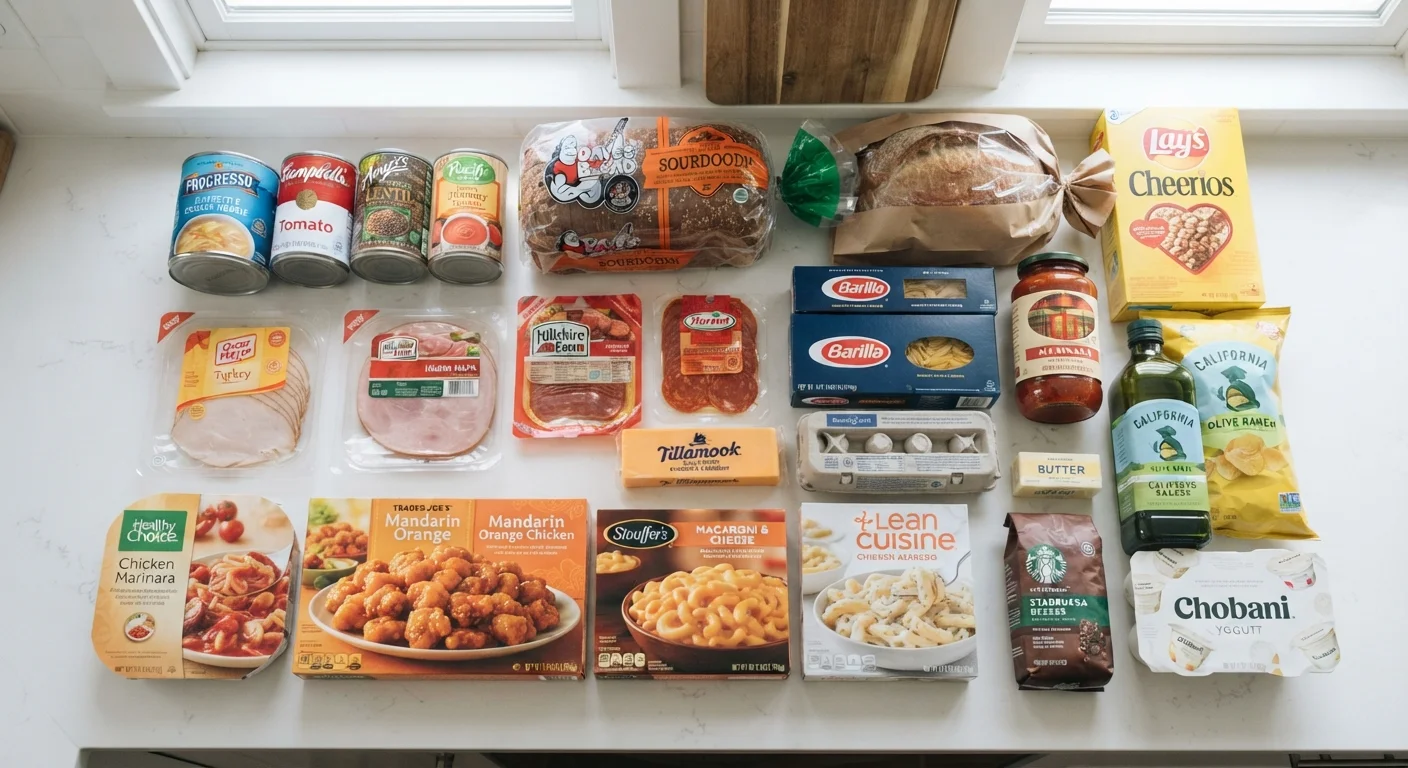
Why Most Sodium Doesn't Come From Your Salt Shaker
Many people assume they can control their sodium intake by simply not salting their food. In reality, the salt shaker at the table contributes only a small fraction of what most Americans consume each day. According to the Centers for Disease Control and Prevention (CDC), approximately 70% of dietary sodium in the U.S. comes from processed and packaged foods, as well as restaurant meals — before anyone reaches for the shaker.
This matters because it shifts where attention is most usefully directed. Worrying about the pinch of salt you add to home-cooked pasta is less impactful than understanding what's already baked, cured, or preserved into the foods you buy. Sodium functions as a preservative, a flavor enhancer, and a texture agent in food manufacturing — roles that make it extremely common across a wide range of products.
Sodium Is Not the Same as Salt
Table salt (sodium chloride) is the most common source of sodium in food, but sodium appears in many other food additives — including sodium bicarbonate (baking soda), sodium nitrate (used in cured meats), and sodium benzoate (a preservative). When reading labels, the 'Sodium' figure on the Nutrition Facts panel accounts for all forms, not just added table salt.
To understand how salt behaves chemically in cooking and preservation, see our guide to what salt actually does in cooking.
The Foods That Contribute Most
Some of the biggest sodium sources are ones that may not taste particularly salty. Bread and rolls top many lists — not because a single slice is loaded with sodium, but because most Americans eat bread multiple times a day, and the milligrams add up quickly. A single slice of sandwich bread can contain 100–200 mg of sodium; two sandwiches across a day adds up fast.
Beyond bread, the CDC and nutrition researchers consistently point to the following categories as major contributors:
- Cured and deli meats — ham, turkey, salami, bacon, and similar products are preserved with salt and sodium-containing compounds.
- Canned soups and broths — a single can of condensed soup can deliver over 800 mg of sodium per serving, and many cans contain two servings.
- Pizza — combines sodium-rich crust, processed cheese, and cured meat toppings.
- Savory snacks — chips, crackers, pretzels, and popcorn are seasoned heavily for palatability.
- Condiments and sauces — soy sauce, ketchup, hot sauce, and salad dressings contribute meaningfully even in small amounts.
- Frozen and fast food meals — convenience products are often high in sodium for both preservation and flavor.
~70%
Dietary sodium from packaged and restaurant foods
According to the CDC, roughly 70% of sodium consumed by Americans comes from processed, packaged, and restaurant food — not salt added at the table or during home cooking.
3,400 mg
Average daily sodium intake for U.S. adults
The CDC estimates that American adults consume an average of about 3,400 mg of sodium per day — nearly 50% more than the general guidance of 2,300 mg.
40%
Sodium reduction from rinsing canned beans
Research has found that draining and rinsing canned beans under water can reduce their sodium content by approximately 40%, making it a simple strategy for lower-sodium cooking.
Restaurant meals deserve particular attention. A single entrée at a sit-down restaurant frequently delivers 1,500–2,000 mg of sodium or more — close to or exceeding the entire daily general guidance in one meal.
How to Get a Clearer Picture of Your Intake
The Nutrition Facts label is your most reliable tool. Look at the sodium line in milligrams per serving, and — critically — check what counts as one serving. Many canned goods and packaged snacks list a modest per-serving figure that doesn't reflect how much a typical person actually eats in one sitting.
A useful benchmark: foods with 140 mg of sodium or less per serving are generally labeled as 'low sodium' under FDA guidelines, while foods above 600 mg per serving are considered high. Neither label tells you whether a food is right for your overall eating pattern — that context matters.
For consumers who want to reduce sodium without abandoning convenience, a few practical shifts help: choosing low-sodium or no-salt-added versions of canned goods, rinsing canned beans before use (which can reduce sodium by up to 40%), and preparing sauces and soups from scratch where possible. Comparing labels between similar products is also straightforward — sodium varies widely across brands of the same food category.
It's also worth noting that sodium consumption doesn't exist in isolation. Eating patterns higher in whole, minimally processed foods tend to be lower in sodium almost by default — and higher in nutrients many Americans under-consume. If you're curious about one of those, see our overview of dietary fiber and why most Americans fall short.
This article provides general nutrition education and is not a substitute for personalized medical or dietary advice. If you have specific health concerns related to sodium or blood pressure, consult a qualified healthcare professional or registered dietitian.
Frequently Asked Questions
Dietary Guidelines for Americans recommend consuming less than 2,300 milligrams of sodium per day for most adults. That's roughly equivalent to one teaspoon of table salt. Many Americans currently consume well above that threshold on a typical day.
Generally, yes. Home-cooked meals give you direct control over what goes in. Since most dietary sodium comes from packaged and restaurant foods, preparing more meals from whole ingredients naturally tends to reduce intake — even if you add some salt during cooking.
Bread and rolls, deli and cured meats, pizza, soups, burritos and tacos, and savory snacks consistently rank among the top contributors, according to the CDC. The high ranking of bread surprises many people because individual servings don't taste especially salty.
Not meaningfully so. All varieties of salt — table, sea, kosher, Himalayan — contain similar amounts of sodium by weight. Kosher salt has larger crystals, so a given volume measure may contain slightly less sodium, but the difference is modest and not a reliable strategy for reducing intake.
Yes, though it is uncommon in healthy adults eating a normal diet. The body requires some sodium to function. Hyponatremia (abnormally low sodium levels) is a medical condition that can arise from certain health conditions or extreme fluid imbalances — it's not a risk from simply eating less processed food.
Check the Nutrition Facts panel for 'Sodium' listed in milligrams per serving, then check the serving size at the top. A product with 600 mg per serving that you eat two servings of delivers 1,200 mg — more than half the daily general guidance in a single food item.
The content on this site is for informational purposes only and is not a substitute for professional advice. Always consult a qualified professional for guidance specific to your situation.