

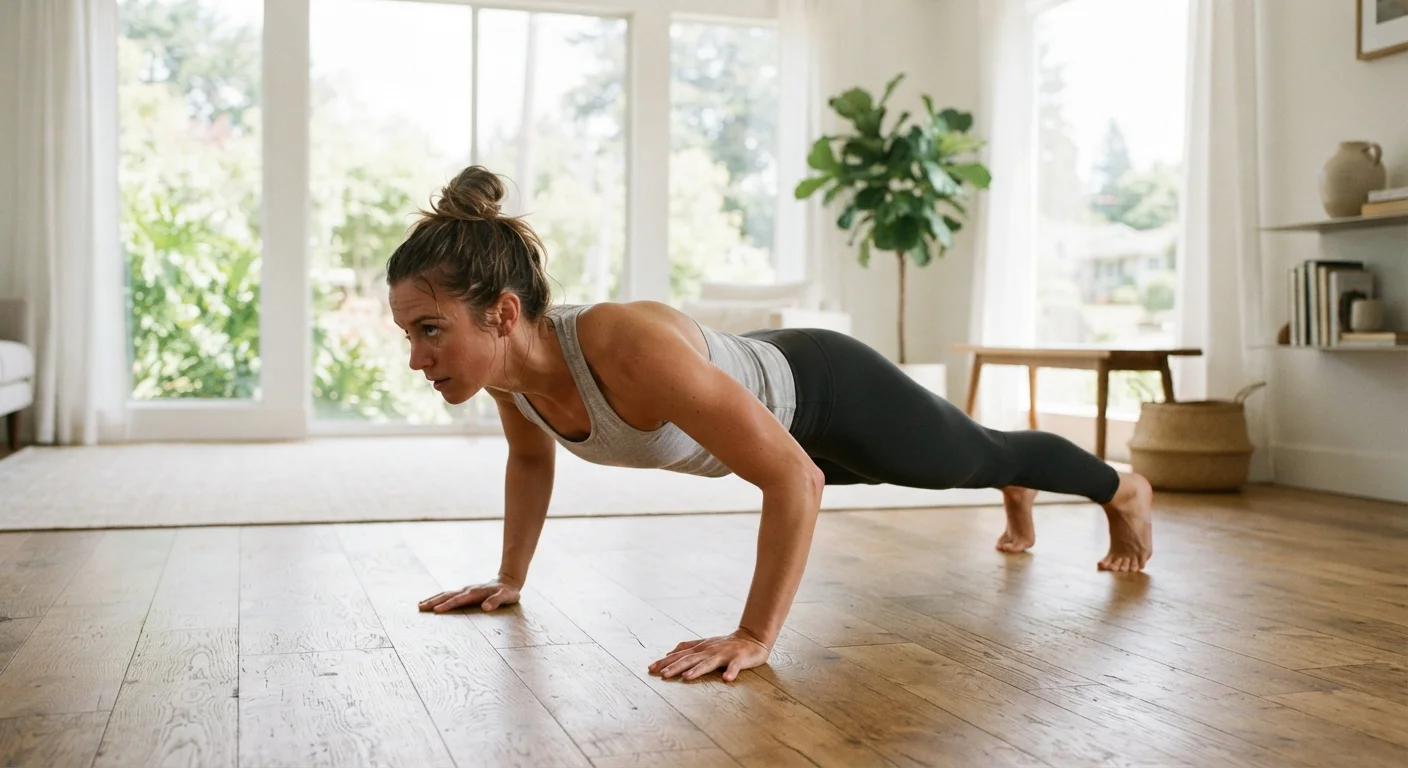
What Is Bodyweight Training?
Bodyweight training is a form of resistance exercise that uses your own body mass — rather than free weights or machines — to build strength, improve endurance, and develop mobility. Movements like push-ups, squats, lunges, and planks are classic examples. Because no equipment is required, sessions can happen in a living room, hotel room, park, or backyard.
This style of training has deep roots: military fitness programs, gymnastics, and martial arts have relied on bodyweight movements for centuries. Today, exercise scientists recognize it as a legitimate and effective method for improving physical fitness across a wide range of goals and ability levels. For a primer on the terminology you'll encounter as you dig deeper, see our fitness glossary.
Key Benefits Backed by Research
Bodyweight exercise delivers measurable health benefits that extend well beyond convenience. Studies published in journals such as the Journal of Strength and Conditioning Research have found that structured bodyweight programs can produce meaningful gains in muscular strength and endurance comparable to machine-based training for beginners and intermediate exercisers.
~150 min
Weekly moderate exercise recommended for adults
The U.S. Department of Health and Human Services Physical Activity Guidelines for Americans recommend at least 150 minutes of moderate-intensity aerobic activity per week for adults.
29%
Adults who meet both aerobic and strength guidelines
According to CDC data, only about 29% of U.S. adults meet both the aerobic and muscle-strengthening activity guidelines, highlighting a significant gap bodyweight training can help close.
0
Equipment required to start bodyweight training
Unlike gym-based programs, a foundational bodyweight routine requires no equipment, membership, or dedicated space beyond a small clear floor area.
Additional evidence-supported benefits include:
- Cardiovascular conditioning: High-intensity bodyweight circuits elevate heart rate effectively, supporting aerobic capacity.
- Improved mobility and joint health: Many bodyweight movements train the body through its full range of motion.
- Lower injury risk for beginners: Without heavy external loads, the barrier for learning proper form is lower.
- Mental health support: Regular moderate exercise is associated with reduced symptoms of anxiety and depression, according to the American Psychological Association.
Compared to a walking-only routine — a great starting point covered in our guide on starting a walking routine — bodyweight training adds a strength and resistance component that walking alone does not provide.
Core Movement Patterns to Know
Rather than memorizing individual exercises, it helps to think in movement patterns. Most effective bodyweight programs are built around five foundational categories:
- Push
- Exercises that move resistance away from the body. Examples: push-ups, pike push-ups, dips.
- Pull
- Movements that draw the body toward a fixed point. Examples: bodyweight rows using a low bar or table edge, chin-ups.
- Squat
- Lower-body movements involving knee and hip flexion. Examples: squats, split squats, jump squats.
- Hinge
- Hip-dominant movements that load the posterior chain. Examples: single-leg deadlifts, glute bridges, hip thrusts.
- Core
- Exercises that stabilize the spine and transfer force. Examples: planks, dead bugs, hollow body holds.
A balanced routine includes at least one exercise from each category per session. To understand how this compares to weighted training, our article on strength training vs. cardio offers useful context on what each approach contributes.
When learning a new movement pattern, film yourself from the side on your phone. You'll spot alignment issues — like knees caving or hips dropping — that are nearly impossible to feel in the moment.
Visual feedback accelerates technique learning and reduces the risk of reinforcing poor form through repetition.
If you can complete all your planned sets with good form and feel like you could do several more reps, that's your cue to advance the exercise — not the end of next month.
Progressive overload applied as soon as readiness is demonstrated leads to faster, more consistent adaptation than waiting for arbitrary time milestones.
How to Structure a Bodyweight Workout
Effective workouts have a logical flow: warm-up, main work, and cool-down. For bodyweight training, a simple structure might look like this:
- Warm-up (5–10 minutes): Light movement that raises core temperature and loosens joints — leg swings, arm circles, slow squats.
- Main work (20–30 minutes): Select one or two exercises per movement pattern and complete them in sets with rest periods in between. Beginners often do well with 2–3 sets of each exercise.
- Cool-down (5 minutes): Gentle stretching and breathing to aid recovery.
Frequency matters. Most exercise guidelines recommend muscle groups recover for at least 48 hours between sessions, so three non-consecutive days per week is a common and practical starting point. For strategies on making workouts a consistent part of your life, see our guide on building an exercise habit that actually sticks.
Progressing Over Time Without Equipment
One common misconception is that bodyweight training plateaus quickly. In reality, progression is achievable through several variables that don't require adding weight:
- Leverage: Elevating feet during a push-up shifts more load to the shoulders; moving to a one-arm push-up dramatically increases demand.
- Tempo: Slowing the lowering phase of a squat (eccentric phase) increases time under tension and stimulates greater muscle adaptation.
- Range of motion: Deepening a squat or adding a pause at the bottom increases difficulty.
- Exercise variation: Progressing from a standard squat to a pistol squat represents a significant strength jump requiring no equipment.
- Volume: Gradually adding sets or repetitions over weeks is a straightforward form of progressive overload.
Tracking your workouts — even in a simple notebook — makes it easier to see when you're ready to progress. If motivation flags along the way, our article on why people quit exercising can help you identify and address common barriers.
Common Mistakes and How to Avoid Them
Even without weights, poor technique or programming choices can limit results or cause injury. Watch for these patterns:
- Skipping the warm-up: Cold muscles and joints are less pliable and more prone to strain. A short warm-up is non-negotiable.
- Prioritizing quantity over quality: Fifty sloppy push-ups produce less benefit — and more injury risk — than twenty controlled ones.
- Neglecting pull movements: Without a pull-up bar or similar anchor, many people skip pulling exercises, creating muscular imbalances over time. Improvised rows using a sturdy table can help.
- Doing the same workout every day: Muscles adapt to stress. Varying exercises and intensity across sessions drives continued progress.
- Ignoring rest and recovery: Adaptation happens during recovery, not during the workout itself. Sleep and rest days are part of the program.
Whether you prefer to train alone or alongside others can also shape your experience. Our piece on solo vs. group exercise explores the real tradeoffs of each approach.
This article is for general informational and educational purposes only and does not constitute medical advice. Consult a qualified healthcare professional before starting any new exercise program, particularly if you have an existing health condition, injury, or other medical concern.
The content on this site is for informational purposes only and is not a substitute for professional advice. Always consult a qualified professional for guidance specific to your situation.