

Turning a Deck Into a Room Outside
Most homeowners underuse their decks — a table, a few chairs, and not much else. But with the right additions, a deck can function like a genuine extra room: a place to cook, gather, relax, and even garden. The projects below range from weekend-scale to multi-week efforts, and each one meaningfully extends how you use your outdoor space across seasons.
Before starting any structural project, check with your local building department about permit requirements. Decks, pergolas, and load-bearing structures often need approval, and requirements vary widely by municipality. Always consult a licensed contractor for work that involves footings, ledger attachments, or electrical connections.
Permits and Codes Vary by Location
Building codes for decks, pergolas, and outdoor structures differ significantly from one municipality to the next. What requires a permit in one county may not in another — and vice versa. Before purchasing materials or breaking ground, contact your local building department to confirm what's required. Unpermitted structural work can create complications during home sales and may affect homeowner's insurance coverage.
Eight Deck Projects Worth Tackling
Add Built-In Bench Seating With Storage
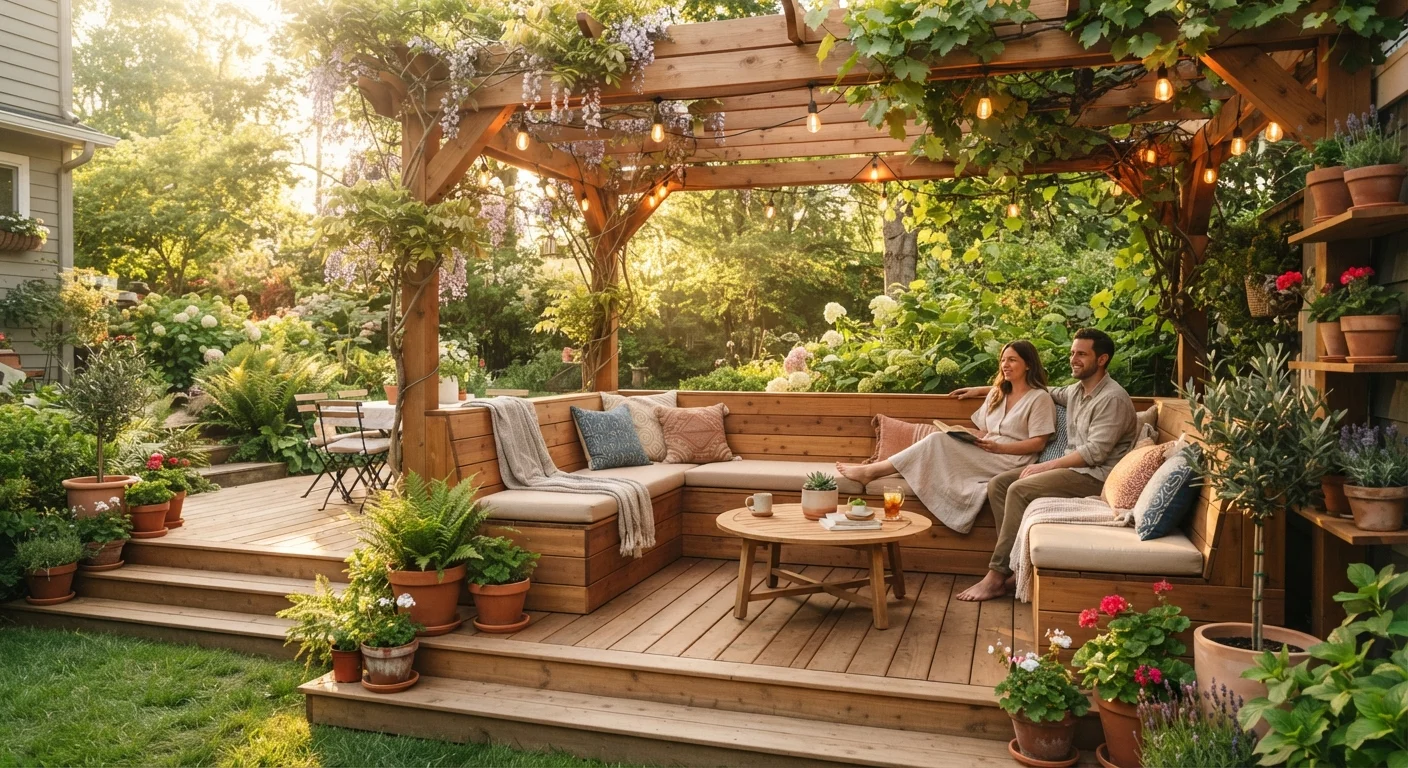
Built-in benches along the perimeter of a deck serve double duty: they provide seating without consuming floor space the way freestanding furniture does, and when built with hinged lids, they offer weatherproof storage for cushions, tools, and outdoor gear. Standard bench height is 17–19 inches, which aligns comfortably with most table heights. Use pressure-treated lumber for the frame and match your decking material for the seat surface. This is a manageable DIY project for someone comfortable with basic carpentry, though getting the framing anchored properly to the deck structure matters for safety.
Built-in benches reclaim floor space while keeping outdoor gear neatly out of sight.
Install a Pergola for Shade and Structure
A pergola defines an outdoor space and provides partial shade without fully enclosing it. Freestanding pergolas can sit on deck footings; attached pergolas connect to the house via a ledger board, which typically requires a permit and careful flashing to prevent water intrusion. The overhead beams and rafters filter direct sun, and adding a shade sail, retractable canopy, or climbing plants between the rafters increases coverage significantly. Pergolas also give you a safe, engineered anchor point for ceiling fans, string lights, and outdoor curtains — all of which improve comfort and ambiance. Always verify that the pergola's post spacing and beam sizing meet local load requirements before building.
A pergola anchors an outdoor room and gives you a structure to build shade and lighting around.
Define Zones With Decking Patterns or Level Changes
A deck that blurs into one undifferentiated platform feels less like a room and more like a platform. Creating distinct zones — a dining area, a lounging area, a transition space — makes the deck feel intentional and larger than it is. You can define zones with a change in decking board direction or pattern, a small step up or down to a secondary level, or a simple area rug on composite decking. Multi-level decks require structural planning and often permits; a change in board direction is a simpler option achievable during a resurfacing project.
Distinct zones transform a flat platform into a space that feels organized and purposeful.
Create an Outdoor Kitchen or Grilling Station
Even a modest dedicated grilling station — a built-in counter with a weatherproof cabinet below — keeps cooking organized and prevents the grill from dominating the deck layout. More elaborate setups incorporate a sink, mini-refrigerator, and storage drawers in a masonry or steel frame. For anything involving gas lines or electrical outlets, a licensed plumber and electrician are required; this is not a DIY gray area. Plan for counter surfaces rated for outdoor use (porcelain tile, stainless steel, and natural stone are common choices) and ensure the structure is anchored so it won't shift.
A dedicated grilling station keeps cooking contained and frees up the rest of the deck.
Add Deck Lighting for Evening Usability
Lighting is one of the highest-impact, lower-complexity upgrades you can make. Low-voltage LED systems — post-cap lights, riser lights on stair risers, and in-deck well lights — are relatively accessible for homeowners comfortable with basic wiring and typically connect to a transformer rather than line voltage. String lights hung from a pergola or post system require only exterior-rated extension cords or simple outlet access. For anything involving new outdoor electrical circuits or outlets, hire a licensed electrician. Good lighting extends usable hours, improves safety on stairs, and changes the mood of the space entirely.
The right lighting doubles the hours your deck is genuinely usable without major construction.
Build a Privacy Screen or Wind Block
A privacy screen along one or two sides of a deck reduces exposure to neighbors and prevailing winds, making the space more comfortable for more months of the year. Options range from a simple lattice panel attached to existing posts, to a planted trellis wall, to a full board-and-batten screen. The key is ensuring screens don't place excessive lateral load on the deck railings — screens should be anchored to independent posts set in the ground or bolted to the deck framing, not hung from railing systems not designed to support them. A contractor can advise on safe attachment methods for your specific deck structure.
Privacy screens block wind and create enclosure, making a deck feel like a true outdoor room.
Incorporate Container Gardens and Planters
Integrated planters — either built into deck corners or mounted along railings — bring greenery into the space without sacrificing floor area. Built-in wood planters should be lined with a waterproof membrane and include drainage gaps to prevent water from contacting the deck structure and causing rot. Railing-mounted planters should be sized and fastened to stay within the railing's weight capacity. Even freestanding containers grouped intentionally can soften the hard surfaces of a deck and create a natural room boundary. For a deeper look at working with plants in limited outdoor spaces, container gardening basics covers what works and what doesn't.
Built-in planters add life and natural boundaries without consuming valuable floor space.
Install a Retractable Awning or Shade Sail
For decks where a full pergola isn't practical — either because of cost, HOA restrictions, or building constraints — a retractable awning or shade sail provides adjustable overhead coverage. Retractable awnings mount to the house wall and extend over the deck; motorized models retract automatically in high winds with sensor add-ons. Shade sails are tensioned between anchor points and are simpler to install, though they require solid anchor points — typically posts set in concrete or existing structural elements. Neither solution should be anchored to fascia boards or gutters without engineering confirmation that the attachment can handle load.
Retractable awnings offer flexible shade without the permanence or permitting of a full pergola.
Start With the Projects You'll Use Most
Resist the urge to tackle everything at once. Identify the single biggest reason you avoid your deck — too hot, too exposed, not enough seating — and solve that first. One well-executed improvement used daily delivers more value than several half-finished projects. Budget and sequence subsequent projects as time and resources allow.
Plan Before You Build
The projects that pay off most are the ones tied to how you actually live. If you rarely host large groups, a sprawling outdoor kitchen may not be worth the investment. If afternoon sun makes your deck unusable by 3 p.m., shade becomes the priority. Sketch your deck to scale, note sun angles and traffic patterns, then prioritize accordingly.
Once your deck is improved, keeping it in good shape matters just as much as the upgrades. See our guide to wood deck maintenance to understand the cleaning, sealing, and inspection routine that protects your investment. And if your new deck zones inspire a gardening interest, container gardening is an accessible way to bring plants into any outdoor space, no yard required.
The content on this site is for informational purposes only and is not a substitute for professional advice. Always consult a qualified professional for guidance specific to your situation.