

Our Verdict
Container gardening is a genuinely practical solution for growing plants when traditional garden space isn't available. It offers meaningful control over growing conditions and can be deeply rewarding — but it demands more consistent attention than in-ground gardening, particularly around watering and feeding. The tradeoffs are real, but for many gardeners, the flexibility and accessibility more than compensate.
Ideal for apartment dwellers, renters, urban gardeners, or anyone with limited outdoor space who wants to grow herbs, vegetables, or ornamentals without committing to a full garden setup.
What Container Gardening Actually Means
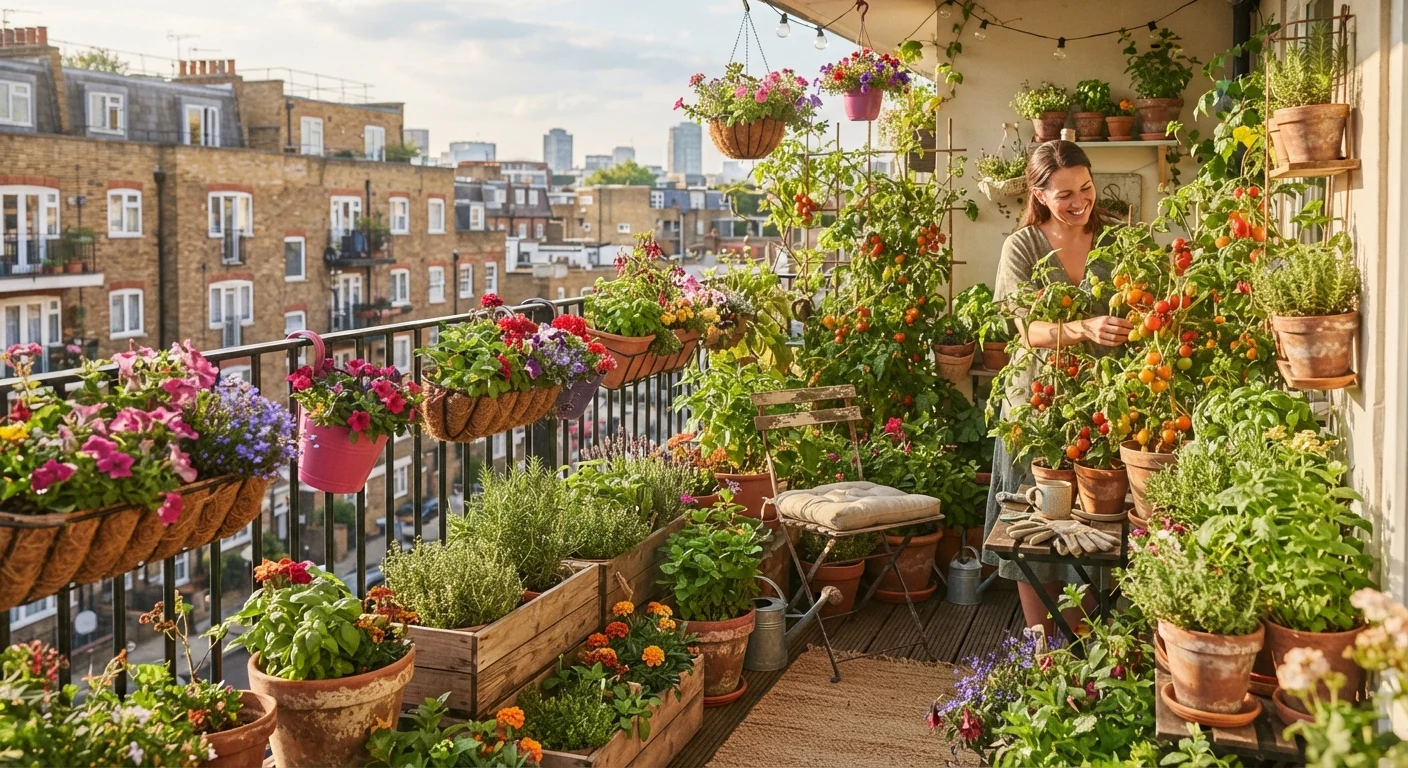
Container gardening simply means growing plants in pots, planters, window boxes, hanging baskets, or any other vessel rather than directly in the ground. It's one of the oldest forms of cultivated gardening and remains one of the most adaptable. A modest collection of containers on a sunny balcony can yield fresh herbs, salad greens, peppers, and even compact tomato varieties through a full growing season.
The approach suits a wide range of living situations — apartment balconies, paved patios, front stoops, and interior windowsills all qualify as viable growing spaces. If you're weighing this against alternatives, our guide to raised beds vs. in-ground planting covers how the approaches compare across drainage, cost, and soil management.
The Advantages of Growing in Containers
Container gardening offers several genuine benefits that even experienced gardeners appreciate — not just beginners working around limited space.
Grows plants with no in-ground space required
Containers work on concrete balconies, rooftops, patios, and windowsills — anywhere that receives adequate sunlight. This makes gardening accessible to renters and urban residents who have no yard at all.
Full control over soil quality and drainage
You choose and mix the growing medium, so poor native soil, clay, or contaminated ground is never an obstacle. This is particularly valuable in urban areas where soil quality can be unpredictable.
Plants can be moved to optimize light or shelter
Containers can be repositioned as seasons change, as shade patterns shift, or to protect plants from frost or excessive heat. That level of adaptability isn't available with in-ground planting.
Easier to manage pests and disease
Isolated containers reduce the spread of soil-borne diseases and make it simpler to inspect, treat, or quarantine an affected plant without disrupting the rest of your garden.
Scales easily — start small and expand gradually
A single pot of herbs is a perfectly complete container garden. You can add containers one at a time as your confidence and available space grow, without any upfront commitment to a full setup.
One underappreciated benefit is mobility. If a plant isn't performing in one location, you can simply move it. That kind of flexibility doesn't exist with in-ground planting. Containers also let you sidestep poor native soil entirely — a common problem that's explored in our piece on garden myths that keep new growers stuck.
The Real Limitations to Know Before You Start
Container gardening has genuine constraints that are worth understanding honestly before you invest in pots, soil, and seeds.
Requires more frequent watering than in-ground plants
Containers dry out much faster than garden beds because they lack access to groundwater. In hot weather, some pots may need watering daily, making consistency essential — a challenge during travel or busy periods.
Nutrients deplete quickly and must be replenished
Regular watering washes nutrients out of potting mix faster than in ground soil. Container plants need supplemental fertilizing throughout the growing season to sustain healthy growth and yields.
Root space limits plant size and crop yield
Many vegetables and large ornamentals need more root room than a container can provide. Even with the right container size, yields from crops like tomatoes or squash will generally be lower than in-ground equivalents.
Containers can be expensive to set up properly
Quality pots, premium potting mix, and ongoing fertilizer represent a real upfront and recurring cost. Large or decorative containers in particular can be a meaningful expense compared to starting a simple ground bed.
Temperature extremes affect roots more directly
Pot walls offer little insulation, so roots are more exposed to freezing temperatures in winter and overheating in full summer sun. This can stress plants or kill them in climates with temperature extremes.
These limitations don't make container gardening impractical — they just mean success requires more consistent daily attention than in-ground gardening typically does. If you're in a planning phase, the pre-season garden checklist can help you build good habits from the start.
Choosing the Right Plants and Containers
Success in container gardening starts with matching plant selection to container size. Shallow-rooted plants — lettuce, herbs like basil and parsley, radishes, and most annual flowers — adapt well to smaller pots. Deep-rooted crops like carrots, tomatoes, and peppers need containers at least 12 inches deep, and often wider.
Avoid Garden Soil in Containers
Standard garden soil is not designed for container use — it compacts over time, reduces aeration around roots, and can introduce pests or pathogens. Purpose-made potting mixes are formulated to stay loose and drain properly in confined spaces. Look for a mix that includes perlite or vermiculite for added drainage and aeration.
Drainage is non-negotiable. Every container should have at least one drainage hole, and saucers should be emptied after heavy rain to prevent waterlogging. A high-quality potting mix — not garden soil, which compacts badly in containers — gives roots the aeration and nutrient access they need. Supplementing with compost improves both nutrient content and moisture retention; our article on composting at home explains how to make your own.
Making the Most of a Small Setup
Getting good results from containers is largely about consistency. Water when the top inch of soil is dry — more frequently in hot weather or for terracotta pots, which lose moisture faster than plastic or glazed ceramic. Feed container plants with a balanced fertilizer every two to four weeks during the growing season, since frequent watering leaches nutrients from the mix.
Grouping containers together helps retain humidity and makes watering more efficient. Pairing compatible plants in a single large container is another practical strategy — companion planting can guide which combinations work well together. If you're starting from seed rather than transplants, starting seeds indoors gives containers an early-season head start.
80%+
U.S. households with some form of gardening activity
According to the National Gardening Association, container gardening consistently ranks among the fastest-growing segments of home gardening participation.
12–14 inches
Minimum pot depth for most tomato varieties
Most gardening extension services recommend containers of at least this depth for productive tomato growth, with wider being generally better for root spread.
The content on this site is for informational purposes only and is not a substitute for professional advice. Always consult a qualified professional for guidance specific to your situation.