

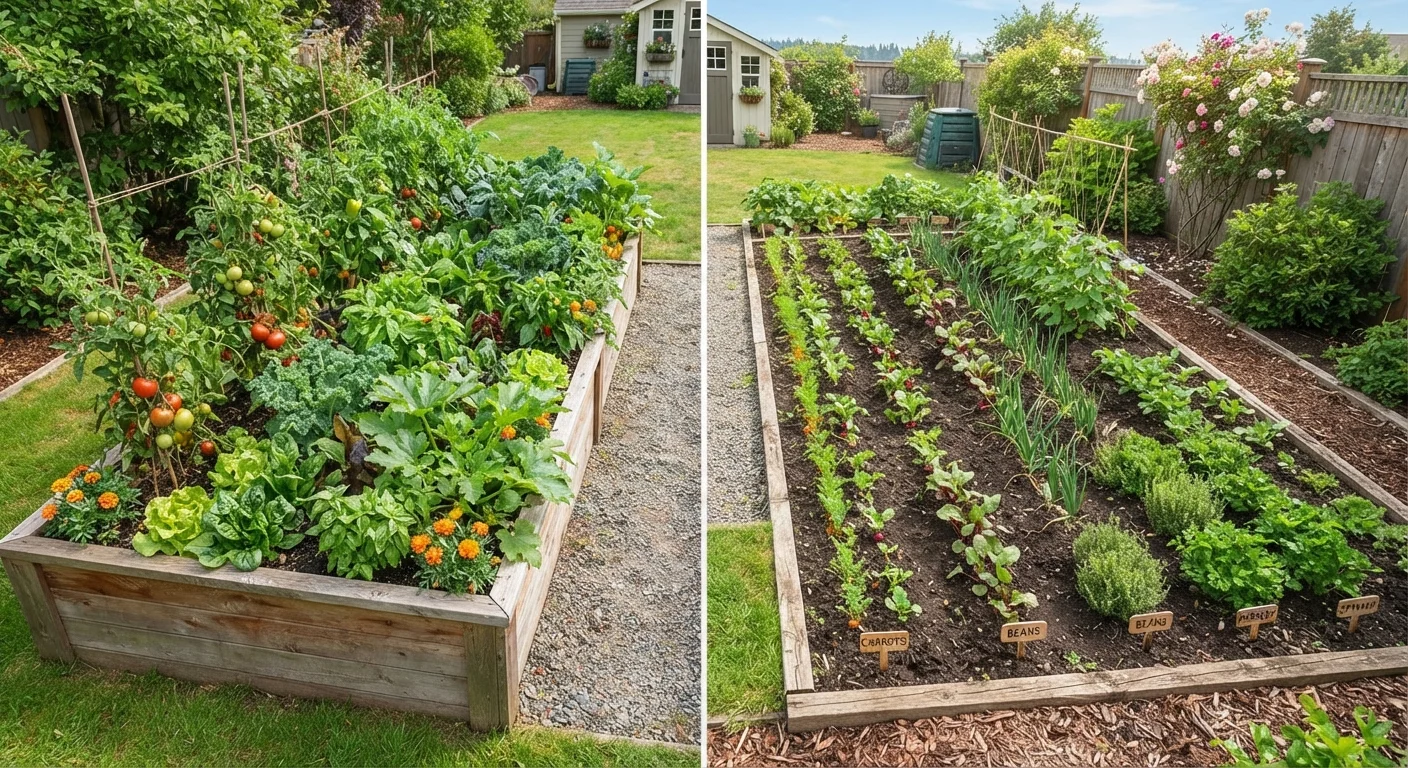
Option A
Raised Beds
The controlled, accessible growing environment.
Best for: Gardeners dealing with poor native soil, limited mobility, or wanting a tidy, defined growing space.
Option B
In-Ground Planting
The traditional, low-cost, scalable approach.
Best for: Gardeners with decent existing soil, larger planting areas, or deep-rooted crops like corn and squash.
What Actually Separates These Two Approaches
At their core, raised beds and in-ground gardens are just two ways of organizing where your plants grow. A raised bed is a contained structure — typically built from wood, metal, or composite materials — filled with imported or amended soil and positioned above ground level. In-ground planting means working directly with the earth beneath your feet, loosening and enriching it as needed, then planting into native soil.
That difference in structure has real downstream effects on drainage, soil temperature, weed pressure, cost, and how much effort goes into setup versus ongoing maintenance. Neither method is universally superior — the better fit depends on what you're starting with and what you want to grow.
Before choosing, it helps to assess your existing soil. If you're unsure what you're working with, our guide to garden soil types walks through what makes a healthy growing medium and how to evaluate yours.
Soil Control, Drainage, and Growing Conditions
Soil quality is where raised beds have the clearest advantage. When you build a raised bed, you choose exactly what goes inside — typically a blend of topsoil, compost, and other amendments tailored to your crops. This matters enormously if your native soil is dense clay, heavily compacted, nutrient-poor, or potentially contaminated by old paint or construction debris.
Raised beds also drain more freely, since water moves through the mix and out the bottom rather than pooling in low-lying spots. They warm up faster in spring because the dark sides absorb heat and the elevated position is exposed to more air circulation — useful if you're eager to plant early in the season.
In-ground gardens depend on whatever soil exists on your property. In many American yards, that soil is workable once amended with compost, but it can take years of conditioning to reach ideal structure and biology. On the other hand, in-ground beds don't dry out as quickly between waterings, which can be an advantage during dry summers. Understanding the right watering approach for each setup helps you manage moisture more effectively in either case.
| Criterion | Raised Beds | In-Ground Planting |
|---|---|---|
| Upfront cost | Higher (materials + fill soil) | Lower (tools + amendments) |
| Soil control | Complete — you choose the mix | Limited to what you amend |
| Drainage | Excellent | Varies by native soil |
| Spring warm-up | Faster | Slower |
| Scalability | Costly to expand | Easy to expand |
| Weed pressure | Generally lower | Generally higher |
| Best crop types | Compact vegetables, herbs | Large, sprawling, deep-rooted crops |
| Accessibility | High (adjustable height) | Requires bending/kneeling |
| Long-term soil improvement | Requires regular topping up | Improves naturally over time |
Cost, Setup, and Long-Term Maintenance
In-ground planting is hard to beat on cost. Aside from basic tools — a spade, garden fork, and some compost — you can start an in-ground plot for very little. There's no lumber to buy, no hardware to source, no bags of fill soil to haul. It also scales easily: turning a 10-foot row into a 30-foot row requires only more digging and amendment, not more construction.
Raised beds carry a meaningful upfront cost. Depending on materials and size, a single 4x8-foot bed can run anywhere from modest to substantial depending on what you build it from and how you source fill soil. Over many seasons, that investment can pay off through less weeding (fewer weed seeds blow into contained beds), fewer soil compaction issues (you never walk in the bed), and reduced need for soil correction. But the initial outlay is real.
6–8 inches
Minimum raised bed depth for most vegetables
Most vegetable roots need at least 6 inches of loose soil; 12 inches is generally recommended for root crops like carrots.
4 feet
Recommended maximum raised bed width
A 4-foot width allows most gardeners to reach the center from either side without stepping into the bed, preventing soil compaction.
2–4 inches
Annual compost addition for raised beds
Horticultural guidance generally recommends refreshing raised bed soil with 2–4 inches of compost each growing season to maintain fertility.
Maintenance patterns differ too. Raised bed soil tends to compact and deplete faster because it's isolated from the broader soil ecosystem. You'll need to top it up with compost regularly — typically each season. In-ground soil, managed with good organic practices and minimal tilling, can improve gradually over time with less deliberate intervention. For a deeper look at building soil fertility affordably, see our home composting guide.
Which Plants Suit Each Method Best
Raised beds shine for compact, high-yield crops: salad greens, herbs, radishes, bush beans, tomatoes, and peppers. These plants don't need enormous depth or lateral space, and they reward the intensive planting that raised beds support well. Shallow-rooted vegetables particularly benefit from the loose, well-aerated soil you can maintain in a raised bed.
In-ground plots handle sprawlers and deep-rooted plants more comfortably. Corn, winter squash, melons, pumpkins, and asparagus all appreciate unlimited root depth and room to spread — conditions that are expensive to replicate in a raised bed. Perennial plants that return each year often do better in-ground, since they develop extensive root systems that don't adapt well to a constrained growing environment. Our overview of annuals and perennials explains how each fits into either setup.
Many gardeners ultimately use both: a raised bed or two near the house for intensive vegetable growing, and open in-ground space for larger crops, fruit bushes, or perennial beds. That combination often delivers the best of both methods without fully committing to either. When you're ready to plan your full setup, the pre-season garden checklist covers everything you need to get organized before the first planting date.
A Note on Contaminated or Unknown Soils
If your property has a history of industrial use, old lead paint, or pressure-treated lumber in contact with soil, in-ground planting in those areas may not be appropriate for edible crops. Raised beds filled with clean soil offer a practical workaround in these situations. Consider having your soil tested through your local cooperative extension office before growing food directly in the ground — many offer low-cost testing services.
The content on this site is for informational purposes only and is not a substitute for professional advice. Always consult a qualified professional for guidance specific to your situation.