

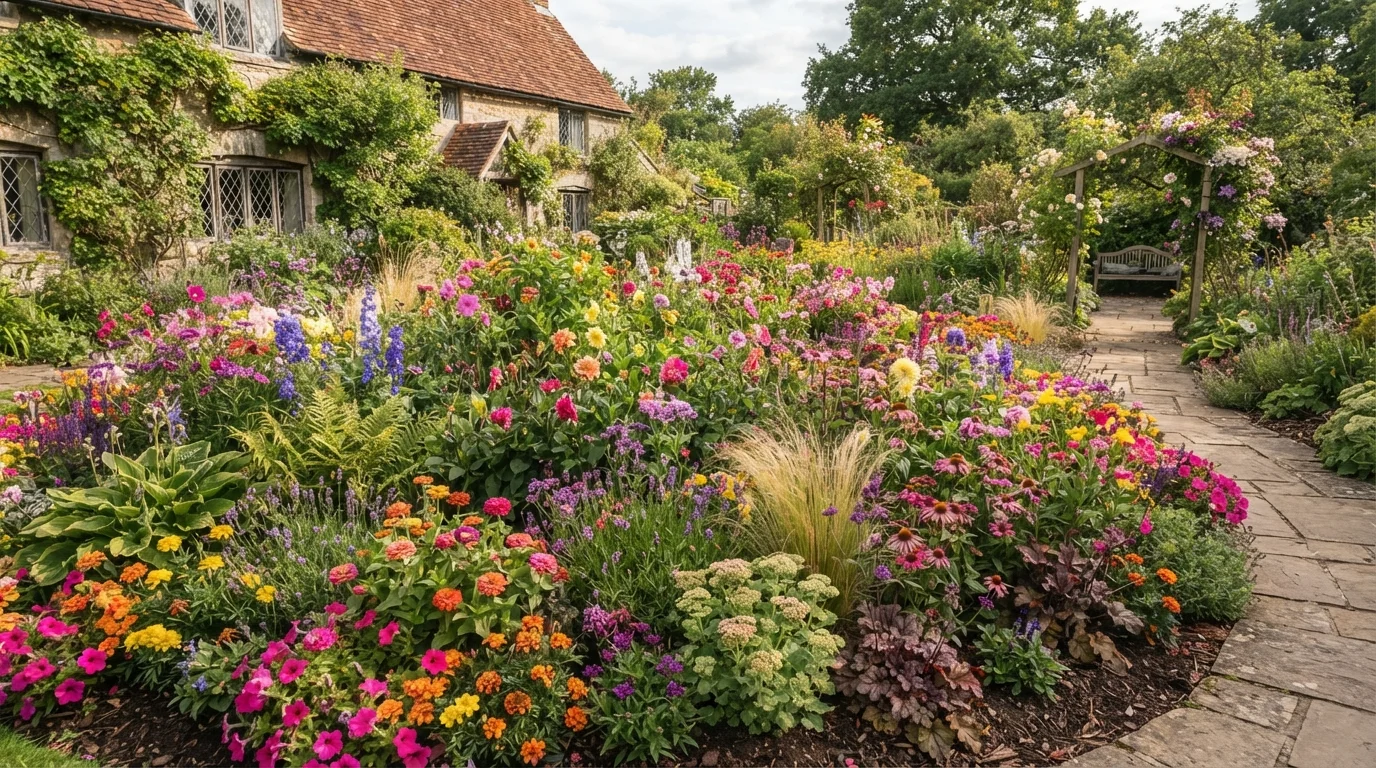
Option A
Annual Plants
The bold, season-long bloomers that give gardens instant impact.
Best for: Gardeners who want continuous, high-impact color throughout a single growing season.
Option B
Perennial Plants
The reliable returners that build a garden's lasting backbone.
Best for: Gardeners who want a low-replanting, long-term garden framework that grows stronger each year.
What Makes a Plant an Annual or a Perennial?
The distinction comes down to life cycle. An annual germinates, grows, flowers, sets seed, and dies — all within a single growing season. Come next spring, that plant is gone, and you start fresh. A perennial, by contrast, completes its above-ground growth cycle each year but survives winter through its roots, bulbs, or rhizomes, resprouting when temperatures warm again.
It is worth noting that these labels are not always absolute. Some plants sold as annuals in northern states behave as perennials in warmer southern climates. A frost-sensitive plant may survive for years in USDA Zone 9 but die after a single season in Zone 5. Always check your local hardiness zone when planning a garden. Before you plant either type, matching your soil to your plants is an equally important first step.
How Annuals and Perennials Perform Side by Side
Understanding how the two types compare on practical factors helps you make smarter planting decisions.
| Criterion | Annual Plants | Perennial Plants |
|---|---|---|
| Life span | One growing season | Three or more years |
| Replanting required | Every year | Rarely, once established |
| Bloom duration | Entire growing season | Typically 2–4 weeks per season |
| Upfront cost | Lower per plant | Higher per plant |
| Long-term cost | Higher (annual repurchase) | Lower (no annual replanting) |
| Establishment time | Fast — blooms same season | Slower — may take 2–3 years to peak |
| Variety flexibility | Easy to change each year | More permanent commitment |
| Winter hardiness | Does not survive frost | Roots survive winter dormancy |
One trade-off worth highlighting: annuals win on bloom duration. Most perennials flower for two to four weeks per season, while many annuals bloom continuously from late spring until the first hard frost. Perennials compensate with longevity — a well-placed peony or black-eyed Susan can thrive in the same spot for a decade or more.
Using Annuals to Your Advantage
Annuals shine wherever you need bold, reliable color fast. They fill gaps between slower-growing perennials, brighten containers and window boxes, and let you refresh the look of a bed every season without major soil disturbance. Because they put all their energy into flowering rather than root development, they tend to bloom generously right up until frost.
Common choices like marigolds, zinnias, and impatiens are widely available and relatively easy to grow from transplants. Deadheading — removing spent blooms — keeps most annuals producing flowers rather than setting seed and winding down. Consistent, appropriate watering is especially important for annuals in containers, which dry out more quickly than in-ground beds.
Self-Seeding Annuals: A Middle Ground
Some annuals — such as cleome, larkspur, and bachelor's button — drop seeds so reliably that they appear to return each year on their own. Technically, these are still annuals; it is the next generation sprouting from fallen seeds, not the original plant regrowing. This self-seeding habit can reduce replanting effort but may also result in plants popping up in unintended spots.
Building a Garden Framework with Perennials
Perennials are the bones of a garden. They return each year, gradually spreading and maturing into fuller, more established plants. This predictability makes them ideal for defining borders, anchoring corners, and creating a sense of permanence that annuals cannot provide.
The practical upside is cost and labor reduction over time. You invest more upfront in a perennial planting, but you avoid replanting that same spot each spring. Many perennials also benefit pollinators and can be divided every few years to propagate new plants for free. For gardeners thinking about structure as well as plants, choosing the right planting setup can affect how well perennials establish over multiple seasons.
2–3 years
Time for most perennials to reach full maturity
Gardening educators commonly describe the first year as establishment, with plants sleeping, creeping, then leaping in years one, two, and three respectively.
60%+
Of flowering garden plants are annuals or tender perennials
Annuals and frost-sensitive plants grown as annuals make up the majority of bedding plants sold at retail garden centers each spring season.
Combining Both for the Best Results
The most satisfying gardens rarely rely on one type alone. A practical approach is to use perennials to establish structure and recurring interest, then fill gaps with annuals while the perennials mature — or use annuals to add color during the weeks when a perennial bed is between bloom cycles.
For example, early-blooming perennials like coneflowers or daylilies can hand off visual interest to late-season annuals like celosias or snapdragons. You can also use companion planting principles to position annuals and perennials so they support each other — suppressing weeds, attracting beneficial insects, or simply creating pleasing color contrasts. If you are still in the early planning phase, a pre-season garden checklist can help you map everything out before you buy a single plant.
The content on this site is for informational purposes only and is not a substitute for professional advice. Always consult a qualified professional for guidance specific to your situation.