

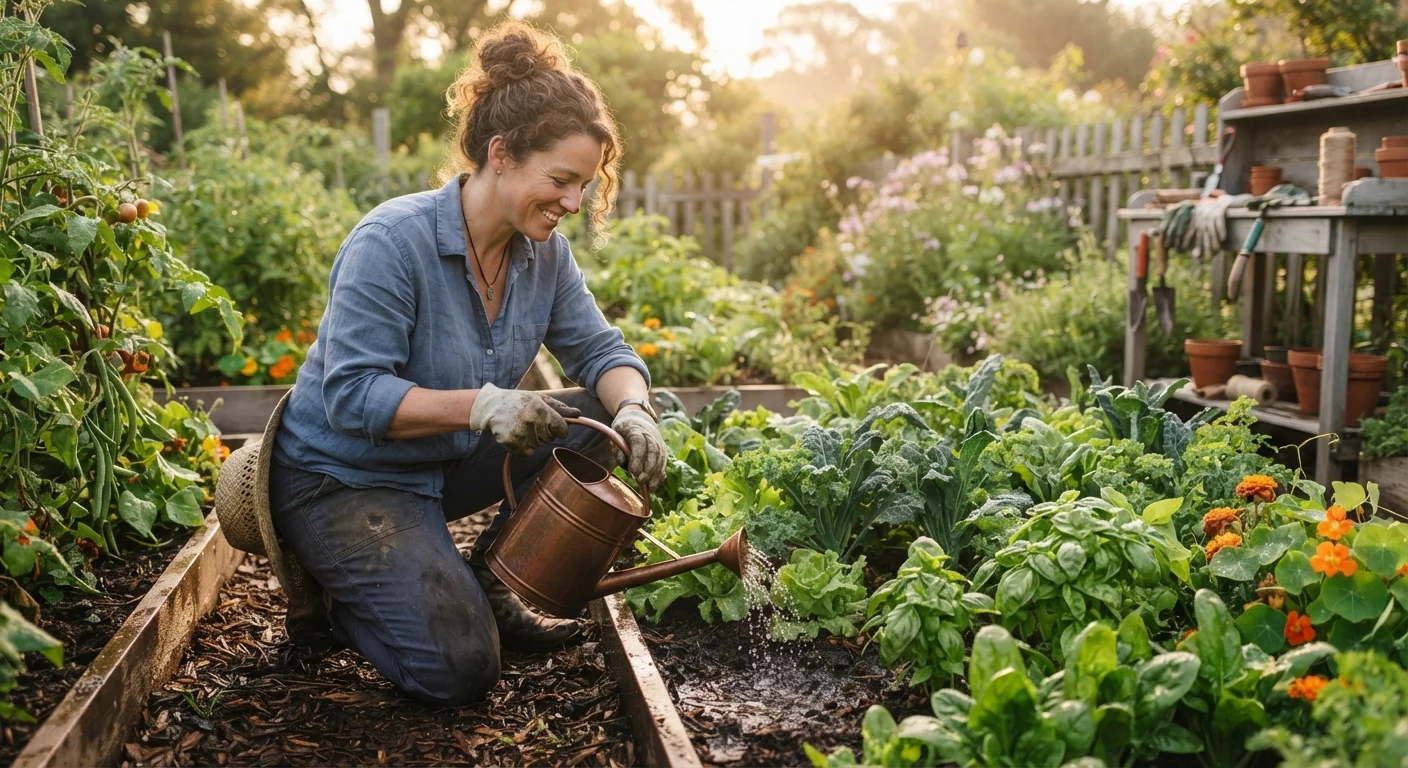
Why Watering Technique Matters More Than Frequency
Many first-time gardeners assume watering is the simplest part of gardening — just turn on the hose. In reality, how you water matters as much as how often. Shallow, frequent watering trains roots to stay near the soil surface, where they're vulnerable to heat and drought. Deep, less frequent watering pushes roots downward, where soil stays cooler and moisture lingers longer.
The goal is to soak the root zone — typically the top 6 to 12 inches of soil depending on the plant — and then let the soil partially dry before watering again. This cycle encourages healthy root development and reduces the risk of root rot caused by constantly saturated soil. Understanding this principle will serve you well across nearly every type of garden plant.
Your soil type plays a major role here. Sandy soil drains quickly and may need more frequent watering; clay soil holds moisture longer but can become waterlogged if overwatered. Amending your soil with compost improves water retention in sandy beds and drainage in heavy clay.
Best Practices for Effective Garden Watering
These principles apply broadly to vegetable gardens, flower beds, and container plantings alike. Adjust based on your specific plants, climate, and setup.
Water at the base of plants, not overhead.
Wetting foliage — especially in the evening — creates conditions where fungal diseases can thrive. Directing water to the soil surface gets moisture to the roots where it's actually needed, and keeps leaves dry.
Water in the early morning whenever possible.
Morning watering gives foliage time to dry throughout the day, reducing disease pressure. It also minimizes evaporation losses compared to midday watering, so more water actually reaches the roots.
Water deeply and less frequently rather than a little every day.
Shallow daily watering encourages surface root growth, leaving plants vulnerable during dry spells. Soaking the root zone every two to three days — adjusting for weather — builds more resilient plants.
Use the finger test before reaching for the hose.
Visual cues alone are unreliable — wilting can signal either too much or too little water. Physically checking soil moisture at root depth is the most accurate low-cost method available.
Mulch around plants to retain soil moisture.
A two- to three-inch layer of organic mulch — such as straw, shredded leaves, or wood chips — slows evaporation significantly, meaning you water less often while maintaining more consistent root-zone moisture.
Adjust your watering schedule based on weather, not the calendar.
A schedule that works in mid-spring can be far too little in a July heat wave or far too much during a rainy stretch. Treating watering as a fixed routine rather than a responsive one is a common beginner mistake.
If you're gardening in raised beds, keep in mind that they typically drain faster than in-ground plots — you may need to water more frequently. See our comparison of raised beds and in-ground planting to understand how your setup affects moisture management.
Reading Your Garden: Signs of Over- and Underwatering
Plants communicate stress through their leaves and stems, but the signals for overwatering and underwatering can look surprisingly similar — wilting, yellowing, or drooping leaves appear in both cases. The distinction usually lies in the soil.
Press a finger about two inches into the soil near the plant's base. If it feels wet or saturated, hold off on watering even if the plant looks stressed. If it feels dry and crumbly, it's time to water thoroughly. This simple test is more reliable than any fixed schedule.
The Finger Test: Your Most Reliable Watering Guide
Before watering any bed or container, press a finger or thin wooden skewer about two inches into the soil near the plant's base. If it comes out dry, it's time to water. If it comes out with moist soil clinging to it, wait and check again tomorrow. This takes five seconds and is more accurate than any fixed schedule or visual cue alone.
Overwatering is among the most frequent reasons plants fail in their first few weeks. Our article on why plants die early covers this and other common early-season mistakes in detail.
Also be aware that some widely repeated watering habits — like watering every single day regardless of conditions — are actually counterproductive. Our piece on garden myths that keep new growers stuck addresses several of these misconceptions head-on.
Quick Wins: Start Watering Smarter Today
You don't need special equipment or a complex schedule to improve how you water. These actions can make a noticeable difference right away.
If you're still in the planning stages, our pre-season garden setup checklist will help you get your space, soil, and watering plan in order before the first seeds go in.
The content on this site is for informational purposes only and is not a substitute for professional advice. Always consult a qualified professional for guidance specific to your situation.