

Why Plant Placement Actually Matters
Most first-time gardeners focus on what plants need individually — sunlight, water, fertilizer. But where you place plants in relation to each other matters too. Plants interact with their surroundings constantly: their roots trade nutrients with soil microbes, their leaves cast shade, their flowers attract or repel insects. Companion planting is simply the practice of using those interactions intentionally.
This isn't a rigid science with universal rules. Think of it as informed gardening — pairing plants that have shown a tendency to help each other, while avoiding combinations that are known to cause problems. If you're just starting out, our complete guide for first-time gardeners covers the foundational habits that make companion planting more effective.
~80%
Of nitrogen in soil from legume fixation
Research in sustainable agriculture suggests legume cover crops can supply a substantial portion of a subsequent crop's nitrogen needs, reducing the need for supplemental fertilizer.
3-in-1
Benefits of the Three Sisters system
Corn, beans, and squash grown together address nitrogen fixation, structural support, and ground cover simultaneously — a traditional multi-function planting system with centuries of use.
30–40%
Potential reduction in pest damage with diverse plantings
Some agricultural studies suggest that intercropping and plant diversity can meaningfully reduce pest pressure compared to monoculture plots, though results are highly variable.
How Plants Actually Help Each Other
There are several distinct mechanisms behind companion planting benefits — and understanding them helps you make smarter choices rather than just memorizing pairs.
Nitrogen Fixation
Legumes — beans, peas, clover — host bacteria in their roots that pull nitrogen from the air and convert it into a form plants can use. Growing them near heavy feeders like corn or leafy greens can enrich the soil over a season. This is one of the best-supported benefits in companion planting.
Pest Deterrence
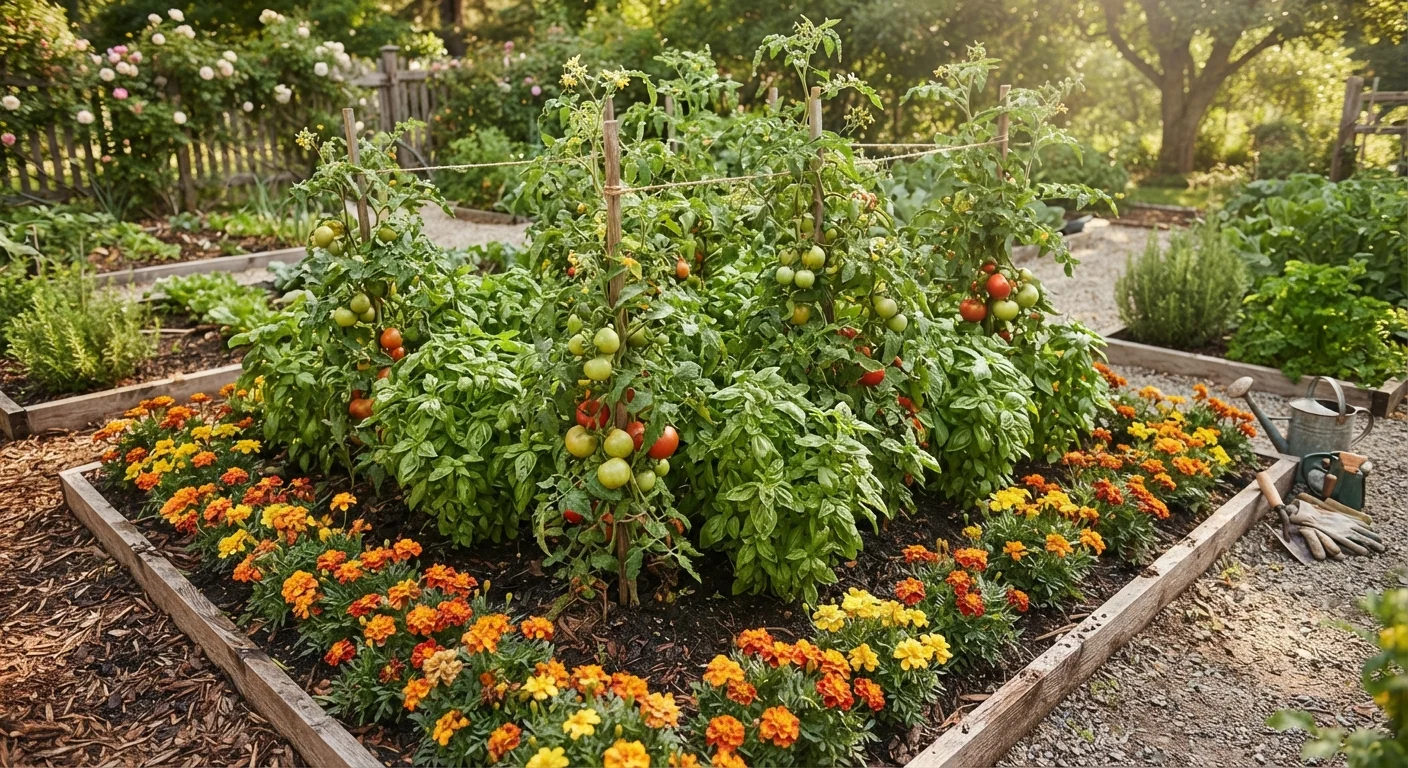
Certain strongly scented plants can confuse or repel insects looking for their preferred host plants. Basil planted near tomatoes is a widely cited example; the aromatic oils may deter aphids and thrips. Marigolds are another common choice — their root secretions are documented to suppress some soil-dwelling nematodes. For a deeper look at which pests cause which damage, see our guide to common garden pests.
Attracting Beneficial Insects
Flowers like dill, fennel (grown away from vegetables), and borage attract predatory insects — lacewings, parasitic wasps, hoverflies — that feed on aphids and other pests. Planting a few flowering herbs among your vegetables effectively invites pest control to move in.
Physical Benefits and Space Use
Tall plants provide shade for heat-sensitive neighbors. Low-growing plants like lettuce or thyme act as a living mulch, reducing moisture loss and crowding out weeds. The classic "Three Sisters" combination — corn, beans, and squash — uses all three of these physical strategies at once.
Start With One or Two Pairs
You don't need to plan an elaborate companion planting scheme from scratch. Pick one well-supported combination — like tomatoes with basil, or beans with corn — and observe how it performs in your specific garden this season. Building knowledge gradually is more effective than attempting a full redesign at once.
Combinations Worth Trying — and a Few to Avoid
Here are some of the most reliably cited companion pairs, along with a few combinations that tend to cause problems:
Pairs That Often Work Well
- Tomatoes + Basil: Basil may deter common tomato pests and is a practical use of space beneath the canopy.
- Beans + Corn: Beans fix nitrogen that feeds the corn; corn provides a natural trellis for climbing beans.
- Carrots + Onions: These are said to confuse each other's pest insects — carrot fly and onion fly — through scent interference.
- Marigolds + Most Vegetables: Planted as a border, marigolds deter a range of pests and attract pollinators.
- Lettuce + Taller Crops: Lettuce benefits from afternoon shade in warm climates and thrives under corn or tomatoes.
Combinations to Approach Carefully
- Fennel + Almost Anything: Fennel releases compounds that inhibit germination and growth in many neighboring plants. It's better grown in its own container or corner.
- Onions + Beans or Peas: Onions are thought to stunt the growth of legumes — keep them separated.
- Brassicas + Tomatoes: These two families can compete heavily and may share some of the same pests.
Good soil health underpins all of this — even the best pairings underperform in depleted or poorly structured soil.
Putting It Into Practice
You don't need to overhaul your entire garden layout to try companion planting. Start small: add a row of marigolds along your vegetable border, tuck basil in between your tomato plants, or try a Three Sisters bed in one corner. Observe what happens over the season — note whether pest pressure seems different, how well each plant grows, and whether any combinations seem to compete.
If you're gardening in containers or raised beds, companion planting still applies — you simply need to be more deliberate about root space. Our article on raised beds vs. in-ground planting can help you think through spacing and layout. For container gardeners, the container gardening guide addresses how to adapt these strategies to smaller spaces.
Keep a simple garden journal. Companion planting is as much about building your own knowledge of your specific conditions as it is about following general guidelines. Over a few seasons, you'll develop a feel for what works in your soil, your climate, and your garden's particular microenvironments.
Frequently Asked Questions
Some pairings have solid evidence behind them, such as legumes improving soil nitrogen or marigolds deterring certain nematodes. Others rest more on tradition and anecdote. Treating companion planting as a helpful guide rather than a rulebook gives you the most realistic expectations.
A few commonly noted problem pairings include fennel (which is allelopathic and can inhibit many vegetables), onions near beans or peas, and brassicas near strawberries. These plants can compete for resources or release compounds that slow neighboring growth.
Companion planting can reduce pest pressure meaningfully in some cases, but it's unlikely to eliminate pest problems entirely on its own. It works best as part of a layered approach that includes healthy soil, appropriate watering, and regular monitoring.
Yes — space-saving pairings like lettuce under taller plants work especially well in containers and raised beds. Just be mindful that root space is more limited, so avoid pairing plants with aggressive root systems in a small container.
Three Sisters is a traditional Indigenous American planting system combining corn, beans, and squash. Corn provides a trellis for beans, beans fix nitrogen in the soil, and squash shades the ground to retain moisture and suppress weeds — a classic example of complementary plant relationships.
The content on this site is for informational purposes only and is not a substitute for professional advice. Always consult a qualified professional for guidance specific to your situation.