

Why Knowing the Pest Matters
Not all garden damage looks the same — and that's actually useful. Ragged holes in leaves, sticky residue on stems, and wilting despite good watering each point to different culprits. Before you reach for any treatment, identifying the pest first helps you respond appropriately and avoid harming beneficial insects in the process.
This guide covers the most common garden pests found in North American home gardens, what they look like, and — critically — what they actually do to your plants. Understanding the mechanism of damage helps you catch problems earlier and make better decisions about intervention.
Good plant health starts well before pests arrive. Strong root systems and well-matched growing conditions make plants more resilient. See our guide to garden soil for a solid foundation, and check the pre-season checklist to start the growing year ahead of common problems.
Honeydew
A sticky, sugar-rich liquid excreted by sap-feeding insects like aphids and whiteflies. It coats leaf surfaces and promotes the growth of black sooty mold, which can block light from reaching the leaf.
Stippling
A pattern of tiny pale or discolored dots on leaf surfaces caused by cell-piercing pests such as spider mites. It signals widespread cellular damage and is an early visual warning sign.
Instar
A developmental stage between molts in insect larvae or nymphs. Pest caterpillars and other insects cause progressively more damage as they advance through instars toward adulthood.
Beneficial insects
Insects that help control pest populations through predation or parasitism — such as ladybugs, lacewings, and parasitic wasps. Avoiding broad-spectrum interventions helps preserve these natural allies.
Sooty mold
A dark fungal growth that forms on honeydew-coated plant surfaces. While not a direct plant pathogen, it blocks sunlight and reduces the plant's ability to photosynthesize effectively.
Integrated Pest Management (IPM)
A science-based approach to pest control that prioritizes prevention, monitoring, and targeted responses over routine pesticide use. The goal is to manage pest populations with minimal environmental impact.
Common Pests and the Damage They Cause
| Most common sap-feeding pest | Aphids |
| Peak slug activity | Night, especially after rain |
| Spider mite ideal conditions | Hot, dry weather |
| Caterpillar damage type | Clean-edged holes; leaf sections removed |
| Scale insects visible as | Small waxy bumps on stems and branches |
| Key early warning sign | Honeydew residue or sooty mold on leaves |
Aphids
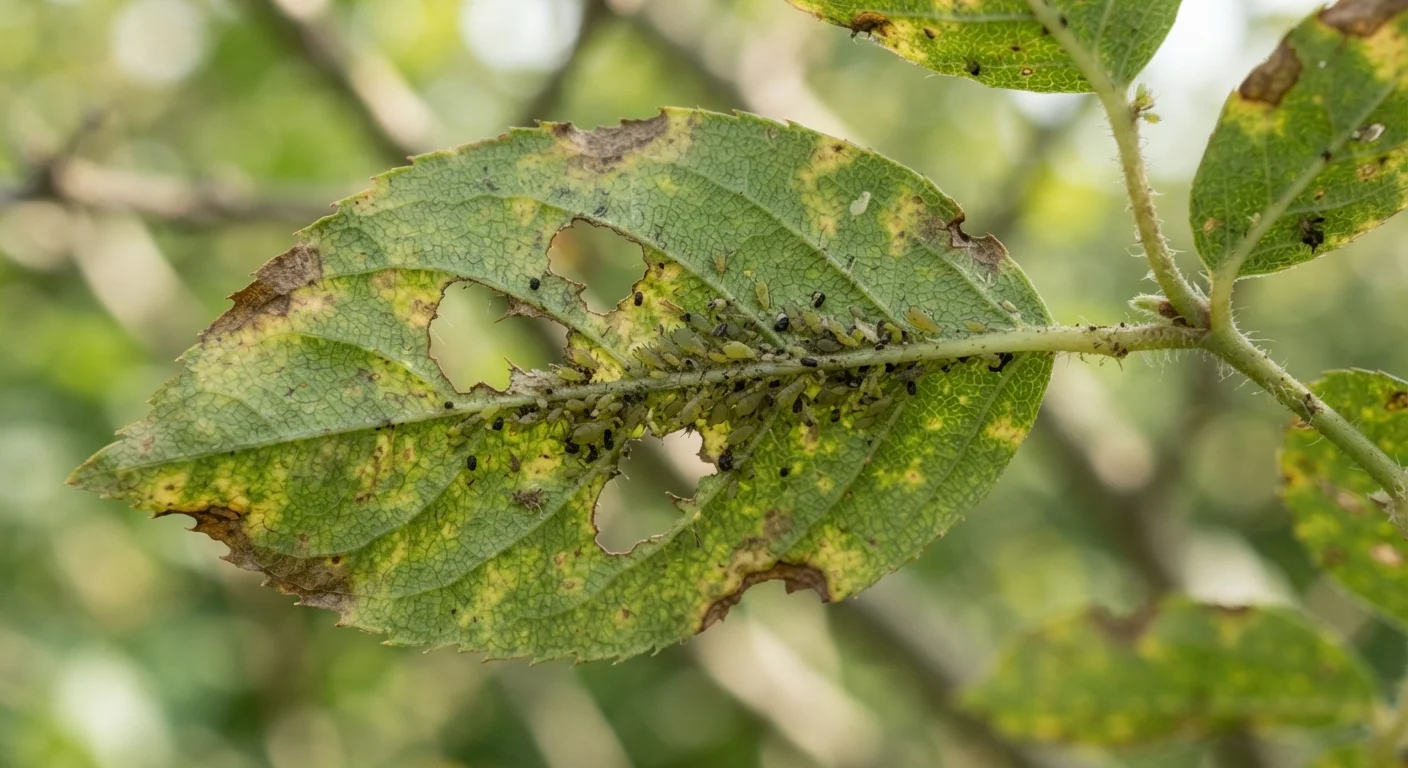
Aphids are tiny, soft-bodied insects — usually green, black, or white — that cluster on new growth, the undersides of leaves, and along stems. They feed by piercing plant tissue and extracting sap, which weakens the plant over time. Heavy infestations cause leaves to curl, yellow, or become distorted. Aphids also excrete a sticky substance called honeydew, which coats leaf surfaces and encourages black sooty mold to grow. They reproduce rapidly in warm weather, so early detection matters.
Slugs and Snails
These moisture-loving mollusks feed at night, leaving behind irregular, ragged holes in leaves — often with a telltale slime trail nearby. They target seedlings and soft-leaved plants most aggressively. Entire young transplants can disappear overnight during warm, wet conditions. Damage is most severe close to the soil surface, where slugs shelter during daylight hours.
Spider Mites
Spider mites are almost invisible to the naked eye but leave clear evidence: a fine, dusty webbing on the undersides of leaves and a characteristic stippled or bronzed appearance on leaf surfaces. They pierce individual plant cells to feed, causing widespread cell death that turns foliage pale, dry, and eventually brown. Hot, dry conditions accelerate infestations. Mites spread quickly between nearby plants.
Whiteflies
Whiteflies look like tiny white moths and cluster on leaf undersides. Like aphids, they extract sap and produce honeydew, leading to the same sooty mold problem. Infested leaves turn yellow and drop prematurely. They're most common in greenhouses and warm-climate gardens, though they appear in summer across much of the U.S.
Caterpillars and Cabbage Worms
The larvae of various moths and butterflies chew through leaves, sometimes consuming entire plants. Caterpillar damage tends to look clean-edged and substantial — full sections of leaf removed rather than the stippling or curling caused by sap-feeders. Imported cabbageworm is a frequent pest of brassicas (cabbage, kale, broccoli), while tomato hornworm can devastate nightshade plants quickly.
Scale Insects
Scale insects attach themselves to stems and branches, appearing as small brown bumps or waxy shells. They feed on plant sap beneath their protective covering, slowly reducing vigor. Heavily infested plants show yellowing, dieback, and stunted growth. Because they're immobile and camouflaged, scale infestations are easy to overlook until damage is significant.
Thoughtful plant placement can reduce pest pressure naturally. Some plants deter certain insects or attract beneficial predators — a concept covered in our companion planting guide. Consistent watering also affects pest vulnerability — learn more in our watering guide.
The content on this site is for informational purposes only and is not a substitute for professional advice. Always consult a qualified professional for guidance specific to your situation.