

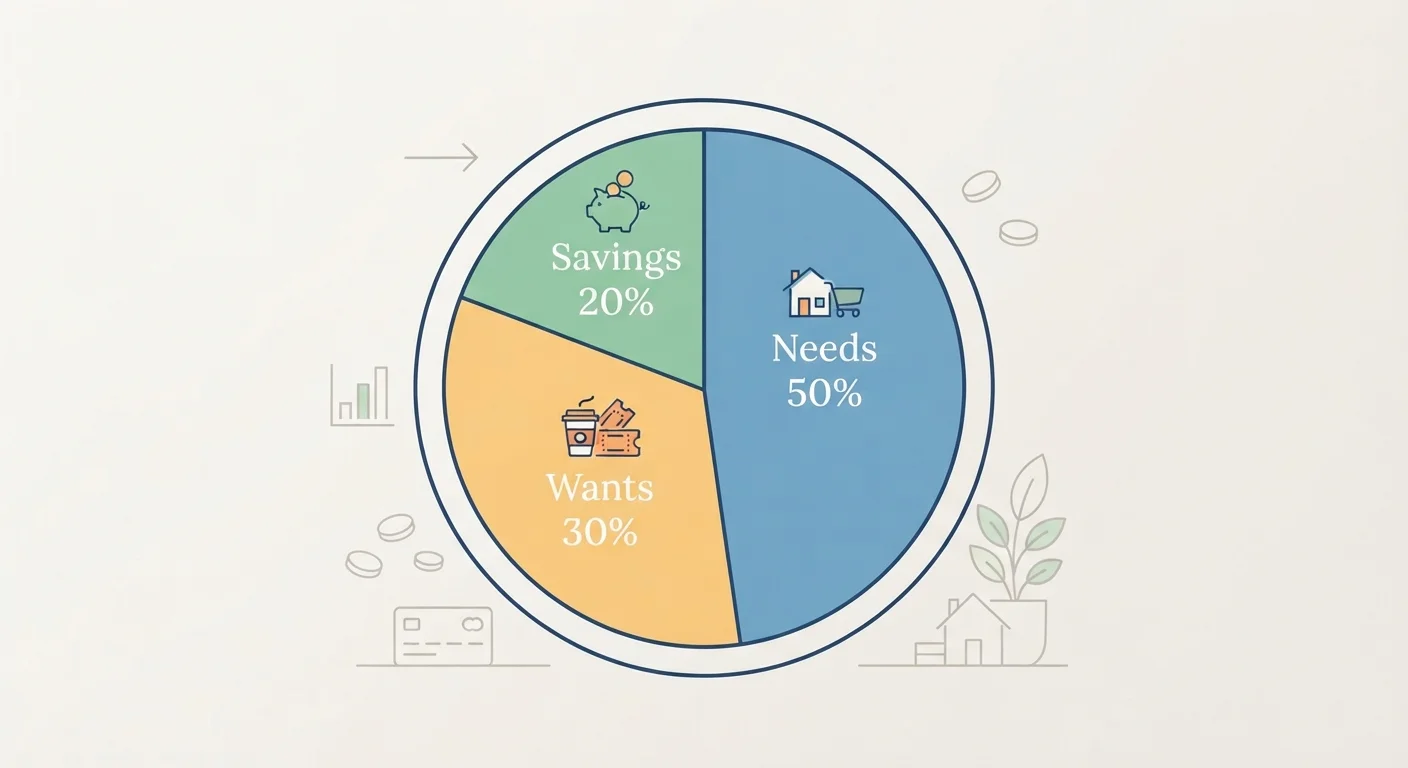
How the Three Categories Break Down
The 50/30/20 rule gives your money three destinations, each with a distinct purpose. Understanding what actually belongs in each bucket is where most people get tripped up — and where getting it right makes a real difference.
Needs (50%)
Needs are the non-negotiables: housing, utilities, groceries, health insurance, minimum loan payments, and basic transportation. The key word is essential. A cell phone plan is probably a need; upgrading to the latest model every year is a want. If you could drop the expense tomorrow and face a serious consequence, it's likely a need. See our guide to drawing the line between needs and wants for a more detailed breakdown.
Wants (30%)
Wants cover everything that improves your life but isn't strictly required: dining out, streaming subscriptions, gym memberships, vacations, and hobbies. This category is where most people have the most flexibility — and, honestly, the most leeway to enjoy their income. There's nothing wrong with spending on wants; the rule just asks you to keep them proportionate.
Savings and Debt Repayment (20%)
This bucket funds your financial future. It includes contributions to an emergency fund, retirement accounts, and any debt payments above the required minimum. Minimum payments on loans or credit cards count as needs, not savings — only the extra you pay down voluntarily belongs here. For a full look at how savings and debt reduction work together, visit our Saving & Debt hub.
Where Minimum Debt Payments Belong
It's a common source of confusion: minimum required payments on credit cards, student loans, or auto loans count as needs — not savings. Only the additional amount you pay above the minimum should be counted in your 20% savings and debt-reduction bucket. Mixing these up can make your savings look healthier than they actually are.
Where the Rule Works Well — and Where It Doesn't
The 50/30/20 framework shines for people who have a stable income, moderate cost of living, and no immediate financial emergency. It removes the need to micromanage every purchase while still keeping spending purposeful. For anyone just getting started with budgeting, it's a much lower barrier to entry than tracking dozens of categories in a spreadsheet.
That said, the rule has real limitations:
- High-cost cities: In metros where rent alone eats 40–50% of take-home pay, the 50% needs target is nearly impossible without a roommate or significant income. The math simply doesn't work for many people in San Francisco, New York, or similar cities.
- Low incomes: When income is tight, basic needs often exceed 50% regardless of spending habits. The rule wasn't designed to solve poverty — it's a framework for people who have some discretionary margin to work with.
- Heavy debt loads: If you're carrying significant high-interest debt, aggressively exceeding the 20% savings target makes more financial sense than trimming wants to hit a round number.
- Irregular income: Freelancers and gig workers whose monthly pay varies widely may find percentage-based budgeting harder to apply consistently.
If any of these apply to you, the answer isn't to abandon the rule — it's to adjust the percentages to fit reality. A 60/20/20 or 50/20/30 split might serve you better. You can also explore common budget categories every household should account for to build a more tailored approach.
Adjust the Percentages Without Guilt
If your needs legitimately exceed 50%, don't abandon the framework — modify it. Temporarily shifting to a 60/20/20 split while you work to lower fixed costs is a realistic and responsible approach. The structure of separating needs, wants, and savings is what matters most. Rigid adherence to the original numbers isn't the goal.
Putting the Rule Into Practice
Getting started is straightforward. Take your monthly after-tax income and multiply by 0.50, 0.30, and 0.20 to find your target dollar amounts for each category. Then look at where your money has actually been going over the last two or three months — your bank and credit card statements make this easy.
The goal isn't perfection in month one. Most people discover their needs are running higher than 50% or their wants are quietly consuming far more than 30%. That awareness alone is useful. From there, you can make deliberate choices: cut a few discretionary expenses, look for ways to reduce fixed costs, or set a timeline for when you'd like to hit the targets.
The rule pairs naturally with other good money habits. As your income grows or your life circumstances shift — a new job, a move, a family change — revisiting these percentages keeps your budget current. For guidance on how money priorities evolve over time, see financial habits worth building in your 20s, 30s, and 40s.
~57%
Americans living paycheck to paycheck
A LendingClub survey conducted in 2023 found that roughly 57% of U.S. adults reported living paycheck to paycheck, highlighting how many households lack a functioning budget structure.
30%
Average U.S. household housing cost share
The U.S. Bureau of Labor Statistics Consumer Expenditure Survey consistently finds that housing represents roughly 30% of average household spending — leaving little margin if other needs push the total over 50%.
This article is for general informational and educational purposes only and does not constitute personalized financial or investment advice. Consider consulting a qualified financial professional for guidance specific to your situation.
Frequently Asked Questions
It's based on net income — your take-home pay after taxes and pre-tax deductions. Using gross income would overstate what you actually have available to spend and save.
Needs are expenses you genuinely cannot avoid: rent or mortgage, utilities, minimum debt payments, basic groceries, and necessary transportation. A luxury apartment or a new car when a used one works would lean toward the wants category.
Yes. The 20% bucket is meant to cover both savings goals — like an emergency fund or retirement — and debt repayment beyond the minimum. Minimum payments typically count under needs, not savings.
That's common, especially in high-cost areas. Start by auditing which expenses truly can't change and which have room for adjustment. You may also need to temporarily reduce the wants category or focus on increasing income before the rule works as written.
Absolutely. The 50/30/20 split is a guideline, not a law. Many people adjust it — say, 60/20/20 or 50/20/30 — to reflect their actual priorities and circumstances. The value is in creating intentional categories, not hitting specific numbers.
It's one of the most beginner-friendly budgeting frameworks available because it's simple and flexible. It works well as a starting point, even if you eventually move to a more detailed approach as your financial picture gets more complex.
The content on this site is for informational purposes only and is not a substitute for professional advice. Always consult a qualified professional for guidance specific to your situation.