

Why Budget Categories Matter
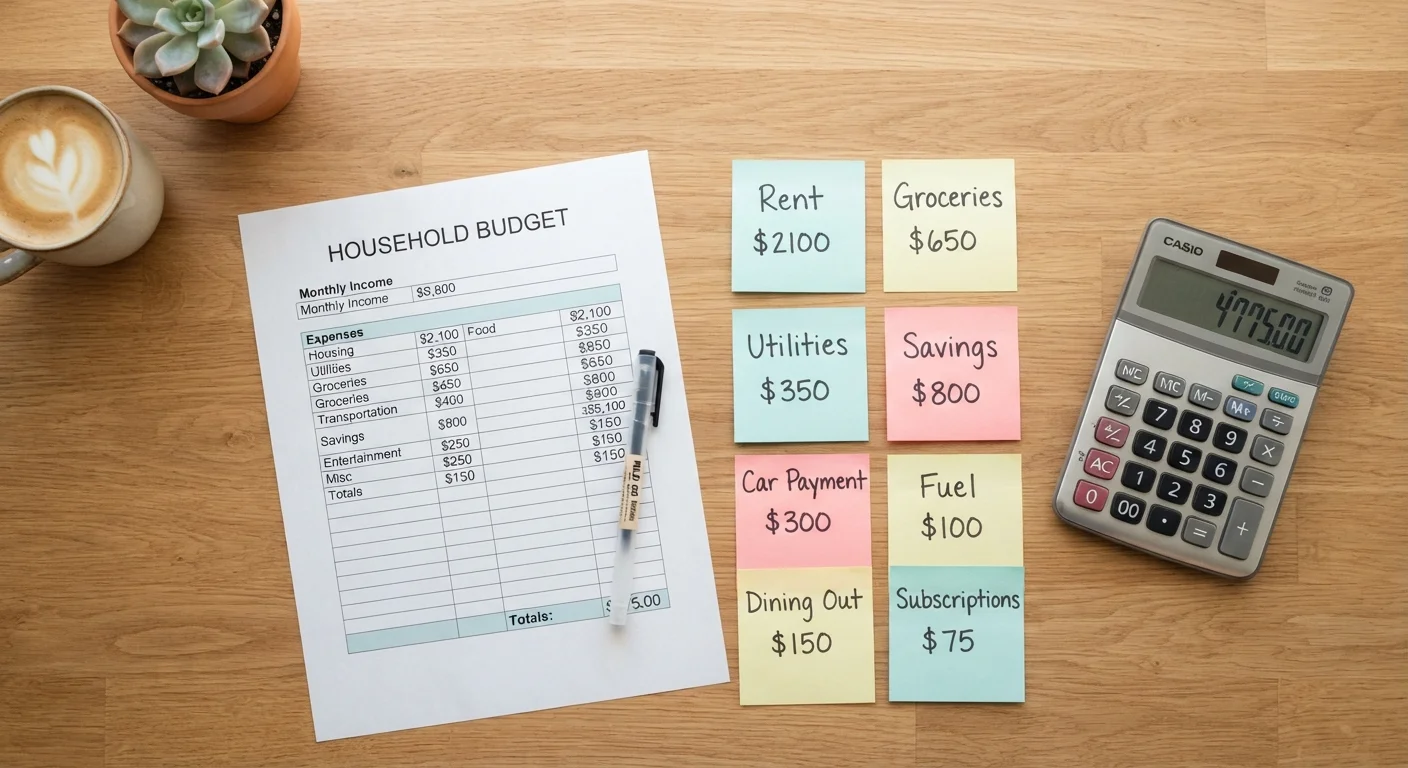
A budget without categories is just a number. Categories are what transform a vague intention to "spend less" into a system you can actually track and adjust. When you know exactly where your money is supposed to go — housing, groceries, debt payments, savings — it becomes much easier to spot where it's actually going instead.
If you're new to budgeting, the six-step monthly budget walkthrough is a good place to build the framework first. This reference guide is designed to fill in the details: what categories to include, what falls under each one, and what you might be forgetting.
The Core Budget Categories
Housing
This is typically the largest line item for most households. It includes your rent or mortgage payment, property taxes (if not escrowed), homeowners or renters insurance, and any HOA fees. A commonly cited guideline is to keep housing costs at or below 30% of gross income, though this varies significantly by location and household size.
Utilities
Electric, gas, water, sewer, and trash collection belong here. Internet service is often bundled in, though some households track it separately under a "subscriptions" category. Utility bills can fluctuate seasonally, so averaging several months gives a more useful budget number than using any single month.
Food
Split this into two sub-categories if you can: groceries and dining out. They behave differently and are driven by different habits. Grocery spending is relatively predictable; restaurant spending tends to be where budgets quietly leak. See our article on spending leaks that quietly drain a household budget for more on that pattern.
Transportation
This covers car payments, auto insurance, gas, parking, tolls, and routine maintenance. If you use public transit, include monthly passes or fare costs here. Don't forget to budget a small monthly amount for vehicle maintenance — oil changes, tires, and the occasional repair are predictable in aggregate even if not by month.
Health and Medical
Include health insurance premiums (especially any you pay out of pocket), copays, prescription costs, dental, and vision. Out-of-pocket medical costs are notoriously hard to predict, which is one reason an emergency fund is so important — more on that below.
Debt Payments
List every minimum debt payment here: credit cards, student loans, personal loans, and any other obligations. If you're paying more than the minimum on any account, that extra amount can also live here or in a separate debt payoff line. For a broader look at managing these, the Saving & Debt hub has practical guidance.
Savings and Emergency Fund
Savings should be treated as a non-negotiable monthly expense, not what's left over after everything else. This category includes contributions to an emergency fund, retirement accounts, and any goal-based savings (down payment, vacation, etc.). If you're unsure how large your emergency fund should be, our guide on emergency fund basics covers sizing and where to keep it.
Insurance (Non-Health)
Life insurance, disability insurance, and any umbrella or supplemental policies belong in their own line. If you pay annually, divide by 12 and set aside that monthly amount so the bill doesn't catch you off guard.
Personal and Household
Clothing, haircuts, cleaning supplies, toiletries, and personal care products all fit here. This category is easy to under-budget — try tracking actual spending for two to three months before setting a number.
Childcare and Education
Daycare, after-school programs, school supplies, tutoring, and activity fees are significant and often underestimated expenses for families. If costs vary month to month, budget for the highest-cost months and treat the lighter months as a chance to build a small buffer.
Subscriptions and Memberships
Streaming services, gym memberships, software subscriptions, club memberships — this category has a way of growing without notice. A periodic audit of what you're actually paying and using is worthwhile. Our monthly financial reset checklist includes a step for this.
Entertainment and Discretionary Spending
Concerts, hobbies, books, games, and similar spending belong here. This is a real category — not a guilt category. Leaving room for enjoyment makes a budget sustainable. That said, it helps to define a limit. The needs vs. wants guide can help you draw that line without being overly restrictive.
Fixed expense
A cost that stays the same each month, such as a mortgage payment or car loan. Fixed expenses are the easiest to budget for because they don't change.
Variable expense
A cost that changes month to month, like groceries or gas. You can estimate a range for variable expenses, but the exact amount will shift.
Sinking fund
A savings sub-category where you set aside money each month for a known future expense — like car registration or holiday gifts — so it doesn't hit your budget all at once.
Discretionary spending
Money spent on non-essential items like entertainment, dining out, or hobbies. It's not waste by definition — it's the flexible part of your budget you choose how to use.
Emergency fund
A dedicated savings reserve set aside to cover unexpected expenses or income loss. It is separate from regular savings goals and intended only for genuine financial emergencies.
Categories People Commonly Forget
Even careful budgeters often miss a few areas:
- Annual or irregular expenses — car registration, professional licenses, holiday gifts, and annual subscriptions. Divide the annual cost by 12 and set that amount aside each month in a sinking fund.
- Pet costs — food, vet visits, grooming, and boarding can add up to several hundred dollars a month depending on the animal and location.
- Travel — even modest trips carry costs people underestimate. Our guide on budgeting a trip from scratch walks through the full picture.
- Home maintenance — a general rule of thumb is to budget 1–2% of your home's value annually for upkeep, though this is a rough estimate and actual costs will vary widely by home age, size, and condition.
- Miscellaneous or buffer — a small catch-all category (even $25–$50/month) absorbs small, unpredictable expenses so they don't derail other categories.
If you share expenses with a partner or roommates, how you allocate these categories across your household is worth a clear conversation. Our overview of splitting bills fairly covers approaches that work for different situations.
Once you've built out your categories, the monthly budget audit checklist can help you review and refine them at the end of each month.
This article is for general informational purposes only and does not constitute personalized financial advice. Consider consulting a qualified financial professional for guidance specific to your situation.
The content on this site is for informational purposes only and is not a substitute for professional advice. Always consult a qualified professional for guidance specific to your situation.