

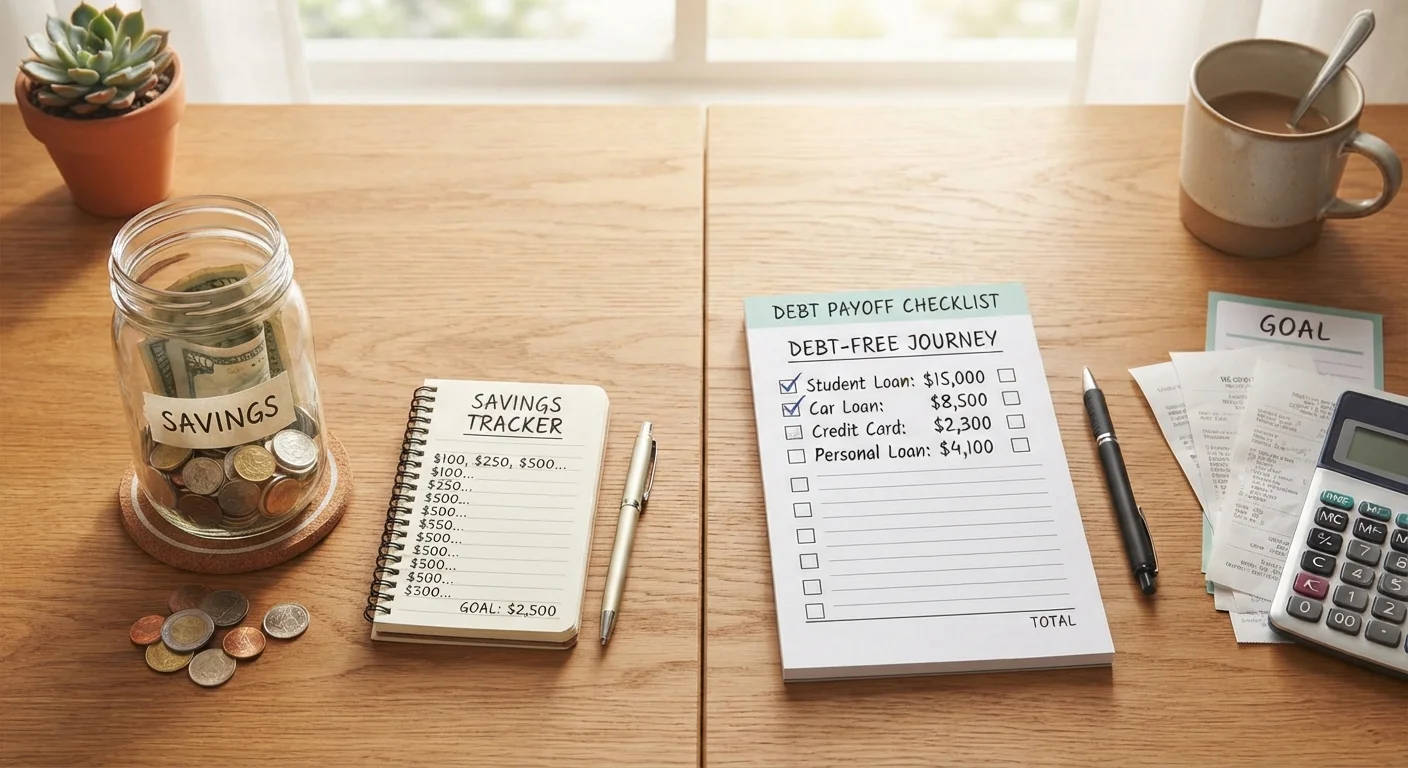
Why This Feels Like an Either/Or Problem
Most people frame debt payoff and saving as a competition. Logic seems to say: why save money earning 4% interest when your credit card is charging you 22%? Pay off the debt first, then save.
That math isn't wrong — but it's incomplete. Life doesn't pause while you pay off debt. A car repair, a medical bill, or a job interruption can wipe out progress and push you back into borrowing at high interest. The real cost of having zero savings while chasing debt payoff is often more debt, not less.
This is why most financial educators recommend doing both — even if the amounts feel small. Understanding which debts are most damaging also shapes how aggressively you should tackle each one. The goal of this guide is to give you a practical framework, not a rigid rule.
What you will need
Getting Your Foundation Right Before You Split Your Focus
Before dividing every spare dollar between debt and savings, two things need to be in place.
First: know exactly what you owe and at what interest rates. List every debt — balance, minimum payment, and interest rate. This takes 20 minutes and changes how clearly you see the problem. It also determines which debts deserve the most urgency.
Second: build a starter emergency fund. Most financial educators suggest keeping $500–$1,000 in a separate savings account before throwing everything at debt. This buffer exists specifically to break the borrow-to-cover-emergencies cycle. Without it, one unexpected expense undoes weeks of payoff progress.
Your monthly budget is the engine behind all of this. If you don't know what's coming in and going out each month, it's nearly impossible to consistently direct money toward both goals. Build that clarity first.
The 'Both at Once' Mindset Works
Research from behavioral economists consistently shows that people who save even a small amount while paying debt tend to stay on track longer than those who go all-in on one goal. Small wins on both fronts build the habit and confidence that sustain longer-term progress. Starting small is not failing — it's building a system.
A Step-by-Step Framework for Doing Both
Once your foundation is set, you can build a sustainable split strategy. The steps below walk you through it systematically.
Lock in your minimum debt payments first
Before anything else, make sure every debt's minimum payment is covered in your monthly budget. These are non-negotiable — missing them adds fees and hurts your credit score, which can raise borrowing costs later. Treat minimums as fixed expenses, like rent.
Fund a small emergency buffer
Direct your first available extra dollars toward a starter emergency fund of $500–$1,000. Keep this in a separate account so it's accessible but not tempting. Once you hit that target, stop adding to savings temporarily and shift focus to debt — until your next milestone.
Rank your debts by interest rate
Sort your debts from highest to lowest interest rate. High-rate debt — typically credit cards — costs the most money over time and should receive any extra payoff dollars first. This approach is often called the debt avalanche method. For a side-by-side comparison of payoff strategies, see how the avalanche and snowball methods compare.
Decide on a split for any extra money
After minimums are covered and your starter fund is in place, decide how to divide any remaining monthly surplus. A common starting point is directing 70–80% toward high-interest debt and 20–30% toward savings. The exact ratio depends on your interest rates, income stability, and how close you are to larger savings goals like a fully funded emergency fund (typically 3–6 months of expenses).
There's no universal right answer — the key is making a deliberate, consistent choice rather than letting the money drift into spending.
Automate both contributions
Set up automatic transfers for your savings contribution and any extra debt payment on or right after payday. Automation removes the decision from your plate each month. When the money moves before you can spend it, consistency improves significantly. Automating your savings walks through exactly how to set this up.
Review and rebalance every few months
As debts get paid off or your income changes, your split should evolve. When a high-interest debt is eliminated, redirect its payment toward the next debt on your list or increase your savings rate. A quick 15-minute review every quarter keeps the strategy current and lets you see real progress — which reinforces the habit.
Common Mistakes That Slow Progress
Even with a solid plan, a few patterns tend to undermine results.
- Ignoring minimum payments — Always pay at least the minimum on every debt. Missed payments trigger penalties and damage your credit, costing more in the long run.
- Saving too aggressively while in high-interest debt — A savings account earning 4–5% doesn't offset a credit card charging 20%+. Once your starter fund is in place, lean your extra money toward high-rate debt.
- Never revisiting the plan — A raise, a paid-off balance, or a new expense all change what your strategy should look like. Set a quarterly reminder to review.
For a broader look at the systems behind this kind of balance, the complete savings and debt management overview covers the full picture without the jargon.
This article is for general informational and educational purposes only and does not constitute personalized financial advice. Consider speaking with a qualified financial professional about your specific situation.
The content on this site is for informational purposes only and is not a substitute for professional advice. Always consult a qualified professional for guidance specific to your situation.