

What the Minimum Payment Actually Does
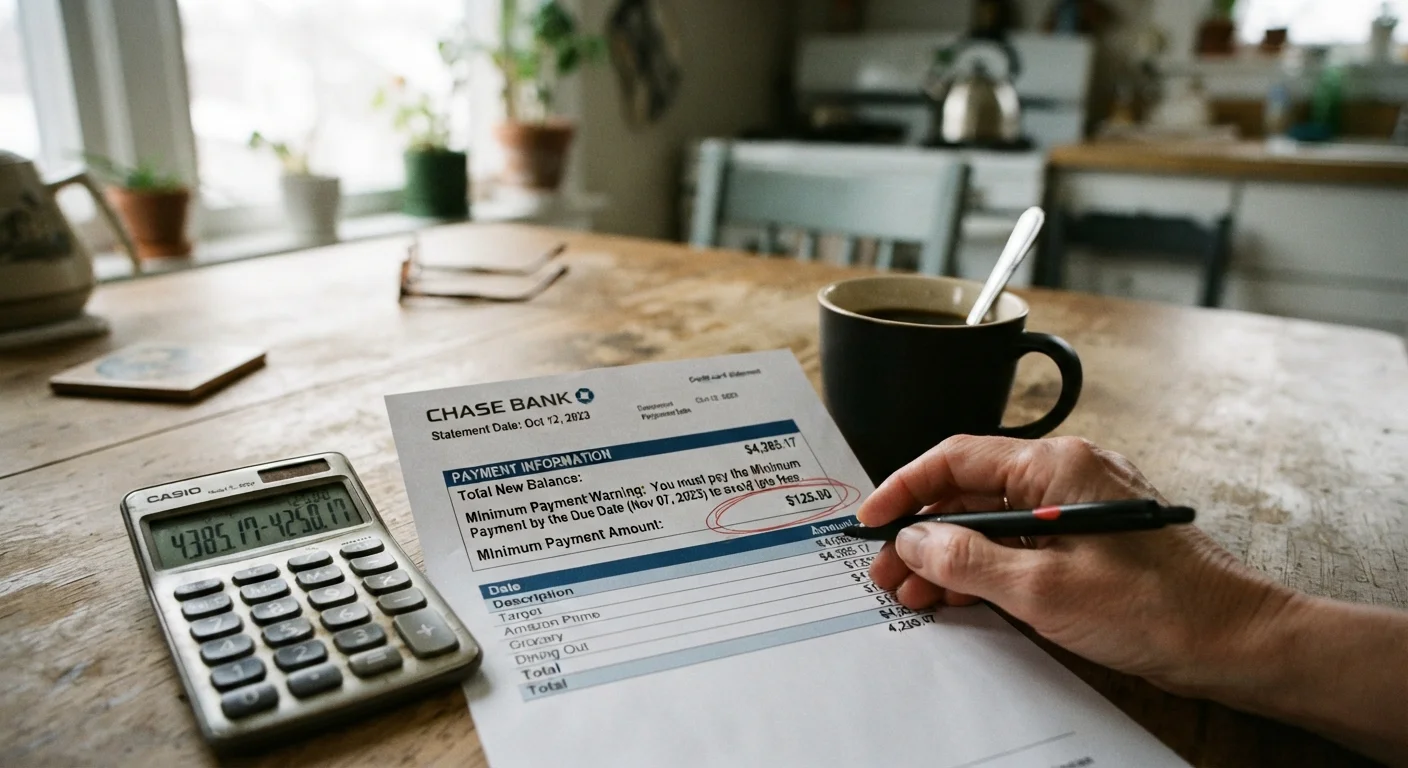
When your credit card statement arrives, the minimum payment amount is front and center — and for good reason. It's the smallest number, and paying it keeps you in good standing with your card issuer. But "in good standing" doesn't mean you're making real progress on your debt.
Here's the core problem: credit card interest compounds daily on most cards. That means every day you carry a balance, interest is calculated on the new, slightly higher total — not just on what you originally borrowed. When your minimum payment barely covers the interest that accrued that month, very little of it chips away at what you actually owe. The balance barely moves.
Federal regulations require card issuers to include a minimum payment warning on every statement. It shows how long it would take to pay off your balance making only minimums, and the total you'd pay in interest. If you haven't looked at that box lately, it's worth a hard look — the numbers are often startling. A $3,000 balance at 22% APR paid at minimums could easily take over a decade to clear and cost more than $2,000 in interest alone.
This is general financial education, not personalized advice — your situation depends on your specific balance, rate, and card terms. A licensed financial professional can help you build a repayment plan suited to your circumstances. For a broader look at managing both debt and savings simultaneously, see how to pay off debt while saving.
Common Mistakes That Keep Borrowers Stuck
Most people don't set out to stay in debt. They fall into patterns that feel reasonable in the moment but quietly compound into a much bigger problem. Understanding these mistakes is the first step to avoiding them.
Treating the minimum payment as the "normal" payment amount.
Why it happens: Card statements present the minimum prominently, and it's designed to feel like a reasonable default. Many people assume paying it means they're handling their debt responsibly.
Continuing to charge new purchases to a card while carrying a revolving balance.
Why it happens: People often don't connect everyday spending to debt growth. The card still works, so it still gets used, even as the balance climbs.
Ignoring the interest rate (APR) because the monthly payment feels small.
Why it happens: Monthly minimums can appear manageable even when the annual percentage rate is extremely high. It's easy to focus on cash flow rather than the total cost of carrying the debt.
Assuming a lower minimum payment means the debt situation is improving.
Why it happens: Minimums often drop as balances slowly decrease — which can feel like progress. But if interest charges are still large relative to payments, real debt reduction remains slow.
Making minimum payments on multiple cards without a clear payoff priority.
Why it happens: When balancing several cards, people often spread payments evenly to avoid feeling overwhelmed. This approach feels fair but isn't financially efficient.
22%+
Average credit card interest rate in recent years
According to Federal Reserve data, average credit card interest rates have reached historically high levels, making minimum-only repayment increasingly costly for cardholders.
10+ years
Typical repayment timeline on minimum payments alone
Consumer Financial Protection Bureau resources illustrate that a moderate credit card balance paid at minimums can take well over a decade to clear, depending on the rate and terms.
~$2,000+
Extra interest on a $3,000 balance at minimum payments
A $3,000 balance at a 22% APR, paid at minimums, can generate more than $2,000 in cumulative interest before the debt is fully retired — more than doubling the original cost.
Practical Steps to Break Free
The minimum payment trap isn't inescapable — but getting out requires deliberate action, not just good intentions. A few concrete moves can make a significant difference over time.
Small Extra Payments Add Up Faster Than You'd Expect
On a $3,000 balance at 22% APR, adding just $50 above the minimum each month can cut years off your repayment timeline and save hundreds in interest. The math works strongly in your favor the sooner you start. You don't need a windfall — consistent small increases in your monthly payment are one of the most effective tools available.
Pay more than the minimum, every time you can. Even $20 or $30 extra per month reduces your principal faster, which reduces future interest charges. The effect is small at first but compounds in your favor over time — the reverse of how the debt itself grows.
Review your statement's repayment disclosure. Use the minimum payment warning box as a motivator. Knowing that your current path leads to 10 years of payments can push you to recalibrate — even modestly.
Consider a structured payoff strategy. The avalanche method (targeting the highest-interest debt first) or the snowball method (tackling the smallest balance first for psychological momentum) both outperform making only minimums. Neither requires a budget overhaul — just intentional prioritization. You can find foundational budgeting approaches at our budgeting basics hub.
Watch out for automation blind spots. Setting a minimum payment to autopay is better than missing a payment — but it can create a false sense of control. If you're not actively checking your balance each month, a growing debt can hide in plain sight. Learn more about what financial automation helps and what it can mask.
There are also common beliefs about debt that make people hesitant to act aggressively — like the idea that carrying a balance helps your credit score. It doesn't. For more on misconceptions that cost people real money, see common myths about debt.
This article is for general informational purposes only and is not personalized financial or legal advice. Consult a qualified financial professional before making decisions about your debt repayment strategy.
The content on this site is for informational purposes only and is not a substitute for professional advice. Always consult a qualified professional for guidance specific to your situation.