

Why This Behavior Deserves Immediate Attention
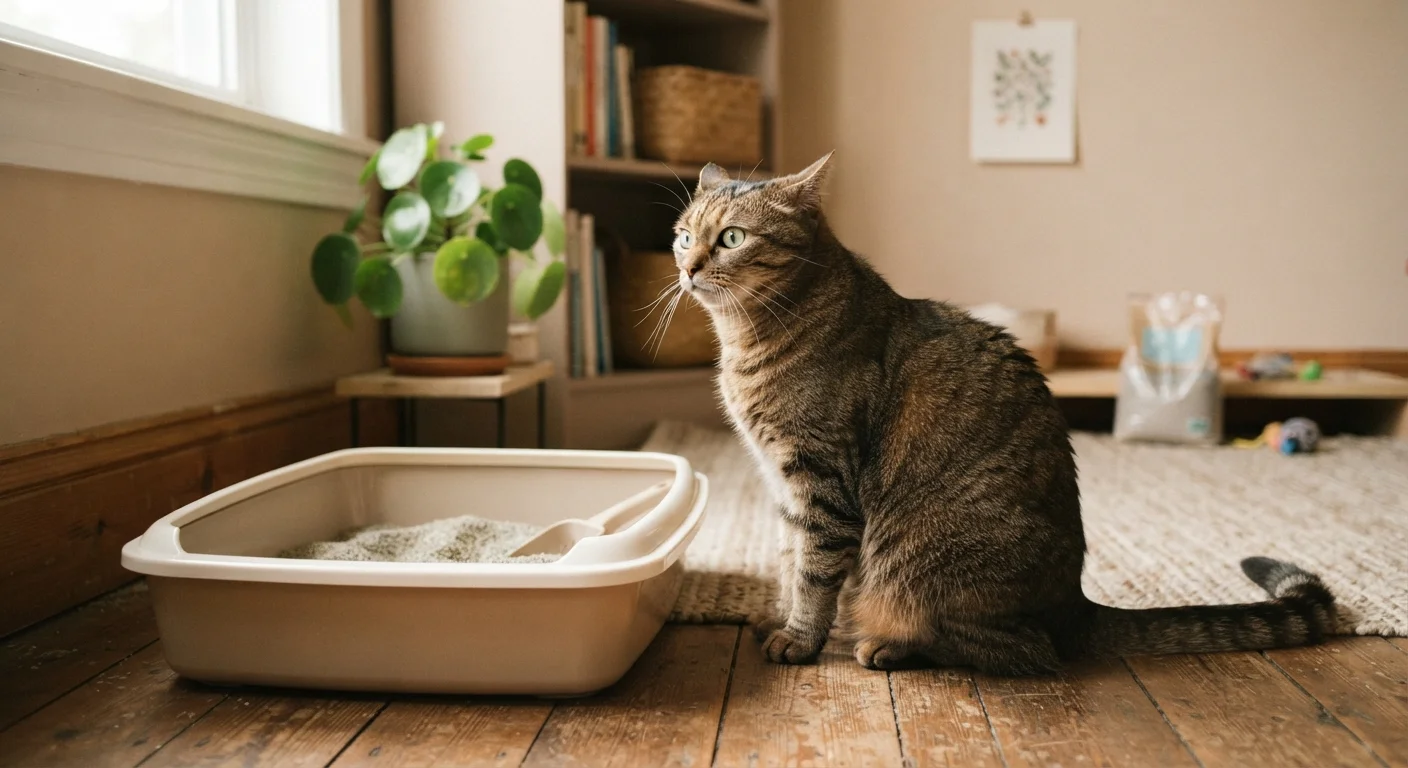
When a cat begins eliminating outside the litter box, it's rarely an act of defiance. Cats are instinctively clean animals — they want to use a designated spot. When they stop, something has made the box unacceptable or physically painful, or something in their body or environment has changed in a meaningful way.
The behavior shows up in two forms: inappropriate elimination (using another location as a bathroom) and urine marking (spraying vertical surfaces to communicate territory). These have different causes and call for different responses. Understanding which one you're dealing with is the first step — and a vet visit is often essential to making that call.
If you've just brought a new cat home, read about what to expect in the early weeks, including how to properly introduce and position the litter box from day one.
See a Vet Before Assuming It's Behavioral
Straining to urinate, crying in the box, blood in the urine, or frequent trips that produce little output are medical emergencies — particularly in male cats, who are prone to life-threatening urinary blockages. Do not wait to see if these symptoms resolve on their own. Contact a veterinarian immediately if you observe any of these signs.
Common Owner Mistakes That Make Things Worse
Most litter box problems are solvable — but several common missteps can extend the issue or make it harder to resolve. Understanding where owners typically go wrong is the fastest path to getting things back on track.
Skipping the vet and assuming the problem is purely behavioral from the start.
Why it happens: Owners often focus on the box setup or litter type first because those feel easier to control, overlooking the possibility of an underlying illness.
Keeping the litter box too dirty or cleaning it inconsistently.
Why it happens: Daily scooping can feel like a chore, and owners sometimes underestimate how sensitive cats are to odors — a cat's sense of smell is far more acute than a human's.
Using a box that is too small, covered, or placed in a difficult location.
Why it happens: Covered boxes are marketed as odor-controlling and look tidier, leading owners to assume cats prefer them. Convenience for the owner often shapes box placement rather than the cat's needs.
Switching litter types abruptly or using heavily scented litters.
Why it happens: Scented litters seem like an obvious way to reduce odors, and new litter products are frequently introduced. Owners switch without considering the cat's established preference.
Ignoring household stress or changes that coincide with the problem.
Why it happens: It's easy to overlook the connection between a new baby, a move, a new pet, or even rearranged furniture and a sudden change in litter box behavior.
Assuming an older cat is just being stubborn rather than physically uncomfortable.
Why it happens: Senior cat behavior changes are sometimes misread as personality shifts when they are actually signs of pain or cognitive decline.
Punishment Makes the Problem Worse
Scolding, physically correcting, or rubbing a cat's nose in an accident does not teach them to use the box — it teaches them to fear you and hide their elimination. Cats do not connect punishment to a past action; they only experience stress in the present moment. A calm, detective-style approach to finding the cause is far more effective.
For a broader look at how cats communicate discomfort or stress, exploring everyday feline behaviors can offer useful context — litter box changes rarely happen in isolation.
Getting Back on Track
Once medical causes are ruled out or treated, a methodical reset of the litter box environment is usually effective. Start by placing a clean, uncovered box in the spot where the cat has been eliminating — cats often choose locations for reasons that make sense to them, and working with that preference rather than against it speeds resolution.
~10%
Cats affected by elimination problems
Estimates from veterinary behaviorists suggest roughly 10% of cats will develop an elimination problem at some point in their lives, making it one of the leading reasons cats are surrendered to shelters.
1 per cat + 1
Recommended litter boxes per household
The standard guidance from the American Association of Feline Practitioners is to provide one litter box per cat plus one additional box to reduce competition and territorial stress.
Gradually migrate the box to a more convenient location over several weeks if needed. Re-earning a cat's confidence with the box takes consistency, not punishment. If behavioral causes are suspected — particularly spraying related to territorial stress in a multi-cat home — a veterinary behaviorist or your regular vet can discuss options including environmental enrichment and, where appropriate, anti-anxiety support.
It's also worth noting that some popular assumptions about cat behavior don't hold up to scrutiny. Veterinarians frequently correct misconceptions about cats — including the idea that litter box problems are just a personality quirk rather than a signal worth investigating.
This article is for general informational purposes only and is not a substitute for professional veterinary advice. Always consult a licensed veterinarian if your cat shows signs of illness or distress.
The content on this site is for informational purposes only and is not a substitute for professional advice. Always consult a qualified professional for guidance specific to your situation.