

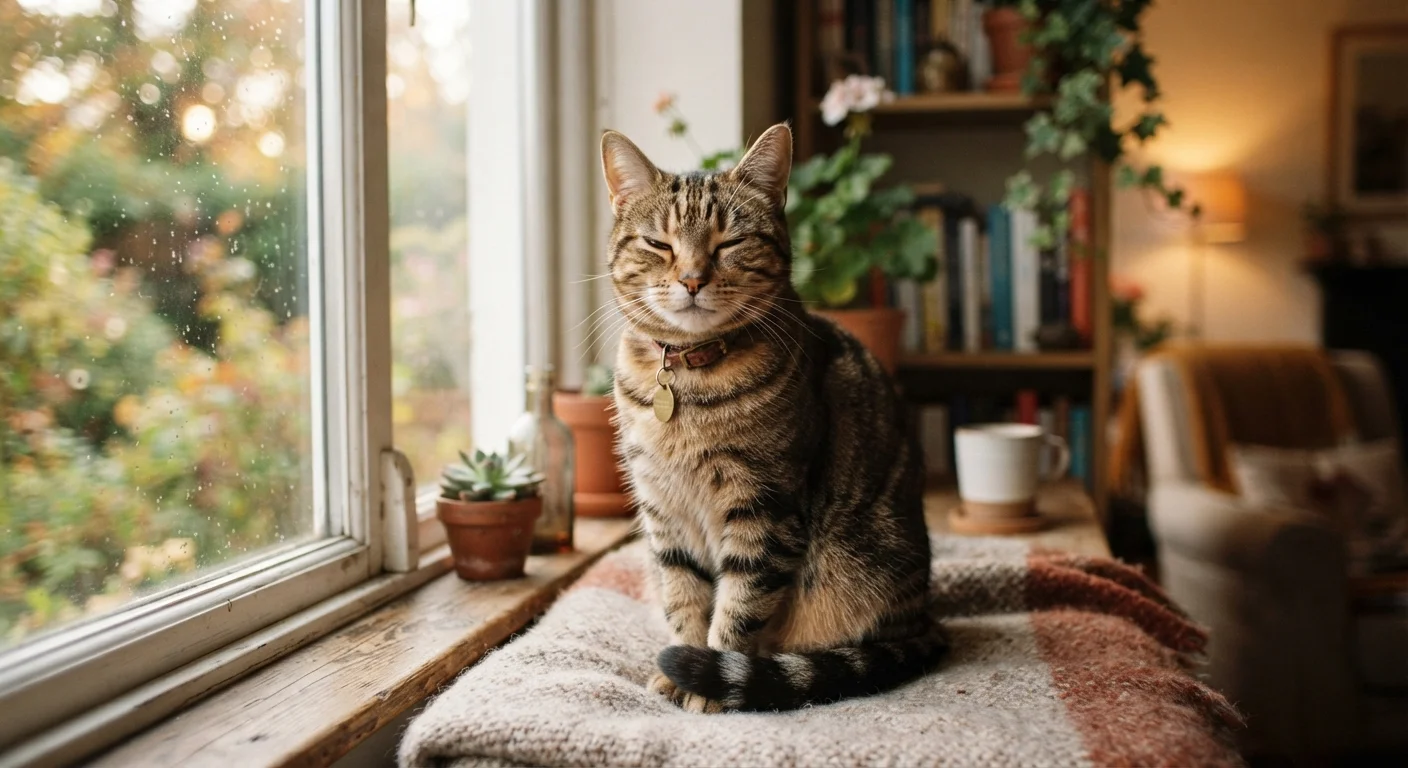
The Slow Blink: Your Cat's Version of 'I Love You'
If your cat makes eye contact and then slowly closes and opens its eyes, consider yourself trusted. Animal behaviorists commonly refer to this as the 'slow blink,' and research suggests it functions as a positive emotional signal between cats and humans.
You can try returning the gesture: soften your gaze, and slowly close and reopen your eyes. Many cats will respond in kind. It's one of the simplest ways to build rapport with a cat on their own terms, and it works even with cats you've just met.
If your cat avoids eye contact altogether, that's not necessarily unfriendly — in feline social language, direct staring can feel confrontational. A cat that looks away first is often choosing to de-escalate, which is actually a peaceful gesture.
Try Returning the Slow Blink
The next time your cat makes eye contact, soften your expression and slowly close your eyes for a moment, then reopen them. Studies suggest cats respond positively to humans who mirror this signal. It's a low-effort, high-reward way to build trust — even with cats you've just met.
Kneading, Chirping, and Other Daily Mysteries
Kneading — that rhythmic pushing of paws against a soft surface — originates in kittenhood, when kittens knead their mother's belly to stimulate milk flow. Adult cats retain the behavior as a comfort response. If your cat kneads on you, it's a sign they feel safe and content in your presence.
Chattering is that rapid jaw-clicking sound cats make when watching birds or squirrels through a window. One leading hypothesis is that it mimics the kill bite used during hunting — a kind of frustrated reflex when prey is visible but unreachable. It appears involuntary and is completely normal.
Midnight zoomies — sudden sprints through the house at 2 a.m. — are a normal release of built-up predatory energy. Indoor cats especially may have energy reserves that go unspent without enough play. Adding a structured play session before bed can help reduce late-night sprinting. See our guide on indoor vs. outdoor cat wellbeing for more on how environment affects behavior.
12–16 hrs
Average daily sleep for adult cats
This extended rest is a normal evolutionary adaptation tied to the energy demands of a predatory lifestyle, according to veterinary behavior resources.
~100
Distinct vocalizations cats produce
Research suggests domestic cats have developed a wider vocal repertoire specifically for communicating with humans compared to their wild counterparts.
25–150 Hz
Frequency range of a cat's purr
Some veterinary researchers note this frequency range overlaps with ranges studied for potential bone-density and tissue-healing effects, though research is ongoing.
Reading Tail and Body Language
A cat's tail is one of its most expressive tools. A tail held high while walking toward you signals confidence and a friendly greeting. A puffed-up tail means the cat feels threatened and is trying to look larger. A low, tucked tail usually indicates fear or submission.
Watch the full picture: ears forward means engaged and curious; flattened ears suggest fear or aggression. A relaxed, open body posture is an invitation; a hunched, tense one says the cat wants space.
Cats that roll onto their back and expose their belly are showing trust — but this isn't necessarily an invitation for a belly rub. Many cats find direct belly contact overstimulating and will swat if touched there. Treat it as a compliment, not a cue to reach in.
If you're new to cat ownership, learning to read these signals early will make the adjustment period smoother for both of you.
Belly Exposure Is a Compliment, Not an Invitation
Many cat owners are surprised when a belly rub results in a swat. Showing the belly is a sign of trust and vulnerability, but it doesn't mean the cat wants to be touched there. Most cats prefer head scratches or chin rubs when it comes to physical contact. Let your cat guide what type of petting it accepts.
When Behavior Signals Something More
Most quirky behaviors are harmless, but some changes in behavior are worth paying attention to. A cat that suddenly stops using its litter box, hides more than usual, stops grooming, or loses interest in food may be signaling a health concern rather than a personality quirk. Our article on what litter box avoidance might signal covers one of the most common examples in depth.
Behavioral shifts are often a cat's primary way of communicating physical discomfort, since they instinctively mask pain. If a behavior changes noticeably and suddenly — especially in an older cat — a veterinary checkup is always a reasonable next step.
Understanding your cat's baseline 'normal' is the foundation. Once you know how your cat typically behaves, deviations become much easier to spot. It's also worth revisiting common assumptions — our piece on cat myths veterinarians wish would disappear addresses several behaviors that are widely misunderstood.
Frequently Asked Questions
A slow, deliberate stare can be a sign of focus or curiosity. If your cat follows it with a slow blink, that's a trust signal. A hard, unblinking stare in a tense body posture, however, can signal stress or a territorial challenge — context matters.
Cats use their paws to investigate objects, and knocking items off surfaces is often a way of testing movement or getting attention from their owner. It can also stem from boredom or under-stimulation. Providing enrichment like puzzle feeders or play sessions can reduce the behavior.
Not always. Cats purr when content, but they also purr when anxious, in pain, or even when dying. Purring appears to be a self-soothing mechanism. If your cat is purring but also hiding, not eating, or seems tense, a veterinary check is worthwhile.
This is a gift-giving instinct rooted in predatory behavior. Cats — especially those with outdoor access — sometimes bring prey to trusted humans, possibly mimicking how they would share food with social companions. It's a sign of affection, even if an unwelcome one.
This is called a 'love bite' or petting-induced aggression, and it signals that your cat has reached its petting threshold. Watch for flattening ears, a twitching tail, or skin rippling — these are early signs your cat wants the interaction to stop.
Cats are crepuscular hunters by nature, meaning they're wired for short, intense bursts of activity around dawn and dusk, with long rest periods in between. Most adult cats sleep 12–16 hours a day, which is entirely normal for the species.
The content on this site is for informational purposes only and is not a substitute for professional advice. Always consult a qualified professional for guidance specific to your situation.