

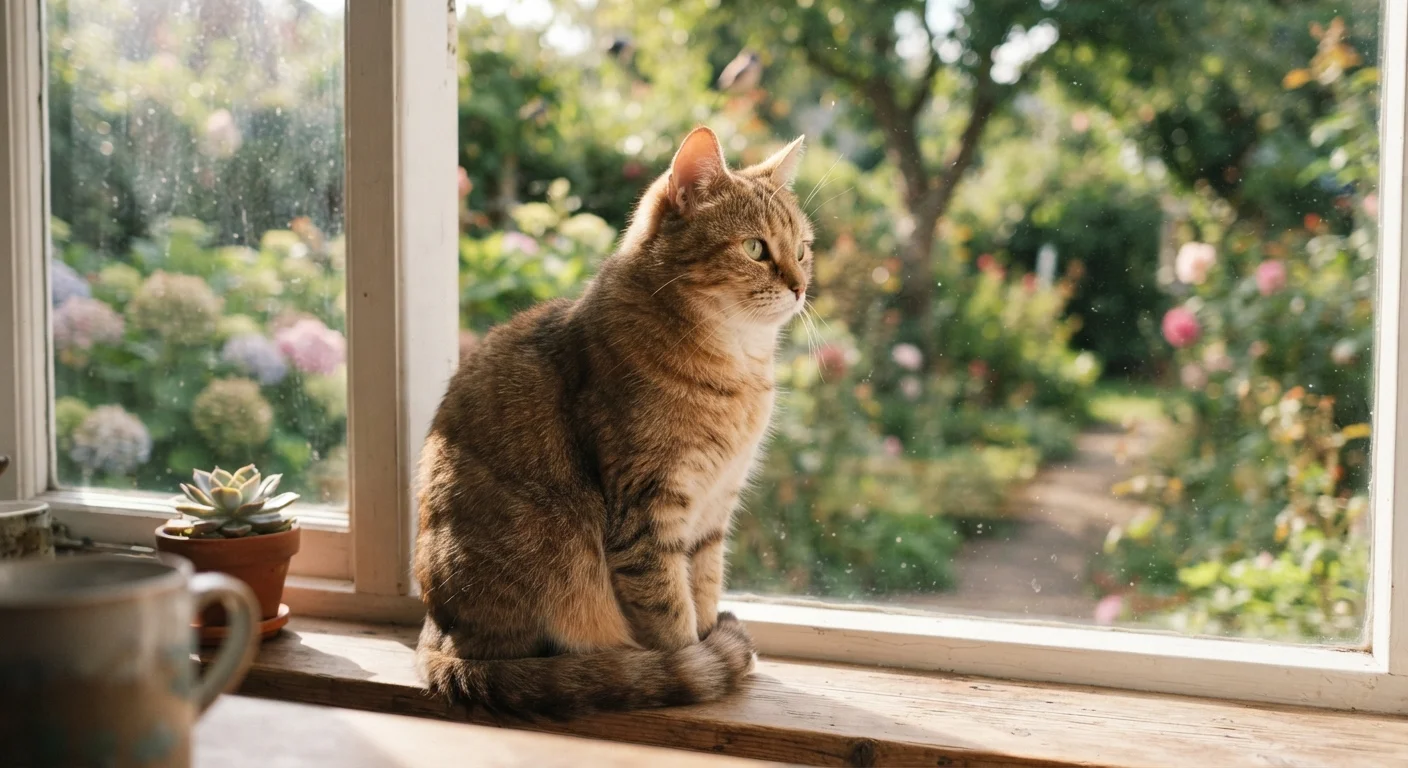
Option A
Indoor Cats
The protected, controlled environment choice.
Best for: Owners who prioritize safety, predictability, and longer average lifespan for their cat.
Option B
Outdoor Cats
The free-roaming, stimulus-rich lifestyle.
Best for: Cats with strong hunting drives in low-traffic, lower-risk environments with attentive owners.
The Core Difference: Control vs. Freedom
The indoor versus outdoor debate is really a question of tradeoffs — between safety and stimulation, control and freedom. Neither lifestyle is inherently wrong, but each carries meaningful consequences for a cat's physical health, mental wellbeing, and longevity.
Indoor cats live entirely or almost entirely within the home. Outdoor cats have regular unsupervised access to the outside world, whether that's a backyard, neighborhood, or open countryside. Many owners fall somewhere in between, allowing supervised or partially restricted outdoor time.
Understanding what each lifestyle actually involves — not just in theory, but in terms of day-to-day risks and needs — helps you make a more informed choice for your specific cat. For a broader look at how environment shapes pet health, our article on indoor vs. outdoor dogs explores similar tradeoffs for canine companions.
| Criterion | Indoor Cats | Outdoor Cats |
|---|---|---|
| Average lifespan | 12–18+ years (generally longer) | 2–5 years (varies widely) |
| Injury/disease risk | Lower overall risk | Higher — traffic, fights, infections |
| Parasite exposure | Minimal with routine prevention | Frequent — fleas, ticks, worms |
| Mental stimulation | Requires deliberate enrichment | Naturally high from environment |
| Obesity risk | Higher without active play | Lower due to physical activity |
| Wildlife impact | None | Can be significant (birds, small animals) |
| Owner control | High | Low when roaming |
Health and Safety: The Numbers Matter
The most frequently cited difference between indoor and outdoor cats is lifespan. Veterinary organizations generally report that indoor cats live considerably longer on average than their outdoor counterparts, largely because they avoid the hazards that cause the most premature deaths: vehicle strikes, predator attacks, territorial fights with other cats, and exposure to infectious diseases like feline leukemia virus (FeLV) and feline immunodeficiency virus (FIV).
Outdoor cats are also more likely to pick up parasites — including fleas, ticks, and intestinal worms — and to sustain wounds that can become infected. Even in suburban settings, the risks add up quickly.
12–18 yrs
Typical indoor cat lifespan
Veterinary sources commonly cite this range for cats kept exclusively indoors, versus much shorter averages for free-roaming cats.
~1.3–4B
Birds killed by outdoor cats annually in the U.S.
According to a study published in Nature Communications, free-ranging cats are among the leading human-related causes of bird mortality in North America.
Up to 3x
Greater disease exposure risk outdoors
Cats that roam freely have substantially higher exposure to FeLV, FIV, and other infectious diseases through contact with unknown cats.
That said, indoor cats face their own health challenges. Without adequate movement and mental stimulation, they are more prone to obesity, urinary issues, and stress-related behaviors. Ensuring your indoor cat gets enough physical activity is essential — a subject closely tied to keeping a solo cat mentally engaged.
Behavioral Needs and Environmental Enrichment
Cats are natural hunters with strong instincts for stalking, chasing, and exploring. An outdoor environment provides rich, ever-changing sensory input — but that doesn't mean an indoor environment can't meet those needs effectively.
Indoor cats thrive when given vertical space (cat trees, shelves), opportunities to hunt-style play, hiding spots, and window perches with views of birds or activity. Puzzle feeders and rotating toys can engage a cat's problem-solving instincts. Understanding what drives your cat's behavior is key — our guide on decoding common feline behaviors can help you read the signals your cat is sending.
Outdoor cats benefit from a richer environment by default, but that freedom comes at cost. Roaming cats also impact local wildlife, particularly birds, which is a growing concern among conservationists and a genuine ethical consideration for owners.
Wildlife Impact Is a Real Consideration
Free-roaming cats are recognized as a significant threat to local bird and small mammal populations. A study in Nature Communications estimated that cats kill billions of birds and small mammals in the U.S. each year. This is not a reason to shame cat owners, but it is a genuine factor worth weighing when deciding on outdoor access — particularly in areas near natural habitats or wildlife reserves.
The Middle Ground: Supervised and Contained Outdoor Access
For many cats and owners, a hybrid approach offers the best of both worlds. Options include:
- Catios: Enclosed outdoor structures attached to the home that give cats fresh air, sunlight, and natural sights without unsupervised roaming.
- Leash and harness training: Some cats adapt well to supervised walks, providing outdoor stimulation with owner control.
- Enclosed garden runs: Fenced or netted enclosures that prevent escape while allowing outdoor time.
Not every cat will take to these options — personality and background matter. Cats adopted as adults who have always roamed may find full indoor life genuinely stressful. Conversely, a kitten raised indoors from the start rarely shows strong desire to roam. If you're considering adopting and wondering how lifestyle will factor in, our article on adopting a shelter cat vs. buying from a breeder addresses how a cat's background shapes their needs.
Whichever environment you choose, routine veterinary care — including vaccinations, parasite prevention, and spay/neuter status — remains essential. Learn more about the health implications of spaying and neutering cats as part of responsible cat ownership.
This article is for general informational purposes only and is not a substitute for advice from a licensed veterinarian familiar with your cat's individual health and history.
The content on this site is for informational purposes only and is not a substitute for professional advice. Always consult a qualified professional for guidance specific to your situation.