

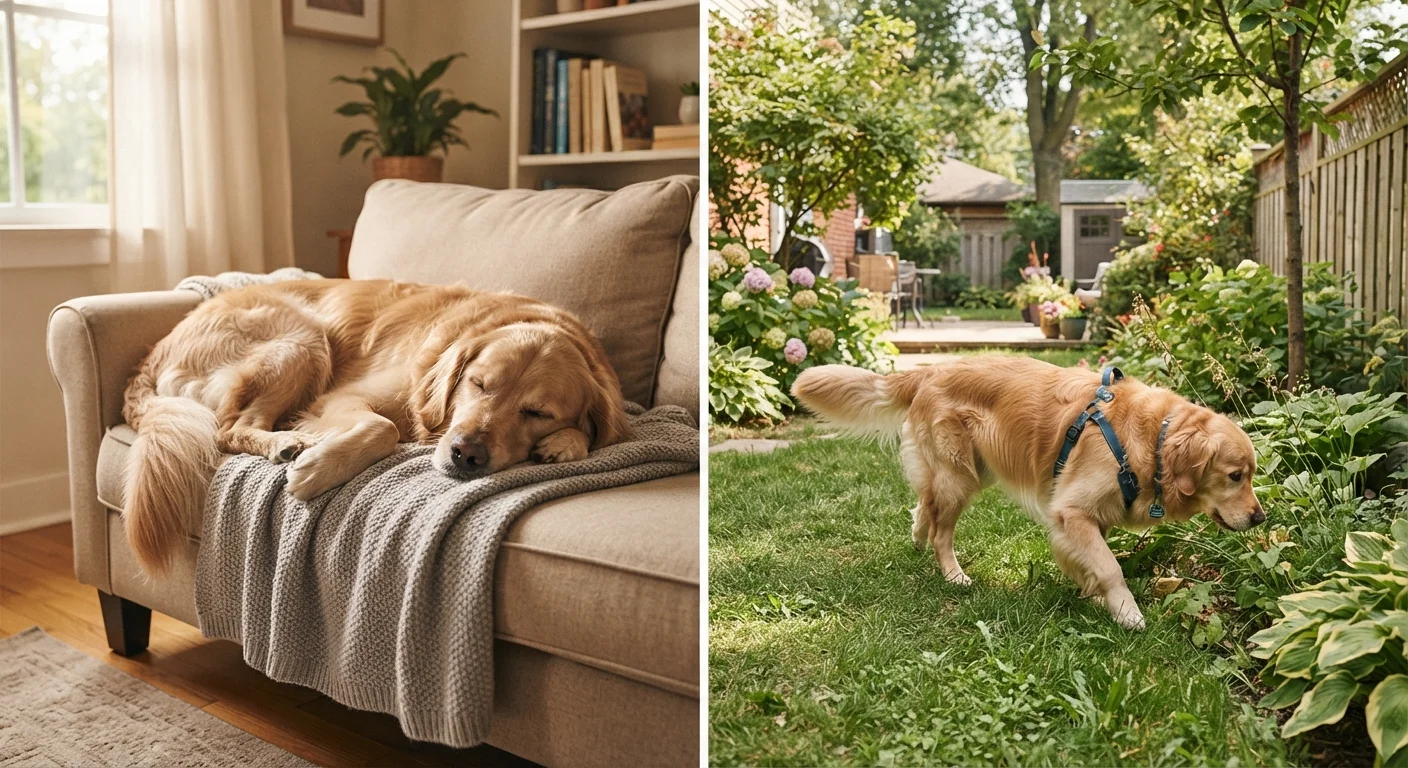
Option A
Indoor Dog
The home-centered companion with controlled-environment health considerations.
Best for: Owners who want their dog integrated into daily household life and can commit to structured outdoor exercise and enrichment.
Option B
Outdoor Dog
The yard-based dog with greater environmental exposure and independence.
Best for: Owners with secure, appropriate outdoor space who can provide consistent monitoring, shelter, and social interaction.
What the Labels Actually Mean
The terms "indoor dog" and "outdoor dog" are shorthand for where a dog spends the majority of its time — not a strict classification system. A dog isn't biologically different based on where it sleeps, but its environment directly shapes its exposure to health risks, its behavioral needs, and the type of veterinary care it requires.
Most American dogs today live primarily inside the home, with supervised outdoor access for exercise and bathroom breaks. A smaller number live primarily outdoors — in secure yards, on farms, or in kennel setups. Many fall somewhere in between. The important thing isn't the label; it's understanding what your dog's actual living conditions mean for its care.
It's also worth noting that keeping a dog outdoors full-time is not appropriate for all breeds or climates. Dogs are social animals that generally thrive with human contact and structured routine, regardless of where they sleep. For a useful parallel from the cat world, see our article on indoor vs. outdoor cats.
Health Risks Side by Side
The health challenges each type of dog faces are meaningfully different — and understanding them helps owners take targeted preventive steps.
| Criterion | Indoor Dog | Outdoor Dog |
|---|---|---|
| Parasite exposure | Lower, but not zero | High — fleas, ticks, worms, heartworm |
| Obesity risk | Higher if under-exercised | Lower with active lifestyle |
| Dental disease risk | Higher without active dental care | Moderate — natural chewing may help |
| Weather-related hazards | Minimal in controlled environment | Significant — heat, cold, storms |
| Infectious disease exposure | Generally lower | Higher — wildlife, soil, standing water |
| Social stimulation | High — integrated with household | Variable — depends on owner interaction |
| Separation anxiety risk | Higher in closely bonded dogs | Lower, but social isolation is a risk |
| Preventive care focus | Weight, dental, enrichment | Parasite control, shelter, vaccinations |
Indoor dogs are more likely to struggle with weight gain and related conditions like joint stress and metabolic disease, largely because they may not get enough daily movement. Exercise needs change across a dog's life, and it's easy to underestimate how much activity an indoor dog actually requires.
Dental disease is another underappreciated indoor-dog risk. Without abrasive chewing on natural materials, plaque builds up faster. As our guide on dog dental care explains, oral health is one of the most common preventable problems veterinarians see.
Outdoor dogs, by contrast, face heavier parasite loads — fleas, ticks, intestinal worms, and heartworm-carrying mosquitoes — due to continuous environmental exposure. They're also at higher risk for infectious diseases spread through contact with wildlife or soil, and they face weather-related hazards like heatstroke in summer and hypothermia in winter.
~56%
U.S. dogs considered overweight or obese
According to the Association for Pet Obesity Prevention's annual surveys, more than half of dogs in the U.S. are estimated to carry excess weight — a condition more common in sedentary indoor environments.
1 in 3
Dogs infected with intestinal parasites annually
The Companion Animal Parasite Council estimates roughly one in three dogs tests positive for at least one intestinal parasite each year, with outdoor exposure being a primary risk factor.
Behavioral and Mental Health Differences
Environment shapes behavior as much as it shapes physical health. Indoor dogs are deeply integrated into household routines, which usually means rich social stimulation — but it also means they can be vulnerable to separation anxiety if they become overly dependent on constant human presence. Under-stimulation — too little activity or novelty — can lead to destructive behaviors like excessive chewing or barking.
Outdoor dogs can develop the opposite problem: social deprivation. Dogs isolated in a yard without adequate human interaction may become anxious, hyperactive, or difficult to handle. They may also develop fence-running, excessive digging, or other outlet behaviors when bored.
Learning to read your dog's body language is useful for any owner, but it's especially important for outdoor dogs whose signals may be less visible if owners aren't regularly interacting with them.
Tailoring Preventive Care to Your Dog's Environment
No Single Protocol Fits Every Dog
Veterinary preventive care guidelines — including vaccine schedules, parasite prevention, and wellness exam frequency — are not one-size-fits-all. Your dog's lifestyle, geographic region, age, and health history all influence what's appropriate. The American Veterinary Medical Association recommends at least annual wellness exams for adult dogs, with adjustments based on individual risk factors. Always discuss your dog's specific living situation with your veterinarian.
Your veterinarian's preventive care recommendations should reflect where your dog actually lives. An outdoor dog in a tick-heavy region needs a different parasite prevention protocol than a city apartment dog. Vaccine schedules may also vary — dogs with more exposure to other animals or wildlife may need additional coverage (such as for leptospirosis or Bordetella).
For indoor dogs, the focus areas veterinarians typically emphasize include maintaining a healthy body weight through measured feeding and consistent exercise, dental hygiene routines, and ensuring adequate mental enrichment. Crate and kennel setups can also play a role in structuring an indoor dog's day.
For outdoor dogs, shelter quality is non-negotiable: insulated housing in cold climates, shade and fresh water in heat, and a secure enclosure that prevents escape or predator access. Regular health checks are important because signs of illness or injury may go unnoticed longer in dogs that aren't handled daily.
In both cases, the quality and consistency of care — not the location itself — determines how well a dog thrives. Speak with your veterinarian to build a care plan that matches your dog's real living situation.
This article provides general information for educational purposes only and is not a substitute for professional veterinary advice. Always consult a licensed veterinarian for guidance specific to your dog's health and circumstances.
The content on this site is for informational purposes only and is not a substitute for professional advice. Always consult a qualified professional for guidance specific to your situation.