

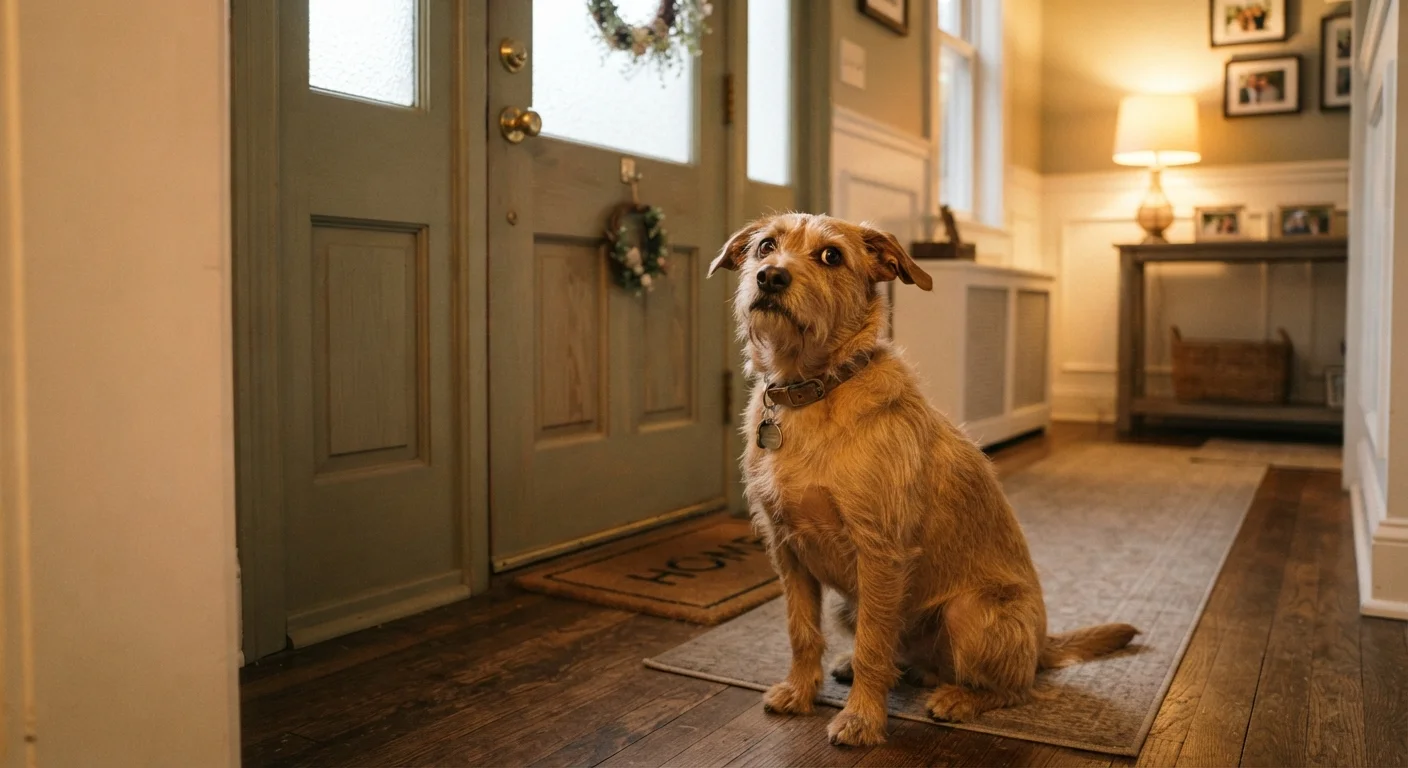
What Separation Anxiety Actually Looks Like
Separation anxiety doesn't always announce itself dramatically. Some dogs howl loud enough for neighbors to call; others quietly destroy a couch cushion or lose control of their bladder. The common thread is that the behavior happens specifically in response to being left alone — not randomly throughout the day.
Common signs include:
- Persistent barking, howling, or whining after you leave
- Destructive chewing, especially near doors and windows
- Urinating or defecating indoors despite being house-trained
- Pacing, drooling, or panting excessively
- Attempting to escape a crate or room, sometimes causing self-injury
- Shadowing the owner constantly before departure
A key diagnostic clue: the behaviors occur predictably when the dog is separated from its primary attachment figure, and they stop when that person returns. Setting up a camera while you're away is one of the most useful things you can do — it turns guesswork into real data.
Separation Anxiety vs. Isolation Distress
These two conditions look similar but have different triggers. True separation anxiety is tied to one specific person's absence; the dog may be fine with another family member present. Isolation distress means the dog panics whenever left alone, regardless of who is or isn't there. The distinction matters because it shapes which training strategies will be most effective.
Why Dogs Develop Separation Anxiety
There's no single cause, and that's part of what makes this condition challenging. Research and clinical experience point to several contributing factors:
- Changes in routine: Moving, a new work schedule, or a family member leaving the household can trigger onset.
- Lack of early independence training: Dogs that were never taught to be comfortable alone often struggle more as adults.
- Genetics and breed predisposition: Some breeds selected for close human companionship — like certain herding or working breeds — may be more vulnerable.
- Traumatic history: Dogs with shelter histories or who've experienced sudden rehoming sometimes develop anxiety around abandonment.
- Over-attachment patterns: When owners inadvertently reinforce clingy behavior — always responding immediately, never creating calm separation — it can deepen dependence.
If you're bringing a dog home for the first time, building in calm, brief alone-time from day one is valuable. Our guide for first-time dog owners covers why early routines set the foundation for long-term behavior.
The Approaches That Actually Help
The most evidence-supported treatment for separation anxiety is systematic desensitization — a structured process of gradually increasing the time a dog spends alone, starting from durations so short the dog barely registers them. The goal is to stay consistently below the dog's anxiety threshold, so it never rehearses the panic response.
This process requires patience and precision. Typical steps include:
- Begin with departures of just a few seconds — picking up keys, stepping outside, immediately returning.
- Increase duration incrementally, only when the dog is calm at the previous level.
- Pair departures with a positive predictor — a food-stuffed toy the dog only gets during alone time.
- Avoid big setbacks: one prolonged absence can undo recent progress.
For moderate to severe cases, a veterinarian may recommend medication — such as FDA-approved options for canine anxiety — alongside behavioral work. Medication doesn't replace training, but it can lower the dog's baseline distress enough to make learning possible. Always discuss medication options with a licensed veterinarian, not a general supplement label.
Working with a certified veterinary behaviorist or a credentialed professional trainer experienced in fear-free methods can make a significant difference, particularly when progress stalls.
Start With Very Short Departures
When beginning desensitization, keep initial departures to 10–30 seconds — just long enough for your dog to register you're gone before you return calmly. Only extend duration once your dog is consistently relaxed at the current level. Incremental progress is real progress, even when it feels painfully slow.
What Doesn't Help — and Can Make Things Worse
Several common owner responses are well-intentioned but counterproductive:
- Punishment: Scolding or correcting a dog for anxiety-driven behavior increases fear and damages trust without addressing the cause.
- Getting another dog: This is one of the most popular suggestions, but it rarely resolves true separation anxiety. The dog isn't distressed about being alone — it's distressed about being without you.
- Flooding: Leaving the dog for long stretches to "get used to it" forces prolonged exposure to panic rather than building genuine comfort. It tends to worsen the condition.
- Rushing the process: Desensitization timelines vary widely. Skipping steps because progress seems good often leads to regression.
Understanding where your dog sleeps, how much independence it has, and how its daily environment is structured also plays a role. Our article on indoor vs. outdoor dog care discusses how a dog's environment shapes its behavior and health.
If you use a crate as part of managing your dog's alone time, it's worth understanding how crate training actually works — and what its limits are. See our overview of crate and kennel training for context. A crate is not a treatment for anxiety on its own, and for dogs with severe separation anxiety, confinement can escalate distress.
This article is for general informational purposes only and does not constitute veterinary or behavioral advice. If your dog is showing signs of separation anxiety, consult a licensed veterinarian or certified veterinary behaviorist for guidance specific to your dog's situation.
Frequently Asked Questions
Bored dogs typically cause mischief early in your absence then settle down. Dogs with separation anxiety show intense distress — panting, pacing, whining, or destruction — that peaks within the first 30 minutes of you leaving. A camera set up at home can help you observe what's actually happening.
Not reliably. True separation anxiety is tied to the absence of a specific human, not to being alone in general. A second dog may reduce isolation distress in some cases, but it won't address the underlying emotional dependence driving true separation anxiety.
Many dogs improve significantly with consistent treatment, though some require ongoing management. The goal is to reduce distress to a level where the dog can cope comfortably. Early intervention tends to lead to better outcomes.
Not always, but it's often helpful for moderate to severe cases. Medication can lower the dog's baseline anxiety enough to make behavioral training more effective. A veterinarian should evaluate whether medication is appropriate for your dog.
It varies considerably depending on severity and consistency of training. Some dogs show meaningful improvement in weeks; others need months of gradual desensitization. There's no universal timeline, and rushing the process typically sets progress back.
No — punishment is counterproductive and harmful. The behaviors stem from genuine fear and distress, not defiance. Punishing a dog for something it cannot control will increase anxiety and erode trust, making the problem worse.
The content on this site is for informational purposes only and is not a substitute for professional advice. Always consult a qualified professional for guidance specific to your situation.