

Our Verdict
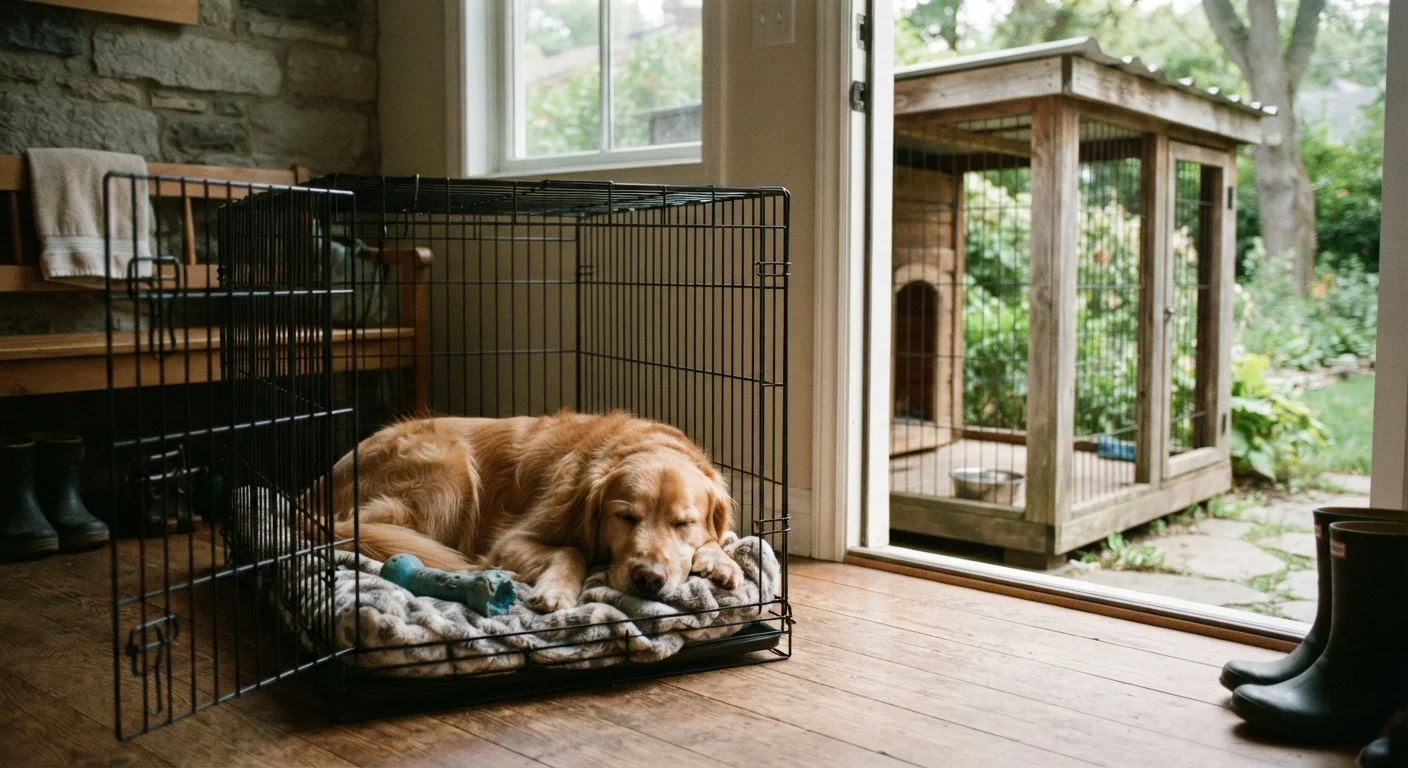
Crates and kennels are not interchangeable — they serve different purposes, require different setups, and suit different situations. Crates excel as indoor den-like spaces that support housetraining and reduce anxiety, while kennels provide secure outdoor containment for supervised or extended periods. Most dog owners find value in understanding both, even if they only use one regularly.
| Best for | Recommended |
|---|---|
| Puppies and dogs being housetrained or managing separation anxiety | Crate training |
| Dogs that spend supervised time outdoors or owners with yard space | Kennel training |
| New dog owners building foundational routines | Crate training |
| Active, larger dogs needing more movement during outdoor time | Kennel training |
What Sets Crates and Kennels Apart
The words "crate" and "kennel" are often used interchangeably, but they describe meaningfully different environments for your dog. Understanding that difference helps you choose the right tool — and use it correctly.
A crate is a compact, enclosed container — typically wire, plastic, or soft-sided — designed for indoor use. It functions as your dog's personal den: a small, secure space where they can rest, feel safe, and, during training, avoid unsupervised accidents or destructive behavior. Crates are sized to fit the dog snugly enough that they feel contained but can still stand, turn around, and lie down comfortably.
A kennel, by contrast, is a larger structure — often an outdoor run, chain-link enclosure, or covered pen — intended to give a dog more room to move around while keeping them safely confined. Kennels are commonly used in backyards, on farms, or at boarding facilities. They may have separate sleeping areas and are generally not designed to replicate the intimate, den-like feel of a crate.
If you're bringing home a first dog, this distinction matters from day one — the setup and expectations for each are very different.
Crate Training: How It Works and Why It Helps
Crate training relies on a dog's natural instinct to seek out small, enclosed spaces for security. When introduced correctly, a crate becomes a place your dog chooses to go — not one they're forced into.
Core principles of crate training:
- Start small and positive. Introduce the crate with the door open, using treats and praise to build a positive association before any door-closing begins.
- Use appropriate time limits. Puppies under six months generally shouldn't be crated for more than three to four hours at a stretch; adult dogs can typically manage four to six hours, though individual needs vary.
- Never use it as punishment. Sending a dog to the crate in anger defeats the purpose and erodes trust.
- Make it comfortable. Bedding, a familiar-smelling item, and quiet placement all help a dog settle.
Crate training is particularly effective for housetraining because dogs are reluctant to soil their sleeping area. It also helps dogs that struggle with separation anxiety feel more secure when left alone.
Make the Crate Feel Like a Den
Place the crate in a low-traffic but social area of your home — somewhere your dog can see the family but isn't overwhelmed by foot traffic. Covering three sides with a blanket can help replicate the enclosed, den-like feeling that dogs instinctively seek. Avoid placing the crate in isolated areas like garages or basements, especially during the initial training period.
Kennel Training: Outdoor Containment Done Right
Kennel training is less about instinct and more about supervised management. A kennel gives your dog outdoor access and movement while keeping them safely enclosed — useful when you're working in the yard, expecting company, or need a secure space during outdoor activities.
Key considerations for kennel use:
- Size matters more here. A kennel should allow the dog to move freely — walk, stretch, and play. Cramped kennels cause stress and physical discomfort.
- Weather and shade are essential. Outdoor kennels must provide protection from sun, rain, wind, and extreme temperatures. Dogs should never be left in an outdoor kennel during dangerous weather.
- Introduce gradually. Like a crate, a kennel should be introduced with positive reinforcement, not just placed and locked.
- Limit unsupervised time. Outdoor kennels are not a substitute for human interaction or exercise. Extended isolation can lead to boredom, stress, and behavioral problems.
Where your dog lives — primarily indoors or outdoors — significantly affects how and when a kennel is appropriate. Our overview of indoor vs. outdoor dog care explores how environment shapes a dog's broader health and behavior needs.
| Crate | Kennel | |
|---|---|---|
| Typical location | Indoors | Outdoors or semi-outdoor |
| Primary purpose | Den-like rest and housetraining | Secure containment with more space |
| Size relative to dog | Snug — just enough to stand, turn, lie | Spacious — room to move and play |
| Training focus | Building positive den association | Gradual outdoor containment comfort |
| Best age to introduce | Puppyhood ideal, any age possible | Any age with proper introduction |
| Weather protection needed | Not applicable (indoors) | Essential — shade, shelter required |
| Max unsupervised time | 4–6 hrs for adults, less for puppies | Limited; not for extended isolation |
Choosing the Right Approach for Your Dog
Neither crates nor kennels are universally superior — the right fit depends on your dog's age, temperament, size, and your household routine.
Consider a crate if: You're housetraining a puppy, your dog needs a calm indoor refuge, or you want a portable safe space for travel and vet visits.
Consider a kennel if: You have outdoor space and need safe containment during yard activities, or your dog is too large and active to settle in an indoor crate for outdoor time.
Both can coexist. Many dog owners use a crate indoors for overnight rest and a kennel outdoors for supervised daytime activity. The two approaches complement each other well, especially for high-energy breeds.
Whatever you choose, consistency and patience are the most important factors. Dogs adapt well when training is gradual, positive, and predictable. If your dog's exercise needs or life stage are changing — for example, moving from puppyhood into adolescence — revisiting your setup is worthwhile. Our guide on how exercise needs shift as dogs age can help you plan accordingly.
The content on this site is for informational purposes only and is not a substitute for professional advice. Always consult a qualified professional for guidance specific to your situation.