

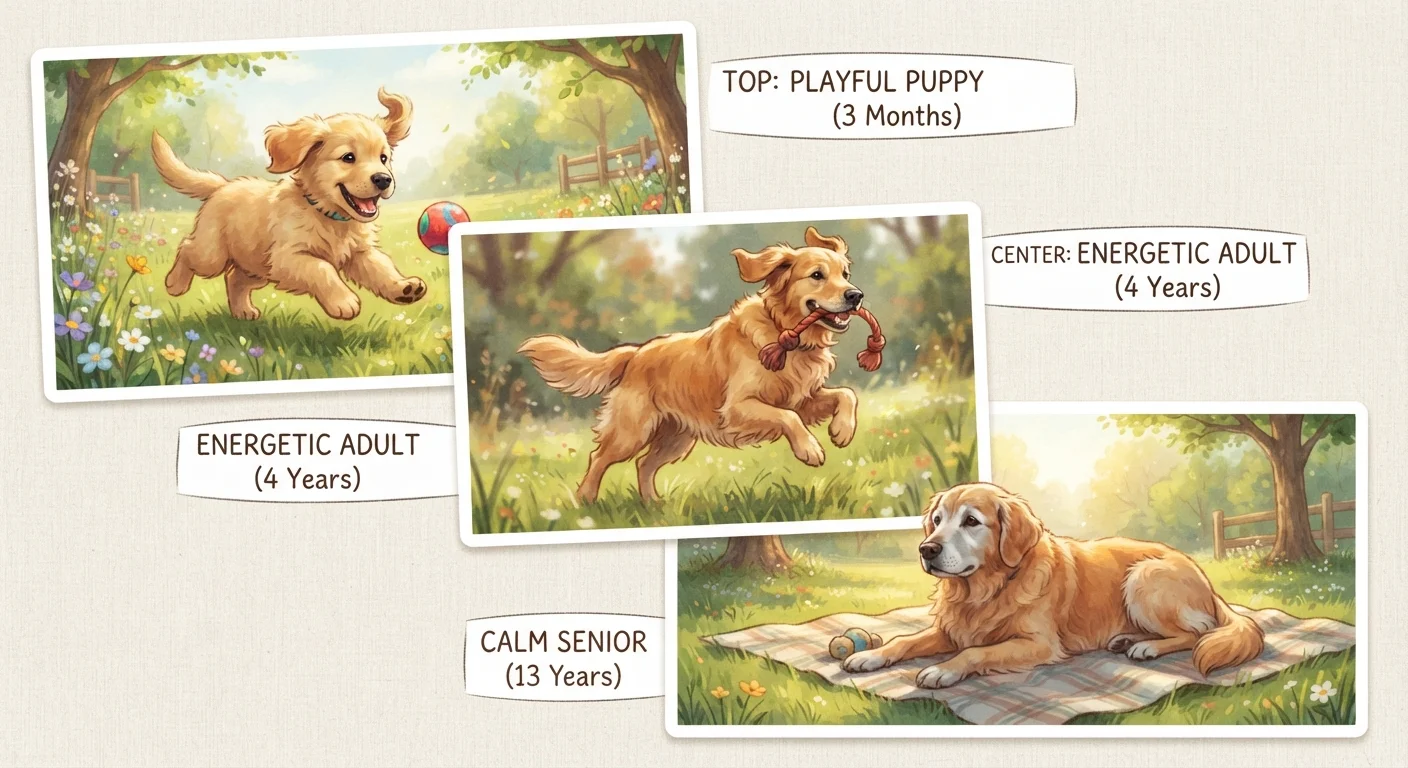
Why Exercise Needs Change Across a Dog's Life
A dog's body changes dramatically from puppyhood to old age, and its exercise requirements shift accordingly. Developmental stage, breed size, individual health, and temperament all play a role. Getting this balance right matters: too little activity at any age contributes to obesity, anxiety, and behavioral problems, while too much — especially at the wrong stage — risks injury. Understanding the "why" behind the changes helps owners make smarter, more consistent decisions rather than guessing.
Breed is a significant factor that cuts across all life stages. A Border Collie and a Basset Hound are both dogs, but their activity needs are worlds apart. High-energy herding and sporting breeds typically require more vigorous, sustained exercise than low-energy or brachycephalic (flat-faced) breeds such as Bulldogs or Pugs. Your vet is the best resource for breed-specific guidance.
What you will need
Step-by-Step: Adjusting Exercise Through Each Life Stage
Follow these steps to calibrate your dog's activity routine as they grow and age. Each stage builds on the last, so starting with good habits early makes transitions easier.
Identify your dog's current life stage
Dogs move through four broad life stages: puppy (up to 12–18 months depending on breed), adolescent (roughly 6–18 months), adult (1–7 years for most breeds), and senior (typically 7+ years, though giant breeds age earlier). Large and giant breeds take longer to reach physical maturity than small breeds, so a Great Dane is still a puppy at 12 months while a Chihuahua may be approaching adulthood. Knowing where your dog falls helps you set appropriate exercise expectations.
Match puppy exercise to short, frequent sessions
Puppies are naturally energetic, but their bones and growth plates are still developing. Repetitive high-impact exercise — long runs, extended fetch sessions, jumping — can stress immature joints. Instead, aim for several short play sessions throughout the day, each lasting 5–10 minutes for very young puppies. Structured free play indoors, gentle leash walks, and basic training activities provide plenty of stimulation without overloading growing bodies.
Mental engagement matters as much as physical activity at this stage. Puzzle feeders and short training games tire a puppy out effectively while building good habits.
Build up activity during the adolescent phase
Between roughly 6 and 18 months, most dogs have more energy than at any other life stage. This is the period where under-stimulated dogs are most likely to develop destructive behaviors. You can begin extending walk duration and introducing activities like hiking on soft terrain, swimming, or off-leash running in safe areas — but ramp up gradually. Check with your vet before starting high-impact sports like agility or dock diving, as growth plates may still be closing depending on the breed.
Sustain consistent moderate to vigorous exercise for adult dogs
Most adult dogs do well with 30–60 minutes of daily exercise, though high-energy working breeds may need considerably more. The key is consistency rather than occasional bursts. Daily walks, fetch, swimming, or play with other dogs all count. Mix aerobic activity with mental challenges — training sessions, food puzzles, or scent work — to address the whole dog. Keep in mind that where your dog spends most of its time shapes how much planned exercise they need.
Shift to lower-impact activity as your dog enters the senior years
Senior dogs often show subtle signs of slowing down: shorter stride, reluctance to jump, stiffness after rest. These changes don't mean stopping exercise — quite the opposite. Regular, gentle movement helps maintain muscle mass, supports joint health, and manages weight, all of which become more important with age. Shorten walk duration but maintain frequency. Swap hard-surface running for grass or dirt paths. Swimming is an excellent option for dogs with arthritis, as it reduces weight-bearing stress on joints.
Many of the same principles that apply to exercising safely with joint pain for humans translate directly to managing an aging dog's activity routine.
Track your dog's response and adjust regularly
No guideline replaces close observation. After any new exercise routine, watch for signs of overdoing it: excessive panting, lagging behind, limping the following day, or reluctance to go out again. Conversely, a dog that is still bouncing off the walls after a walk likely needs more stimulation. Adjust duration and intensity based on what your individual dog shows you, and revisit with your veterinarian if you notice consistent fatigue, weight changes, or behavioral shifts that exercise alone doesn't explain.
Mental Exercise Counts Too
Physical activity is only part of a dog's daily stimulation needs. Nose work, obedience training, and food puzzles engage a dog's brain and can reduce restlessness just as effectively as a longer walk. Blending mental and physical activity is especially valuable during weather extremes or when a dog's mobility is limited.
Tools That Help at Every Stage
The right equipment makes exercise safer and more effective regardless of your dog's age. A well-fitted harness reduces neck strain on puppies and senior dogs alike. Low-impact options like a shallow wading pool extend a senior dog's activity options when joint discomfort limits land-based exercise. You don't need much — consistency and attentiveness matter more than gear.
Leash and collar or harness
Required for safe on-leash walks during all life stages.
Fetch toy or tug rope
Provides mentally stimulating, controlled play sessions for puppies and adult dogs.
Dog-safe swimming area or shallow pool
Low-impact hydrotherapy-style exercise ideal for senior dogs or those with joint issues.
As your dog's home environment shapes daily activity levels too, it's worth doing a home safety audit to make sure your space supports safe, unrestricted movement at every life stage.
When to Talk to Your Veterinarian
Routine wellness visits are the right time to discuss your dog's exercise routine — not just when something seems wrong. Vets can identify early signs of joint disease, heart conditions, or weight issues that should shape your activity approach before symptoms become obvious. If you're ever uncertain whether a new exercise is appropriate, or if your dog's tolerance for activity changes noticeably, a quick call to your vet is always a reasonable first step.
For owners curious about how aging affects other pets in the household, the patterns are notably different — see our guide on senior cat care for a comparison.
This article is for general informational purposes only and does not constitute veterinary medical advice. Always consult a licensed veterinarian regarding your dog's individual health and exercise needs.
The content on this site is for informational purposes only and is not a substitute for professional advice. Always consult a qualified professional for guidance specific to your situation.