

Summary
28 items · 30–60 minutes
Why a Home Safety Audit Matters for Dog Owners
Dogs explore the world with their mouths and noses, which means hazards that seem harmless to humans can become emergencies in minutes. Whether you've just brought home a puppy or you've had dogs for years, it's easy to overlook risks that accumulate as your home and routines change. If you're preparing to bring home your first dog, completing this audit before their arrival can prevent a stressful early incident.
This checklist covers the most common hazard zones room by room. Work through it systematically — ideally getting down to your dog's eye level in each space — to spot risks you might otherwise miss. You'll also want to note that where your dog spends most of its time shapes which hazards are most relevant to your household.
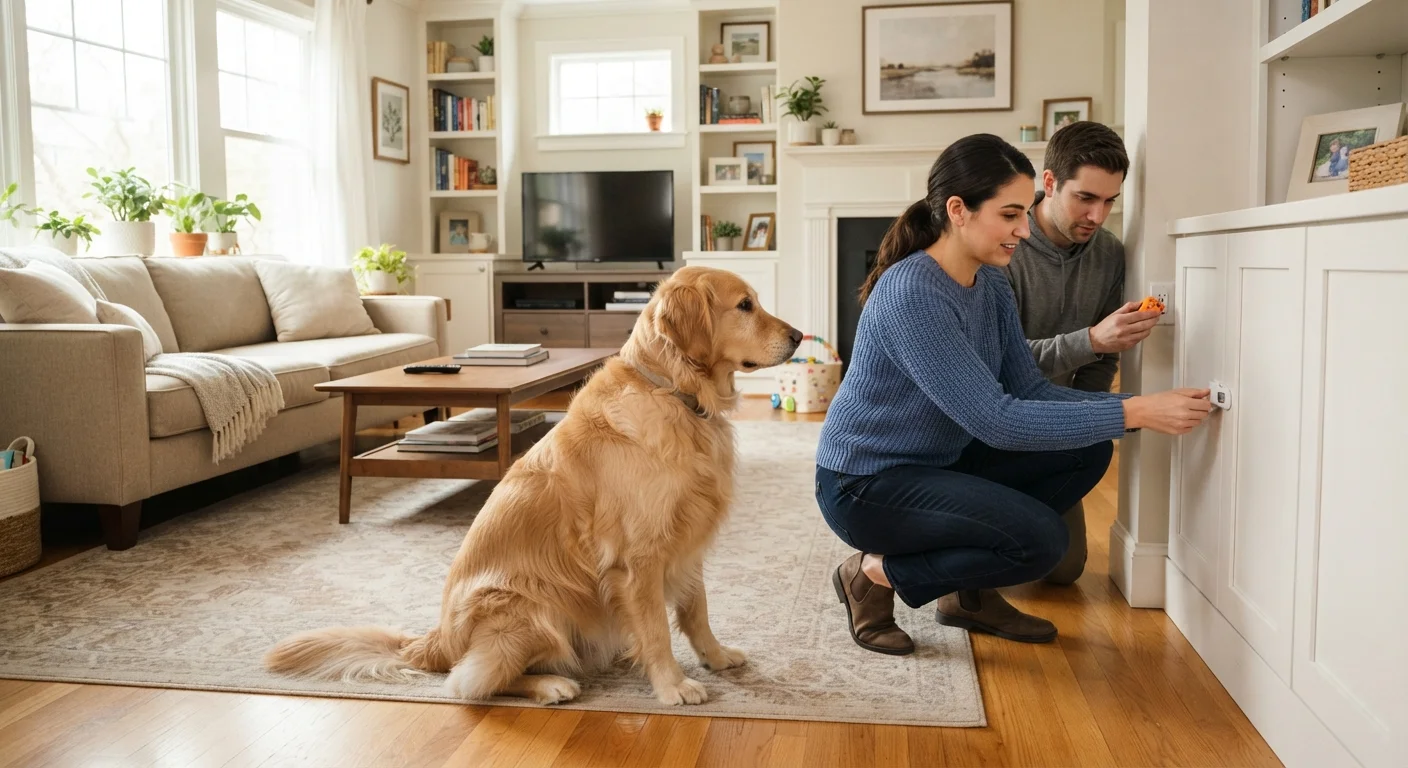
Cabinet safety latches
Prevent dogs from nosing open lower cabinets containing hazardous items.
Cord organizers or cable covers
Protect electrical cords from chewing and reduce tripping hazards in living areas.
Lidded, latch-close trash can
Keep food scraps, bones, and toxic waste inaccessible to curious dogs.
Non-slip floor mats
Reduce slipping on hard floors, particularly for senior dogs or large breeds.
ASPCA Animal Poison Control Center number (888-426-4435)
Provide immediate expert guidance if your dog ingests a potentially toxic substance.
Flashlight or phone torch
Illuminate under furniture, in corners, and along fence lines when inspecting for hidden hazards.
Room-by-Room Hazard Checklist
Walk through each area of your home with this checklist. Items are organized by space and marked by priority so you can address the most critical risks first.
Kitchen
Living Areas
Bathroom & Laundry
Garage & Utility Spaces
Yard & Outdoor Areas
Antifreeze Is a Life-Threatening Hazard
Ethylene glycol — the active ingredient in most antifreeze products — has a sweet flavor that dogs find appealing. Even a small amount can cause acute kidney failure. Symptoms may appear mild at first (stumbling, lethargy) and then worsen rapidly. If you suspect your dog has ingested antifreeze, contact an emergency veterinarian immediately — time is critical.
Human Medications Are a Leading Cause of Dog Poisonings
Common over-the-counter drugs including ibuprofen, acetaminophen, and naproxen are toxic to dogs at doses far lower than human therapeutic amounts. Never leave medications on countertops or in a bag your dog can access. If ingestion is suspected, call your vet or the ASPCA Animal Poison Control Center right away — do not wait for symptoms to appear.
What to Do After the Audit
Once you've identified gaps, tackle must items within 24 hours — these represent the hazards most likely to result in an emergency. For the garage and yard in particular, a single unsupervised minute can be enough for a dog to ingest something dangerous.
Write down or save your veterinarian's number and the ASPCA Animal Poison Control Center hotline in an accessible place. If your dog shows sudden vomiting, lethargy, trembling, or difficulty breathing, contact your vet or an emergency animal hospital immediately — do not wait to see if symptoms resolve on their own. Learning to recognize subtle warning signs is equally important; see our guide on signs your dog may be in pain for what to watch for between emergencies.
Finally, revisit this checklist whenever your living situation changes — after a move, seasonal home preparations, a renovation, or whenever a new pet or child joins the household. Pairing this with your dog's annual vet checkup ensures both your home environment and your dog's health are assessed on a regular cycle.
This article is for general informational and educational purposes only. It is not a substitute for professional veterinary advice. Always consult a licensed veterinarian for guidance specific to your dog's health and safety needs.
The content on this site is for informational purposes only and is not a substitute for professional advice. Always consult a qualified professional for guidance specific to your situation.